How Jean-François Richet and Vincent Cassel reinvented Quasimodo
With Quasimodo, the soul of Paris, Jean-François Richet finds Vincent Cassel and follows in the footsteps of the man who is said to have inspired Victor Hugo’s hunchback. The filmmaker spoke to us about barricades, period paving stones and the beauty we lost along the way.
In 2010, an archivist at the Tate in London read the seven handwritten volumes of the memoirs of a forgotten English sculptor, Henry Sibson. In the 1820s, this young man cut stone on the Notre-Dame construction site. He talks about a discreet colleague whom everyone called “the Hunchback”, to the point that Sibson almost never heard his real name. At the same time, Victor Hugo lived a few streets away. He fights for the cathedral and begins his masterpiece Notre-Dame of Pariswhich will appear in 1831. Was he inspired by this man for his Quasimodo? Nobody can prove it. And it is on this doubt that Richet based his film.
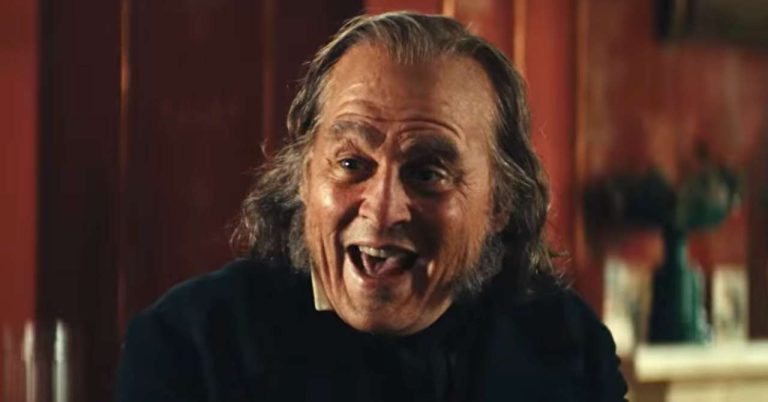
The filmmaker therefore did not seek to remake Hugo. We know the Quasimodo of the adaptations: a deaf bell ringer perched in the Paris of 1482. We have all seen the Disney. But his hunchback is different. He comes from the street. He works stone, he is poor and he is hunted. The film takes place in 1830, just before the Three Glorious Years. Cholera is wreaking havoc, anger is rising in the suburbs, and Vincent Cassel is pursued by a young doctor (Benjamin Voisin) who would like to make him a guinea pig to find a cure, and by the head of the Security Service (Karim Leklou). He is ready to do anything to protect the dancer he loves (Daphné Patakia). The gothic monster becomes a man to be chased, and the romantic melodrama takes on the rhythm of a chase film.
The Hunchback and the Great History
From a distance, when you talk to Richet it all looks like a Dream Project. To turn Quasimodohe thus kept Hollywood waiting. He had two action films planned in the United States and he postponed one. On one side Gerard Butler and Jason Statham, on the other Victor Hugo: the gap seems enormous, not for him. “The DNA of a director is not necessarily to stay in the same genre. We can treat the same themes with different genres.“
Besides, just look at his CV in detail. From one film to another, he films the same type of man. Jacques Mesrine, the heroes of Butler, François Vidocq, and now a hunchback whose name History has not even remembered: these are working class heroesmodest people caught up in events that are beyond them. “Basically, they are small characters. I like the viewer to be able to identify with someone they might come across.” With Vincent Cassel, his actor since Mesrinehe talks little about reconstruction and a lot about what makes the characters act. He does not want to film “historical figures, but simply characters”. “When you are in love in the 19th century, even if the social rules are different, you are in love. When you hate someone, you hate them. That’s what I’m trying to make the audience feel…“
The 19th century, which he had already explored with Vidocq in The Emperor of Parisalso attracts him for a simple, almost old-fashioned reason: beauty. That of the sentences of Hugo, Balzac and Zola, and that of the stone facades that he readily contrasts with our glass and concrete buildings. For him, we have lost our connection with time. Notre-Dame was built over several centuries by workers who knew they would never see it finished. “Our times are going crazy because we only think about profit. While it takes time to create beauty.“
A barricade does not arise just anywhere
This passion (for the characters as well as for the period) is seen on the screen. Down to the smallest details. Richet wants shirt buttons remade identically, and he does not tolerate a single Haussmann building in a Paris which is still twenty years away from the major works. And as he knows his limits, for uniforms and troop movements, he calls on specialists: “Whether a soldier’s pompom is blue or red, I would be unable to say.“For the barricade, the central scene of the film, he studied photographs of the Commune, where we see the barricades succeeding each other from crossroads to crossroads. He also re-read Hugo and period testimonies.”A barricade is not placed in the middle of a square. It serves a purpose. The insurgents know that they will not hold it for long, and everything is designed with that in mind.“
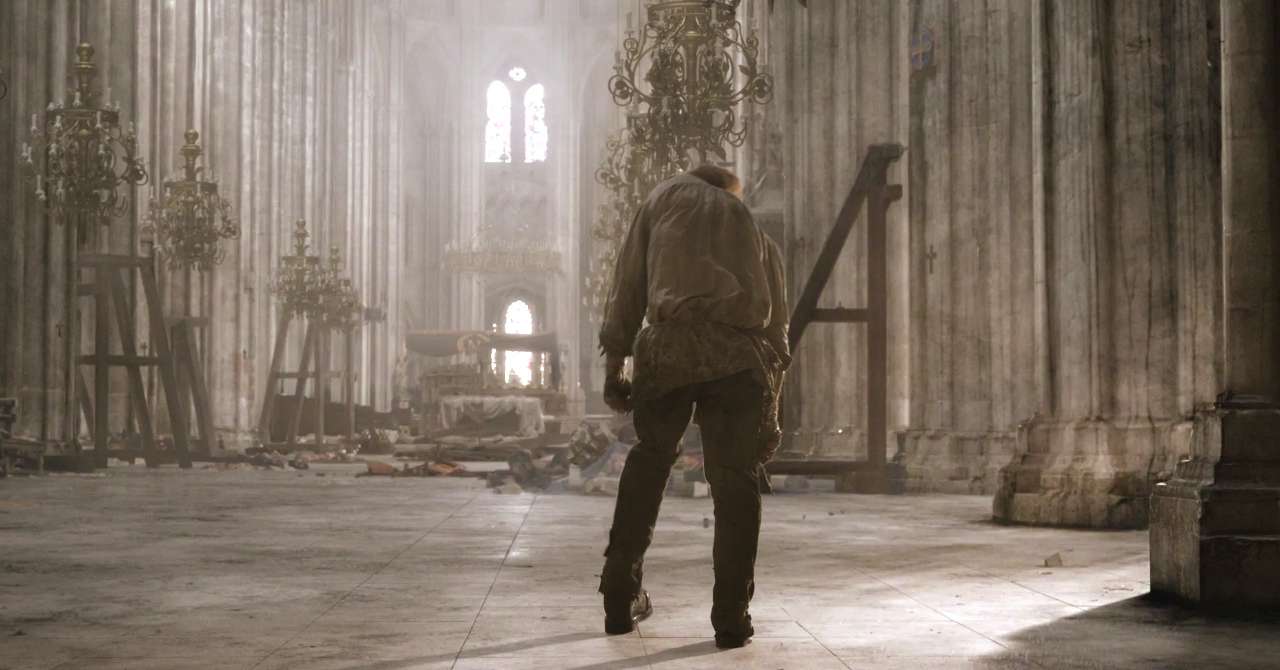
In Quasimodowe are not looking at a setting, we are caught in the turmoil, with the paving stones flying and a barricade that we know is condemned as soon as it is set up. To achieve this realism, he had to partly rebuild the city. Or look for it elsewhere. The Paris of 1830 no longer exists. Richet therefore went to look for ancient stones in Bourges and Senlis. For the major scenes of insurrection, he did as on The Emperor of Paris : he rebuilt the city in an immense field, open to the sky. And as always, using digital technology as little as possible.
This is undoubtedly where Richet really reinvents Quasimodo. He does not remove it from the legend by a twist of scenario. He puts him back in a Paris where the cobblestones are real, where there are fights on street corners, and where a nameless hunchback may have encountered Victor Hugo.
Quasimodo, the soul of ParisNovember 27 on Netflix