Bastien Bouillon: “La Frappe is first and foremost a story of friendship and loyalty”
A year after presenting Partir un jour and Connemara, he returns to the Croisette and impresses as a toxic father in La Frappe, the first feature by Julien Gaspar-Oliveri whom he has known for 15 years. Encounter.
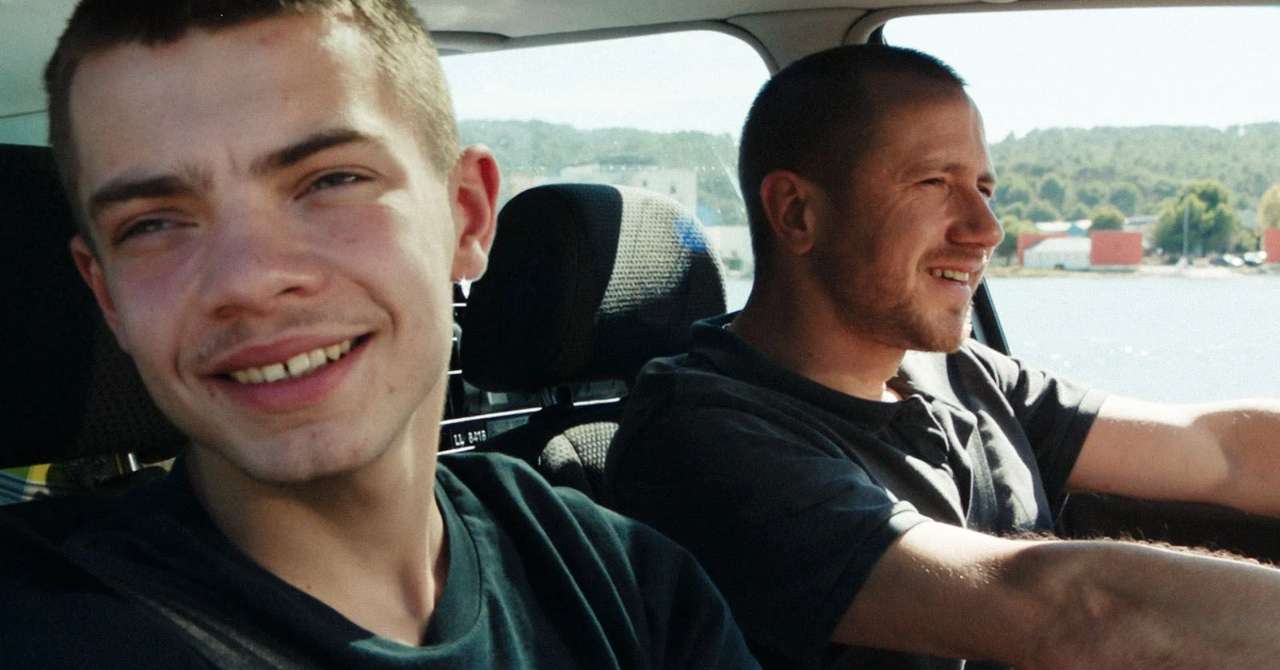
How do you find yourself playing this father who, upon his release from prison, finds his two children left to their own devices for years in this very strong first feature film full of twists and turns by Julien Gaspar-Oliveri?
Bastien Bouillon: First of all, it’s a beautiful story of loyalty and friendship because I’ve known Julien for more than 15 years: we were at the Conservatory together. I didn’t stay there long but he was one of the only ones who made me play in one of his projects in this school. We were even supposed to meet up for a short film which ultimately didn’t see the light of day. But I have always followed his work, particularly loved his medium length film Villeperdue which is truly a great film. So the desire to work with him again was there, always present like the confidence in his actions as a filmmaker and director of actors. Accompanying him for his first feature was obvious
And so with a complex role of toxic father, whose buried secrets we will little by little discover throughout the plot…
For my part, I see him above all as an ambivalent character and as such profoundly human in everything that this term can cover, including the most extreme things. We are all plural, ambivalent, right? Some simply pull more towards a bright side while others see their dark side swallow up everything else. But I immediately liked in Julien’s scenario his refusal of any Manichaeism and falling into the ease of burdening this character with the father
But how do we work with this ambivalence? This character’s ability to create empathy as well as fear?
I relied on Julien who had a very precise idea of this film and this character. I let myself be guided by his suggestions. This corresponds more broadly to the way I see my job: making myself as available as possible to my directors. Without it being directly autobiographical, I immediately perceived Julien’s particular sensitivity to this story. And he knew how to lead me towards the intangible. To create terror without the crutch of words through silences, looks… A kind of physical aura which diminishes little by little, before we see it disappear into the crowd. Even if I often enter the score through the body, I cannot say that I have made it aware of what I am telling you here, but Julien was able to lead me there.
Also going through rehearsals?
No because Julien wanted us to be able to meet on set. And I also believe that this system worked even more for my character who comes out of prison and who his children will rediscover after years spent away from them. All familiarity had to be erased. The filming only lasted 22 days but Julien managed to create a light that allowed us to move freely, without any axis constraints to respect. And this freedom necessarily favors meeting one’s partners.
From The Night of the 12th in 2022, you have become a big regular at Cannes where you presented The Count of Monte Cristo, Connemara or even Leave one day. What does this festival mean to you?
This is the first time I’m going through Critics’ Week. And I would say that Cannes is first and foremost a great opportunity for films. A magnificent exhibition. And I am so happy and proud for Julien. The Strike was really a complicated film to put together. He deserves it so much!
By Julie Gaspar-Oliveri. With Bastien Bouillon, Diego Murgia, Romane Fringeli… Duration: 1h44. Released August 26.