Canal+ will no longer work with anti-Bolloré signatories: Maxime Saada hits back in Cannes
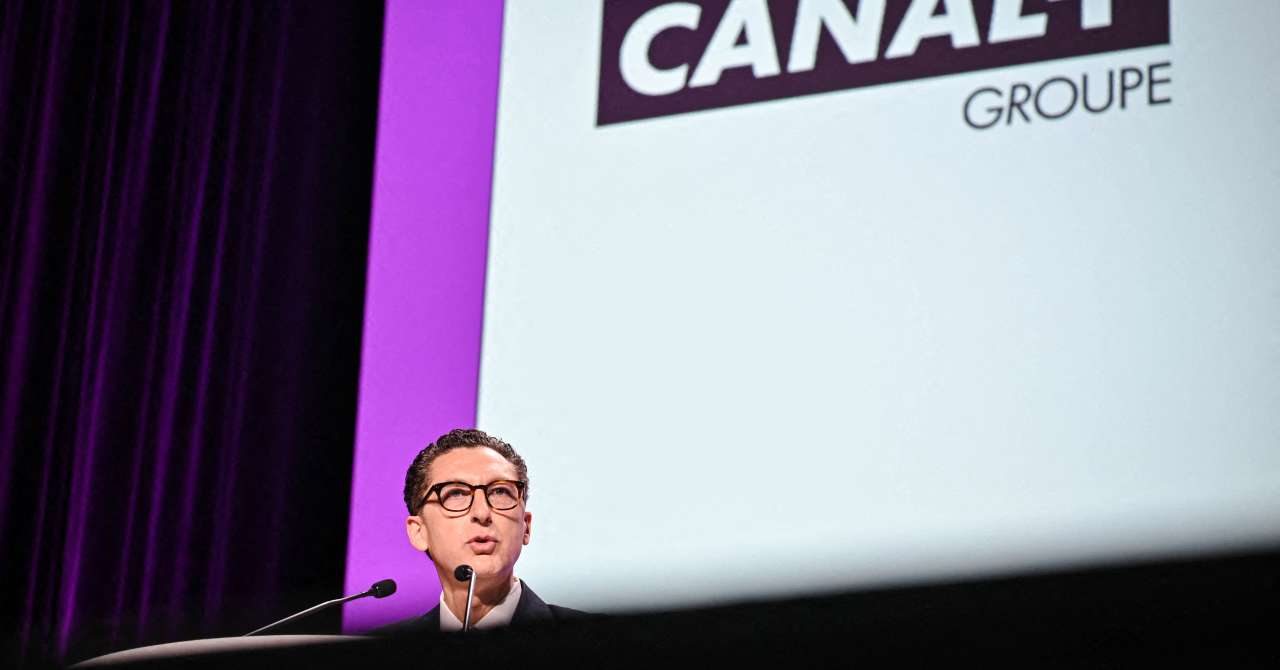
In the midst of the 79th edition of the Cannes Film Festival, the general director of Canal+ Maxime Saada announced that he no longer wished to work with the 600 professionals who signed the “Zapper Bolloré” column, published in Libération on May 11. At issue: the term “crypto-fascist” used against the group.
Is war declared? In any case, the sentence leaves no room for interpretation. “I no longer want Canal+ to work with the signatories of this forum. If some come to call Canal+ ‘crypto-fascist’, then I cannot agree to collaborate with them“, declared Maxime Saada, general director of the group, in comments reported by French Film. The response therefore targets the signatories of the text published on one of Release on May 11, on the eve of the opening of the festival, and which brought together 600 professionals, including Juliette Binoche, Adèle Haenel, Blanche Gardin, Swann Arlaud, Raymond Depardon and Arthur Harari. All denounced the influence judged “sprawling and ideological” by Vincent Bolloré on the French film industry.
This forum was obviously not born in a vacuum. It continued the shock wave caused, in April, by the crisis experienced by Editions Grasset, whose CEO Olivier Nora had been fired and then replaced by a Bolloré loyalist definitively taking over (ideological?) control of the publishing house. From books to cinema, cultural concern is spreading more and more widely today. The signatories of the tribune of Libé recalled that Canal+, of which Bolloré is the major shareholder, acquired 34% of the capital of UGC, France’s third largest cinema network, with the prospect of holding 100% by 2028. At the end of this operation, the billionaire would control the entire chain, from financing to theatrical exploitation including television broadcasting. It is precisely this vertical concentration that has worried the sector since the fall of 2025.
The group’s response has something of a self-fulfilling prophecy. The 600 signatories themselves diagnosed their vulnerability: “We depend today, to varying degrees, for our projects as much as our salaries, on the money of Vincent Bolloré.” In less than a week, the demonstration is made. Dependence, named by the authors of the text, becomes the very instrument of the sanction. And for the signatories as for Canal’s response, the choice of moment – Cannes, world showcase, at a time when several signatories are treading the Croisette – is powerfully symbolic.
There remains a gray area, and it is significant. Professional organizations have already requested clarification, with some lawyers citing a possible conflict with the legal investment obligations governed by the law. Canal+ has committed to investing 480 million euros in French cinema over the period 2025-2027: can a nominal boycott targeting 600 professionals in the sector fit within this conventional framework? The question is asked. And it promises to occupy the industry well beyond the palm.