
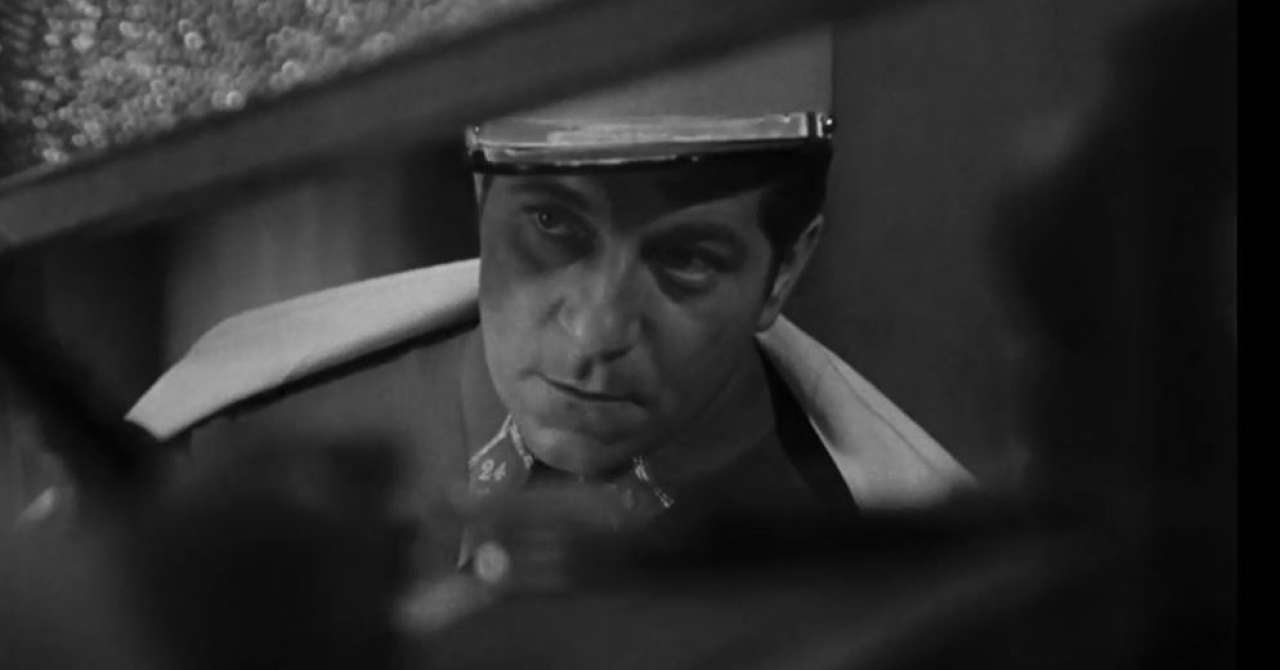
Jean Gabin, proof by 5
On November 15, 1976, the greatest sacred monster that French cinema has ever seen disappeared. Fifty years later, we have retained five roles.
Jean Gabin died just fifty years ago.
Where is it located in collective memory? Everywhere and (almost) nowhere. Or rather, everywhere, that is to say nowhere. The characteristic of sacred monsters is to cover everything, including themselves. If we asked a young actor to name one of his role models, it’s not certain that Gabin’s name would appear on his list. At most he would have in mind the black and white face of a man who he imagined had always been old. A sort of great-grandfather whose photos are lying around in photo albums that no one opens anymore. We are hardly exaggerating, but, in the age of platforms, we do not have too many (any) great illusions about the resurgence of heritage. Just the word stinks of death.
Now, if cinema is life, so is Jean Gabin. A life in cinema as long as an arm, cut in two by the Second World War. In this regard, you should rush to the doc available on Arte, Jean Gabin, war is not cinemaby Patrick Jeudy. The film recounts the military engagement of Jean Moncorgé Gabin. The actor, already a huge star, first went into exile in the United States in 1941 where he lived a romance with Marlène Dietrich. The then 37-year-old man could not bring himself to sit idly by while his country was fighting against the German ogre. From 1943, soldier Gabin was on the waters in North Africa, then joined Algiers before joining the Leclerc division and participating, as a tank commander, in the Liberation.
Want to read more?
Access all articles and reviews for €1.99/month
No obligation, cancellable at any time
Subscribe
Already subscribed? Log in


