
Cinema-citizen, day 2: between punches and hope
The sun burns valves, but in dark rooms, films blow hot and cold. Between workers’ rage and family tenderness.
The sun burns valves this Thursday, transforming the streets into a furnace. But in the air-conditioned rooms of the Ciné-Citoyen festival, films blow hot and cold. There are punch works and softer films, those that exp (l) dare the faults of the system and those who seek a little light in the darkness of everyday life.
This second day was strong. Very strong. It was planned. First there was the Masterclass of Vincent Lindon. The actor electrified a packed room for two and a half hours, engaging like never before and proving that few actors in his caliber are capable of such generosity. And then in the “Heritage” section we were able to see again War of Stéphane Brizé which still does not do a neighborhood. And from the start, ask the angry questions: does a boss have all the rights? Can a shareholder afford everything? Can he humiliate his employees, push them into the wall, crush them for profitability and money, break lives, energies or desires for simple profit? Can he shoot a business, kill a story, stories (those of employees who make it turn) to make more money? This is what the filmmaker wondered in this film which did not have a bit of a bit.
Class war version 2.0
War Starts in the premises of Perrin Industrie. This company does not exist, it was born from the imagination of Stéphane Brizé and his coscenarist, Olivier Gorce. But it would be enough to replace this name with Goodyear, Continental, Whirlpool, Sanofi and so many others to find themselves in the hard and precise form of the documentary. The film, always so relevant, therefore, always so crazy about rage, still as controlled, plunges us into the heart of this permanent war that capital and labor are engaged. War could basically be a radical, extreme definition of a citizen cinema. We were looking yesterday which could embody him, and this film he has convulsive energy. And the revolted soul.
Vincent Lindonmagnetic in the role of the union delegate Laurent Amédéo, embodies this working resistance with striking authenticity. The dialogue between “real” trade unionists and professional actors always creates a disturbing truth. “We are all on the same boat,” defends one of the leaders at one point. “If we are in the same boat, we are in the bottom berths with rats and shit and you are in those at the top,” replied his interlocutor.
This war in any case has no easy outcome, no happy ending and the film finds its balance and its power in its desire to emphasize the sequences and the complexity of the situations of struggle, to embody the whole human dimension. Before the session, Brizé en Visio, explained that his film was “the missing image”, the link between the way the media reports on these struggles and all that the info cannot show, the real, the human who leads to the conflict. It is black, bubbling, angry, but perhaps hope lies in the fight, in the fact of getting up against those who exploit the work of others. It is also posed to the movie front, which opens on a quote from Brecht: “Whoever fights can lose, but the one who does not fight has already lost. “ Are we taking up arms?
On the gentle side of the force
We suspect Frédéric Tellier and Philippe Lemoine for having done their programming job well: the same evening, the actress-director Hélène Médigue We just asked to lay their arms. To let go.
This Ciné Citizen festival has a good ability to get anger to tenderness, from explosion to appeasement. A place for Pierrot Third film in competition brought us in any case to a completely different field, that of disability and especially caregivers, these heroes of the daily life who live with or alongside people with disabilities.
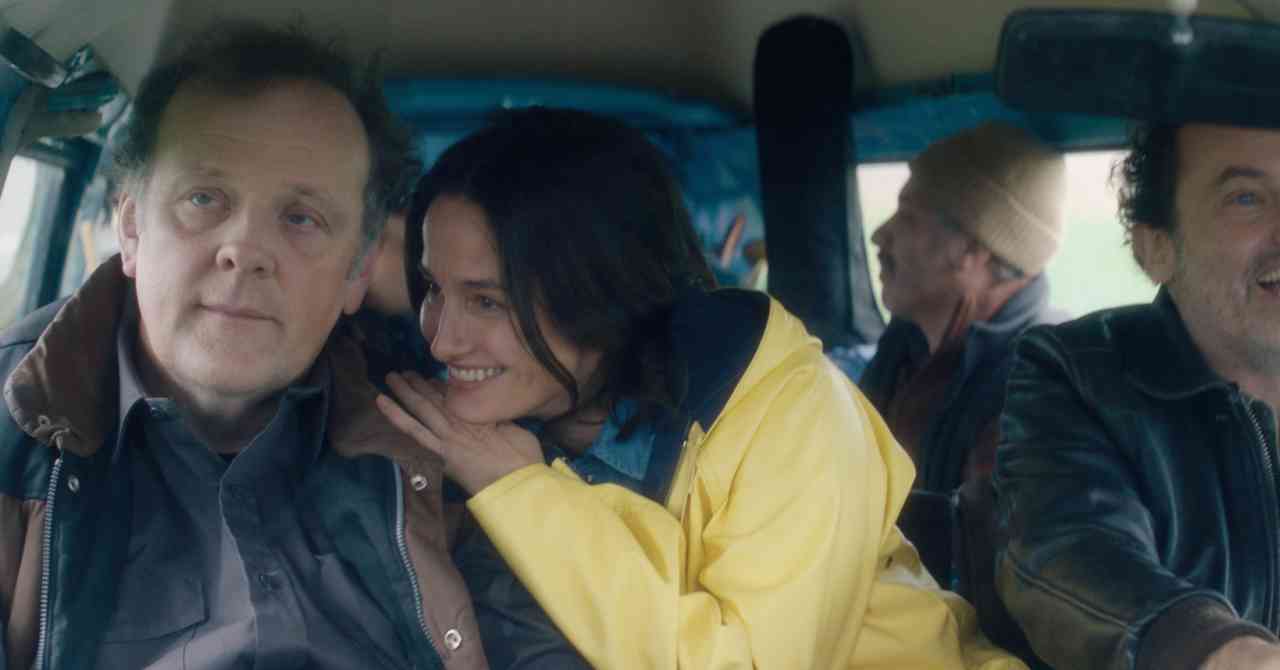
Inspired as much by his personal experience as by a humanist cinema -and in particular the meteorology of the feelings of Claude Sautet and his group scenes where the real circulates all the time -, Hélène Medigue tells the daily life of a young lawyer who recovers her autistic Pierrot brother, hitherto placed in a medical center. The arrival of the latter will upset Camille’s precarious balance, increase her mental load as a modern woman already on the wire. We will follow her hesitations, his crises, her favorites, her blows of blues and her errors – and if she often wears a yellow wax, it is a reference to the Sautet Rosalie …
Sometimes commitment, change, is only a matter of sensitivity. It is a note that turns upside down, an image that transforms, a word that makes you wax. And A place for Pierrot Look (and reaches) this. It is a just, felt and organic film (the word often returned to discussions after the screening and during interviews the next day). It is a film as soft as it is violent, as strong as it is fragile, and which is very much due to its full staging, as calculated as it is intertwined, supported by the solar and distraught interpretation of Marie Gillain (But why do we not see it more often in the cinema?!) And the powerful and discreet presence of Grégory Gadebois . No miserabilism here, no voyeurism either, but a light approach to a heavy subject and this way of filming the difference without making it a spectacle.
If A place for Pierrotis also successful, it is that it is above all a film on reconstruction. Not only that of Pierrot who learns to live outside the institution, but also that of Camille who rediscovering her brother is also recovered and learns to accept. But it is also, more broadly, a film that talks about the link between people who would be broken and that you have to learn to take up. At the end of the projection, the testimonies of the spectators told that we are very much to dream of a society which finally agrees to make a place for the Pierrot and the Camille which surround us. At war? Yes, but without weapons, neither hatred or violence.
In the Vannetaise heat, we begin to understand what a citizen cinema can be: a space where emotions are completed, where reflection is born from the diversity of looks carried on our time and our disturbed truths.