From The Piano Lesson to Top of the Lake: Jane Campion revisits her filmography
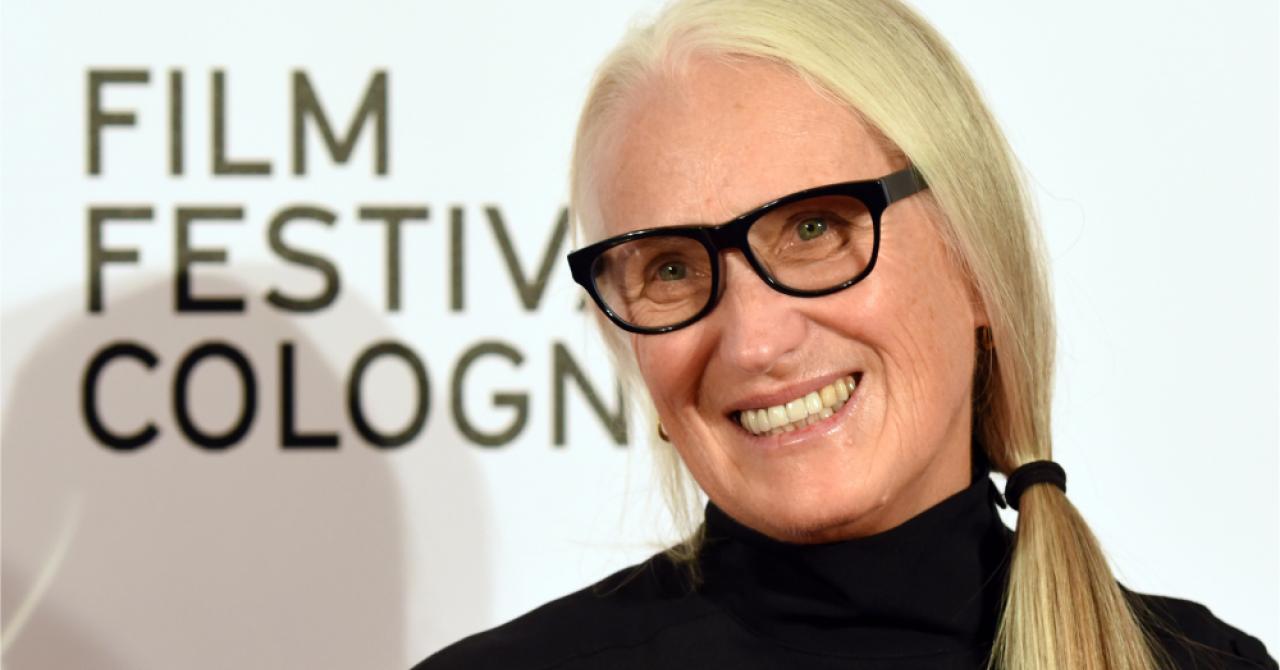
In Première, the director returns to the films that have marked her lyrical and sensual work. Interview.
France 5 devotes its evening to Jane Campion, and rebroadcasts her great classic Palme d’Or in Cannes, The piano lesson.
In 2017, the filmmaker looked back on her impressive filmography in Première magazine. A great interview that we invite you to discover.
Sweetie (1989)
Cannes, 1989. Already a darling of the Croisette since his first steps in the cinema (PeelPalme d’Or for short film in 1982), Jane Campion explodes for good with this crossed portrait of two dissimilar sisters (the fat one, the thin one), both consumed by neuroses.
“I’m having trouble rewatching some of my early films. Tissues, for example, my very first short, shot in super 8: it’s so rudimentary, I don’t even know if we can call it cinema (Laughs) But I saw Sweetie again recently, I was pleasantly surprised, it stands the test of time well. It’s a first film, that’s obvious. It’s raw, getting into it, not yet “polished”. A little clumsy but really honest. This is what makes it strong. There are these weird framings, this convoluted narration… I was still under the influence at the time. David Lynch? Of course, I was crazy about it! Also from Jim Jarmusch. And Bunuel, above all. He meant a lot to me, I learned from him the idea that the best way to shatter social conventions is to behave like a child. Sweetie talks about this. But I changed after this film. I’ve given up on irony. Because as you mature, you realize that everything can’t be a joke. We experience pain and compassion.“
An Angel at my table (1990)
Superb evocation (three hours on the clock in its original version) of the life of the New Zealand writer Janet Frame. The intellectual and sexual emancipation of a woman, the artist facing solitude, nature as a reflection of the soul… Filmed for television, a summary of Campion’s cinema.
“I had fallen in love with Janet Frame’s autobiographical books. Most of the film producers we met answered: “But who is going to be interested in the story of this plump redhead who panics when she gets her first period?” (Laughs) I was obsessed with this project, I wanted to do it by all means. We then turned to TV, which gave us the opportunity to take our time, allowed us to have down moments. An Angel at My Table ended up being released in theaters; at the time there was still this difference in prestige between the big and small screens which has since completely shattered. This is the first of my New Zealand works, before The Piano Lesson and Top of the Lake, and I tend to think that the latter are the most personal, the most intimate of all. Is this a self-portrait? Probably a little, yes. Janet’s journey really shook me. When I was younger, I too had this kind of hypersensitivity which leads to thinking that we are unsuitable. I’m 61 now, things are getting better, but that plump redhead still lies dormant within me.“
The Piano Lesson (1993)
The moment of the big shift. Michael Nyman’s heady soundtrack, Harvey Keitel’s Maori tattoos, dazzling artistic intuitions, then the international triumph, the Palme d’Or and the Oscars (for Holly Hunter, little Anna Paquin and the script by Campion). Instant classic.
“It was the first time I worked with American actors of this caliber. I was terrified at the idea of meeting Harvey Keitel, I imagined him as wild and dangerous as in Scorsese’s films. He turned out to be charming. He really wanted to make the film, he was almost begging me to hire him. It was the world turned upside down! I almost told him no, besides, I was afraid that his experience would inhibit me, afraid of making me eat raw on the set. He called me one evening to set the rules of the game: “For each scene, I will offer you my interpretation, my vision of things. But if you are not satisfied, I promise, I will work until you are.” I learned a lot about directing actors from him. Before, for me, that meant hiring actress friends and giving them orders from morning to night! (Laughs) Success? I didn’t really see it coming. A few weeks before being selected at Cannes, I showed the film to my friend Monty Montgomery (future producer of Portrait of a Lady) and he pouted: “It will do well in the Australian art house circuit but it will never go further.” We still laugh about it today.“
Portrait of a woman (1996)
In the middle of the 90s romantic wave (Reasons and feelingsby Ang Lee, Judeby Michael Winterbottom, The Time of Innocenceby Scorsese…), Jane Campion seems to be playing on velvet with this adaptation of Henry James. Instead of the expected triumph, it’s a commercial flop and a nasty critical backlash.
“After a success like The Piano Lesson, an unspoken rule of business says that you can afford to fail at the box office. I didn’t bother, I actually did three in a row! (Laughs) Portrait of a Lady, Holy Smoke and In the Cut. After a painful experience like this, you grieve for a few weeks, and then it passes. It was quite healthy, in the end. I understood that if cinema had to stop overnight, I would not make it an illness. I will find other means of expression. On the other hand, don’t count on me to explain to you why people rejected Portrait of a Lady. Too classic? Too sophisticated? No idea…Nicole is extraordinary in it. We first met in the early 80s, I gave her a role in my short film A Girl’s Own Story, but she declined, citing exams. She admitted to me recently that she had lied – I asked her to uglify herself and it scared her at the time. She was just starting out and dreamed of big glamorous roles.”
Holy Smoke (1999)
The busiest, most crazy (most failed?) film by its author. A zany new-age fable about female sexuality and spirituality, where Harvey Keitel wanders in the desert after borrowing Kate Winslet’s evening dress.
“We filmed in the Flinders, where Nicolas Roeg had filmed Walkabout (La Randonnée, 1971). A magnificent place, the spiritual heart of Australia in my opinion… It’s a film about an angry woman. A pure concentrate of feminine rage! I know that it divides, but if there is a category of spectators to whom it systematically pleases, it is young women. Holy Smoke deals with macho domination, the pain of being seen only as a sexual object. The world continues to be dominated by men, it’s a bitter observation and it’s the subject of the film. Harvey was the ideal partner for this adventure, he has an extremely feminine sensitivity and relationship with the world. I grew up in the 70s, at the height of the feminism boom, when women were not afraid to shout their dissatisfaction and refused to remove their hair. I formed myself intellectually at that time and I continue to carry this legacy. I’m less angry, I put a little water in my wine. I shave under my arms now… But I’m always on the lookout.“
In the cut (2003)
An identity crisis, a sexual awakening, snatches of poetry, the truth at the end of the road… On paper, it’s typical Jane Campion, almost caricature. In reality, however, it is the film of first times. First filming on US soil, first foray into a codified genre (the erotic thriller with a blonde female star). In the end, a transition rather than a revolution.
“Nicole (Kidman) contacted me, she absolutely wanted us to shoot together again. I told her about this book by Susanna Moore, which she read and loved. The film was built on her name, but she ultimately decided against it. She was going through a zone of turbulence, she was working too much, she was in the middle of a divorce from Tom Cruise. My credo is that actors should never be made to perform against their will. Meg Ryan arrived on the project, she needed a change of scenery, to prove that she could do something other than romantic comedies. She is perfect in the film. In the cut is a thriller, it’s true, but the genre didn’t interest me that much. My knowledge on the subject was limited to Polanski’s work, and that was more than enough for me – to the great dismay of one of my producers, who pushed me to draw on other films, to build a “referenced” world. But I wanted to confront the question of female sexuality, not do a sub-Basic Instinct.“
Bright Star (2009)
The life and loves of the poet John Keats, told like a spring blossom too quickly faded. After a few sabbatical years, the director’s big return to her romantic obsessions (and to the Cannes competition).
“After In the Cut, I wanted to take some time for myself. Given the film’s box office results, it wasn’t very complicated. The whole world wasn’t pounding on my door begging me to take my camera back! (Laughs) I wanted to see my daughter grow up, to be by her side during her adolescence. I took the opportunity to reflect on my cinema practice, rewatching lots of old films. I became obsessed with Bresson’s A Death Row Man Escaped. I shot a short film as a family, The Water Diary (collective film segment 8), which was an important step. It made me want to return to more simplicity. I started looking into Keats and his love affair with Fanny Brawne. One day, François Ivernel, from Pathé, who had been a producer on In the Cut, came for tea. I didn’t want to “pitch” anything to him. I didn’t particularly want to fight for this film. It’s like I’m hoping the desire comes from others rather than me. Then he asked me what I was working on and I got excited. I had to be convincing: Bright Star was born that day.“
Top of the Lake (2013)
While auteur cinema appears more and more sclerotic, complicated to finance, Jane Campion dives into the deep end of TV series and emerges with one of her masterpieces. A detective story pantheist, with friend Holly Hunter as feminist guru, alter ego with long white hair.
“In the mid-2000s, I discovered Deadwood. I was in shock: “Oh, is that what TV looks like today?” (Laughs). It really opened up new horizons. The success of Millenium also appealed to me. That such a powerfully feminist story could have such a global impact was unprecedented. It made me want to return to the detective genre, but in a less “abstract” way than at the time of In the cut. I had in mind the image of a young girl who disappears into a lake… When we met the people in charge of BBC 2, they told us: “Above all, let go. Be as extreme as you want.” Which is the opposite of what film producers say, who ask you all the time: “do you think people will like it?” I favored a format of six one-hour episodes, because in seasons of 12 or 13 episodes, there is always a soft underbelly, a moment when we realize that the writers are saving ammunition for the end. Some say Top of the Lake is a “series”, others say it’s a “mini-series”… It doesn’t matter. I see it as a novel. A filmed novel. This is the new frontier.”