Lanterns Season 1 Ending Explained
Chris Mundy and Damon Lindelof look back on the finale of the HBO Max series, explain their choices and what they could mean for the future.
With class and brilliance, Lanterns turned off the light on its season 1 this Monday on HBO Max in France.
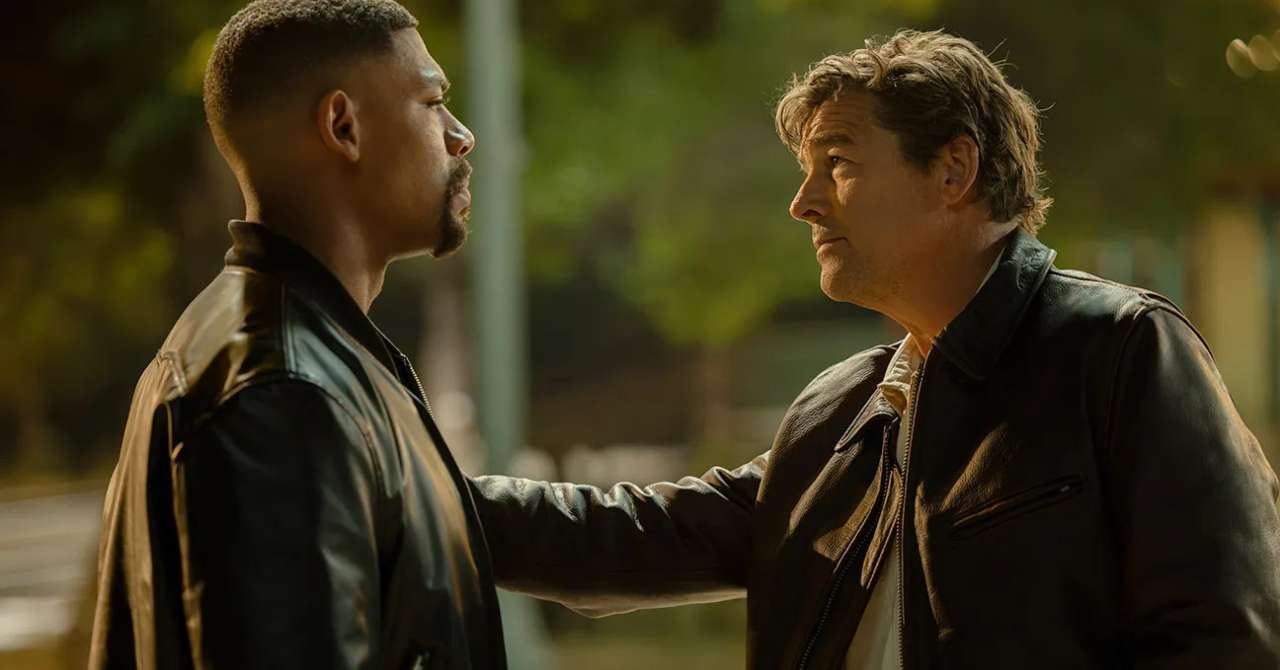
Like this entire season, a lot of finesse, intelligence and elegance to tell the story of John Stewart’s arc, his discovery of this universe and especially his relationship with Hal Jordan. A relationship which ultimately was the beating heart of the series, until the end.
Spoiler alert!
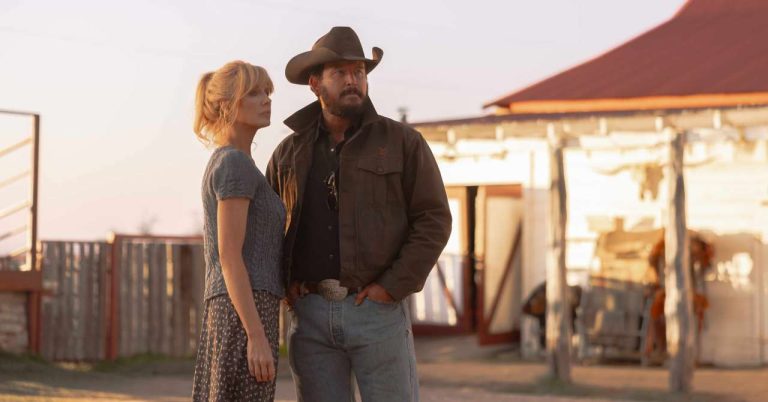
In this last episode, we discover that Noah, the son of Sheriff Kerry Kane, is actually a Manhunter. The last of his kind, or rather a Manhunter-human hybrid. And it was because Hal had discovered his secret that Kerry shot him in the head. She wanted to protect her son at all costs, even if it meant eliminating the man she loved. But Noah is not just a young man with extraordinary powers. He freed Sinestro himself and asked him to make a new lantern from the contaminated water of the planet they are on. He then finds himself faced with the true dilemma of his existence: should he accept the Manhunter nature that was programmed into him or continue to be the human being that his mother raised and loved? John Stewart then understands that he cannot simply condemn Noah for what he is. He takes the risk of letting him live, with his mother, understanding that his action was dictated by fear and by the love she has for her son. John eventually recovers Hal’s ring and the lantern Sinestro made. He now decides to take the protection of the Earth into his own hands, but according to his own rules. So much the worse for Guy Gardner. Too bad for the Guardians…
The series could have transformed this conclusion into a gigantic cosmic battle. She chooses exactly the opposite. No big fight, or almost. No deluge of digital effects. But a lot of emotion, characters who must accept their choices and a John Stewart who comes out of this story profoundly changed.
Why no big show in the finale?
The choice was perfectly made. Chris Mundy explains (via The Hollywood Reporter) that there never was a “version of the finale that was more action-oriented.” And this is due to the very construction of the season. For Damon Lindelof, episode 5, with the “Battle of Rushville”, was already the great piece of Lanterns bravery. The moment when the series could afford to let go of the horses. “If Lanterns had to be made into a two-hour movie, it would have required a huge third act spectacular, followed by a few minutes of closure. The series did exactly the opposite: it took the fallout from that battle and stretched it out over its final three episodes.” The creators therefore preferred to let the emotional consequences of this battle breathe rather than add a new layer of spectacle.
And Hal had to die. From the pilot, the creators knew that they did not want to play the fake death card:
“The end of the pilot, Hal Jordan died. And early on, we knew we didn’t want it to be a make-believe. To make the whole emotional progression feel real and earned and lived, we stuck to that idea. There wasn’t going to be a twist.”
The identity of the assassin
Chris Mundy had early on pegged Kerry as the person who would kill Hal. The real challenge then consisted of making his gesture understood without the character losing all the sympathy of the audience. Because Kerry loved Hal. She also loved her son. And it is precisely this paradox that interested the screenwriters: how to make a woman capable of killing the man she loves a character that we continue to understand despite everything? Damon Lindelof explains:
“We thought early on about not wanting her to seem deceitful. Was it possible that she loved Hal and killed him anyway? And, as three married men writing this show, we said: absolutely! 1,000%. The show then became less of a whodunit – who did it – and more of a why-done-it – why did she do that…”
How does the lantern made by Sinestro work?
This is one of the big ideas of the finale. The lantern that Sinestro makes for Noah is “a lantern of will, but it is imbued with fear,” specifies Chris Mundy in EW. “It wasn’t infused with fear on purpose, but since all the water on site is contaminated, it contains traces of it. So, yes, infused with fear…” This doesn’t make him a classic Yellow Lantern. The situation is much stranger, and above all much more interesting: John becomes an independent Green Lantern, with an unauthorized lantern and a new way of considering this fear which, until then, seemed incompatible with his role.
Can John Stewart really consider himself a Green Lantern?
The answer is deliberately complicated. Chris Mundy explains that given his distancing from the Guardians and the mythology surrounding this very particular lantern that comes into play, “it’s definitely a point that could be addressed if the series were to continue. We considered him to be the Green Lantern of Earth, but it is true that he is more or less blackmailing the Guardians at the moment. So it’s a situation which gives him power, while being precarious.” He is therefore both Green Lantern and outlaw in the eyes of his own institution.
How did Kerry get pregnant with Noah?
The answer is mixed: it was accidental. After using her technology to save Kerry, Zoe unexpectedly induced her pregnancy. In the minds of the screenwriters, she would then have tried to reproduce the phenomenon, without ever succeeding. “It kind of happened by accident. We talked about how we think Zoe tried to do this in different ways afterward, but never succeeded. It’s not shown on screen, but in our own writing room, we imagined that when she saw what happened and got Noah back, she was like, ‘I’m going to try to do the same thing.’ This is the kind of situation that is a unique flash of genius that is impossible to repeat; No matter how much she tried, she never succeeded. I think that given the Manhunters’ worldview, she must have seen this as an opportunity to begin repopulation.” Chris Mundy explains that Noah is thus a “hybrid, and we see him as the true test of nature versus nurture. What is programming and what is free will?”
What is the relationship between John Stewart and Guy Gardner in Superman: Man of Tomorrow?
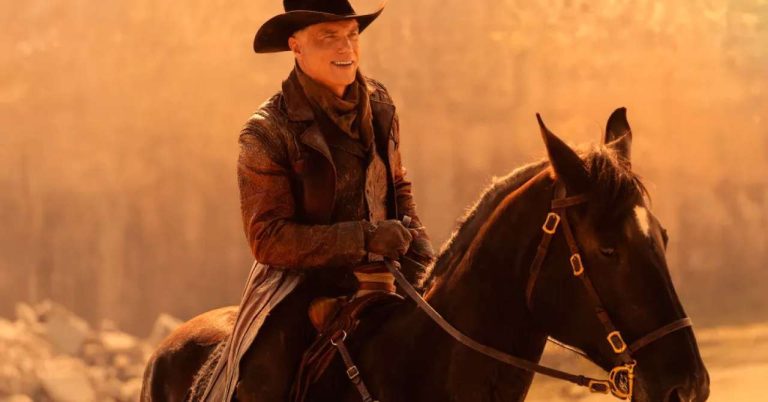
The lunar face-to-face between John Stewart and Guy Gardner in the last minutes of the series brings us to the next opus of the DC Universe. In Superman: Man of Tomorrow, the two men will meet again. Aaron Pierre and Nathan Fillion have already been announced in the casting. So how will they coexist in James Gunn’s film? Chris Mundy says he didn’t even think about it:
“No. We were really looking at it within the framework of our little eight-episode project. We wanted a very clear conclusion. We wanted John’s role to be well defined, and then hand it over to James and what he was going to do. Basically, we just wanted to bring closure to our story.”