Scarlet and Eternity: the new peak from the director of The Wolf Children (review)
The Japanese Mamoru Hosada signs a gem of an animated film, a personal and feminist rereading of Shakespeare’s Hamlet. To die for.
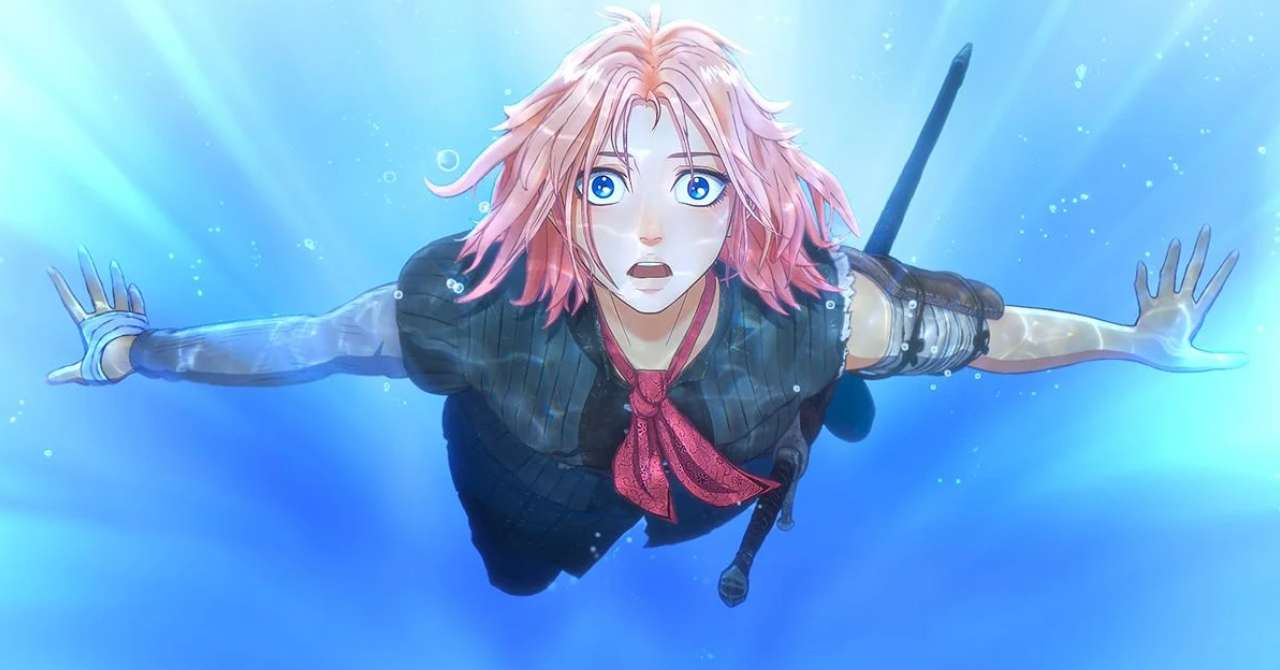
Shakespeare’s Hamlet is definitely popular. After Hamnet by Chloé Zhao, the gang’s exploration of the famous drama, here is Scarlet and the Eternity of one of the masters of Japanese animation, Mamoru Hosoda. Closer to the play from which he takes up the initial argument, Hosoda however replaces the figure of the young prince of Denmark with a princess. The latter will also seek to avenge the unjust death of her father.
A quest which takes him into a vast purgatory, a sort of valley of death where souls have two options: reaching the world of nothingness (total annihilation) or that of eternity (access to a paradise through a form of redemption). We could add a third path which would condemn the unfortunate to vegetate in this in-between. It remains to be seen what the young warrior will sacrifice to make those responsible pay for the family betrayal.
The feminization of the story allows the Japanese author to reverse the original plot to modify its course and conform it to his views. The humanist Hosoda here continues his trajectory marked by markers of modern animated cinema: The Crossing of Time (2006), The Wolf Children (2012) or more recently Belle (2021), to stick to stories guided by a heroine grappling with moral dilemmas. Stories each time forcing the young woman to leave the social sphere from which she comes.
In Hosoda, the hero’s test involves, in fact, the apprehension of another world adjacent to ours. This distancing redefines spatio-temporal boundaries and forces us to test our certainties. A reflection that is both philosophical and aesthetic. Because if from one film to another the dramatic bridges are visible (it is always a question of a supposedly purifying emancipation), the style specific to each opus allows another level of reading.
In this Scarlet, this involves the meeting of our heroine from the Middle Ages with Hijiri, a modern young man. The slinger Scarlet seems to come straight out of a Zelda-type video game, entirely guided by her actions. The wise Hijiru, on the contrary, a typical hero of a contemporary manga, seeks to temper the ardor of his partner and forces her to question what constitutes her as a “historical” being. Two conceptions of the world which we suspect will have to find common axes to triumph over an evil which gnaws at them both.
The Japanese’s previous film, Belle (2021), was a reflection on the dangers of virtual worlds where desires were not necessarily soluble with an a priori disappointing reality. Scarlet and Eternity goes further in this way of obliterating a multiple reality which only appears here in dreams, in the form of traces of a memory subjected to the intensity of memory. It is therefore no longer a question of correcting the course of things through magical subterfuges but of fully accepting any errors of the past in order to face the present.
In the Shakespearean drama The Ghost reveals to Hamlet the name of the murderer, treacherously fueling his thirst for revenge. Scarlett knows from the start where to direct her anger and will have to decode her father’s muffled plea alone before dying. Final warning before erasure. In this way, the finale has an insane narrative scope as it is enriched by all the human contradictions, reopens the scars of the characters, summons the ghosts that mark their paths, to offer, perhaps, this promise of serene eternity. Strong.
By Mamoru Hosoda. Duration: 1h52. Released March 11, 2026