
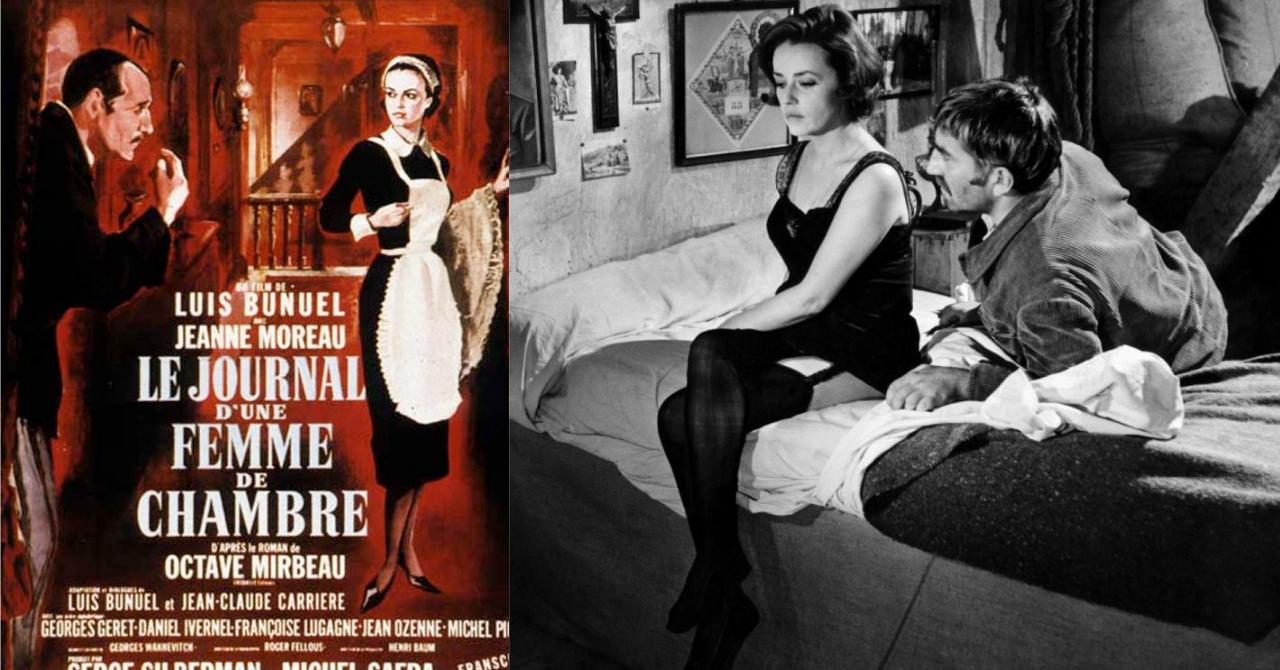
The Diary of a Maid on Arte: the revenge of Luis Buñuel
The Spanish director returned to film in France, 34 years after The Golden Age, for this drama starring Jeanne Moreau, Georges Géret and Michel Piccoli.
Arte rebroadcasts this Monday evening The Diary of a Maidalso visible in streaming for two weeks on the channel’s website. A look back at this great classic by Luis Buñuel released in 1964, a charge against the bourgeoisie but also France in the 1930s which had driven this visionary filmmaker into exile.
In 1964, with The Diary of a Maid it is the return of a major intellectual and filmmaker that French cinema is celebrating. Think, the Spanish filmmaker hadn’t filmed in France for 34 years and left rather angry.
The story between Buñuel and France had nevertheless started well. In 1925, it was as a young Spanish student that he came to find refuge in France. He started as an assistant director and very quickly became the traveling companion of André Breton, Max Ernst and their friends who were not yet called the surrealists.
In 1928, with his compatriot Salvador Dali, he wrote An Andalusian dog. The short film caused a sensation. The film shocks as much as it attracts. Two years later, he returned to the dreamlike-provocative model with The golden agealways sidekicked with his sidekick Dali. This time, Paris in the 1930s is no longer laughing at the anti-clerical collages that dot the film. Far-right activists demonstrate violently against the film. The right is calling for it to be banned. Police chief Jean Chiappe gives in to popular vindictiveness. The negative is entered. It was not until 1981 that the film was officially authorized.
When Luis Buñuel agreed in 1963 to adapt The Diary of a Maid by Octave Mirbeau, he took the opportunity to settle his score with this bourgeois France which forced him into exile before falling into Pétainism.
With his co-writer Jean-Claude Carrière, he shifts the action of the novel by thirty years in order to situate it in the ambivalent France of the 1930s. The portrait that Buñuel paints of spineless and mean-spirited France is the one he felt and it is ultimately in the character of the maid (whom Jeanne Moreau masterfully embodies) that he portrays himself.
The Parisian Célestine thus finds herself confronted with the cowardly husband who rapes for love (astonishing Michel Piccoli) as well as the terrifying Joseph, a fascist groom, who we can see becoming a militiaman (Georges Géret). The film ends with a far-right demonstration in the streets of Cherbourg with cries of “Long live Chiappe”, a reference to the man who banned The golden age.


