
The Last Refuge, a concentrate of the worst and best of Netflix (review)
Despite the performances of Greta Lee and Wagner Moura, the claustrophobic behind closed doors of Louis Leterrier rushes into the flaws of his scenario.
Netflix has found its summer hit. Most viewed film on the platform since its release on Friday August 7, The Last Refuge (The Last House in original version) ticks all the boxes of the successful streaming film. An intriguing pitch, with soft horror (we can see it with teenagers), two headliners (Greta Lee and Wagner Moura) identified by the general public: the perfect cocktail to liven up a summer evening with the family. But what is this sci-fi thriller directed by Frenchman Louis Leterrier really worth?
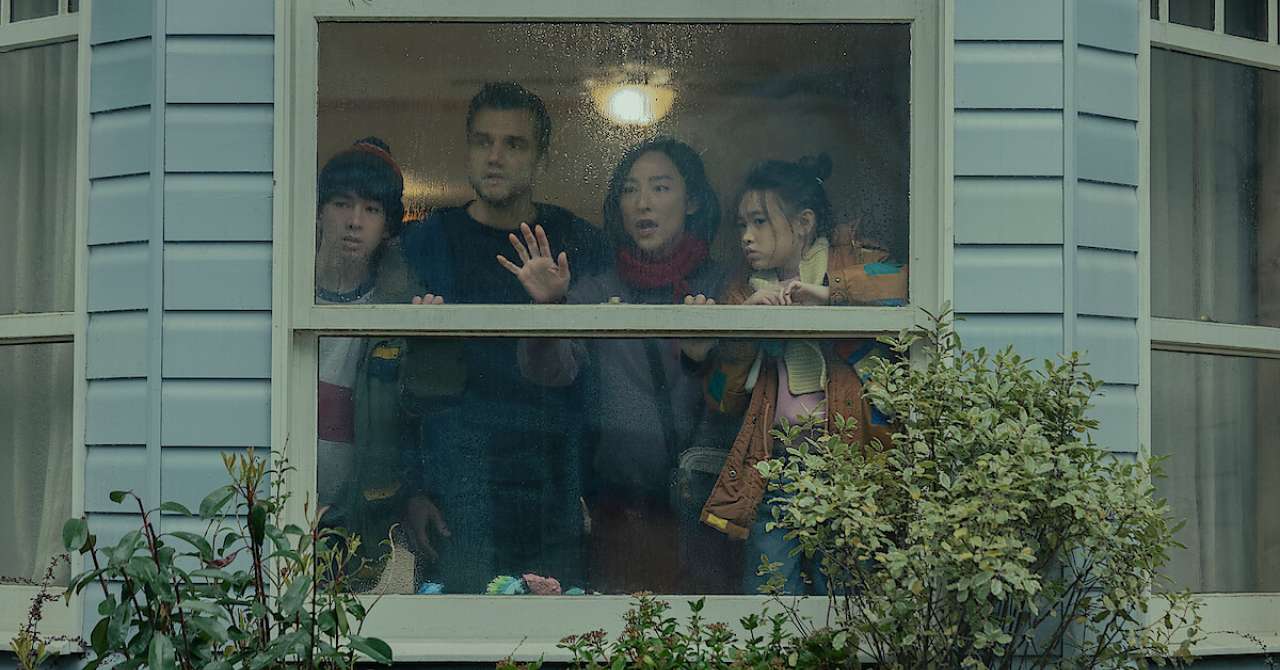
From the first scene, the foundations of the plot are laid. A typical American family is about to go out and buy a Christmas tree when a strange rain begins to fall, making it literally impossible to leave the house, whether through the doors or windows. They quickly realize that their neighbors are suffering the same fate and begin to organize themselves to face this new reality. But the situation drags on and becomes more and more worrying as supernatural phenomena occur outside.
Not a very subtle metaphor for confinement during the Covid-19 pandemic, The Last Refuge hardly shines for its originality. We are faced with a medley of the great science fiction successes of the 21st century, The Mist has War of the Worldspassing through Without a sound Or… Bird Boxa big hit from 2018 (already on Netflix) where Sandra Bullock wandered blindfolded in a post-apocalyptic world haunted by mysterious creatures.
With a slightly different story but a fairly similar formula, Leterrier’s film works quite well in its first part. Before the inconsistencies in the storyline start to become really glaring. Which can make the experience painful for the viewer, or downright funny, depending on our ability to rant about poorly written fiction after a good meal.
Why does the family accept such an unusual situation so “easily”? How do they have access to electricity for so long? You shouldn’t ask yourself too many questions, believe in the traps made by the father (unemployed engineer) to hunt from a distance, and don’t be surprised that the house next door has the antibiotics necessary to save one of the children. Nor that the latter are unrecognizable after the time jump which occurs during the film, due to a very poorly managed change of actors.
The Last Refuge reaches a peak of irony when, deprived of the internet and therefore of a streaming service, the home rediscovers the joys of physical media (as in The World After Us by Sam Esmail, already on the platform). Problem, the family DVD collection comes down to Annie And Air Force One. Two films to watch over and over for 5 years is hard… Shouldn’t you have subscribed to Netflix?
Greta Lee and Wagner Moura (awarded last year at Cannes for his remarkable performance in The Secret Agent) do their best, but cannot save this horrific fable with a generally confused ecological theme, especially the last act which sinks into survival clichés and shows us the monsters that we would have preferred not to see. The icing on the cake is that there’s even a completely free “six seven” moment to make the TikTok generation scream.
The Last Refuge synthesizes the worst and best of platform films, where cinema disappears on the altar of entertainment. As Under the Seine (Netflix again), the public finds it rubbish, but watches en masse. And if you missed passages because you were looking at your phone or got up three times to go to the bathroom or the kitchen, a summary will explain to you what little you had to understand just before the ending (Matt Damon wasn’t lying). Tudum!


