The things we say, the things we do on France 4: Emmanuel Mouret deciphers his cinema
With The Things We Say, The Things We Do, Emmanuel Mouret creates a virtuoso film, the most beautiful and accomplished of his career to date. But what makes him such a unique director in the landscape of French cinema? Decryption.
France 4 rebroadcasts this Tuesday evening The things we say, the things we dowhich will be available for free streaming the next day on France.TV. For the occasion, we are resharing this article devoted to the cinema of Emmanuel Mouret, initially published in First n°510 (with Alexandre Astier on the cover).
The weight of words
We discovered Emmanuel Mouret in 1999. Naked as a worm. Or almost. The young man, freshly graduated from Fémis, saw his graduation film released on the screens, carried by a title in the form of an injunction: So walk around naked! Mouret – front and back – played the clumsy but enterprising romantic, with a very articulate sense of dialogue. As if Tati met Rohmer. One thing leading to another, this very literary and contemporary cinema has asserted itself and developed. The games of love and chance continued unabated. The titles of the films testify to this: A Kiss Please, The Art of Loving, Another life, Caprice… He even recently paid Diderot, during a costume escapade (Mademoiselle de Joncquières in 2018, his biggest success to date).
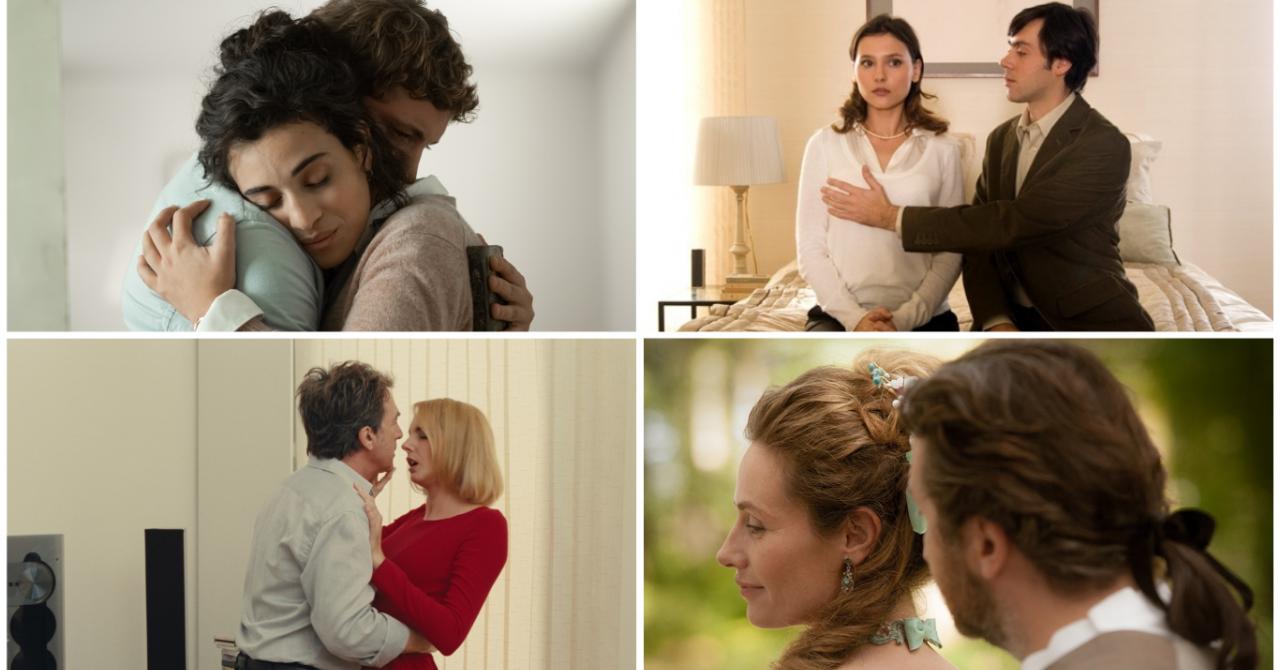
Here comes The things we say, the things we dohis tenth feature film, certainly his most ambitious. We talk (a lot), we meet (a lot), we love each other as we leave each other. The casting advances in pairs and plays absolute parity: Camélia Jordana/Niels Schneider, Émilie Dequenne/Vincent Macaigne… We talk a lot at Mouret, but it is not a talkative cinema:
“I’m surprised to see that in the cinema, people exchange ideas so little, whereas in life we spend our time doing so. This is something that I share with Éric Rohmer. For him, suspense is born precisely from words. His characters clearly express their feelings and are extremely committed. The spectator observes whether the promises are kept or not. The title of my film, The things we say, the things we doeven establishes it as a program. To the question: ‘What is a film?’ Raoul Walsh reportedly replied: ‘Action, action and action!’ But speech is action, it commits. A sentence can hurt or delight. Let us say quite stupidly: ‘I love you !‘ Or ‘I don’t love you anymore!‘, we generate movement. We learn in schools to be wary of dialogues in the name of a sovereign image. Cinema is watched. He can also be heard and listened to. Playing with words is both fun and abysmal. A philosopher said that ‘we are a fabric of stories‘. It’s a very beautiful idea. This fabric is constantly being made and unmade…“
Want to read more?
Access all articles and reviews for €1.99/month
No obligation, cancellable at any time
Subscribe
Already subscribed? Log in