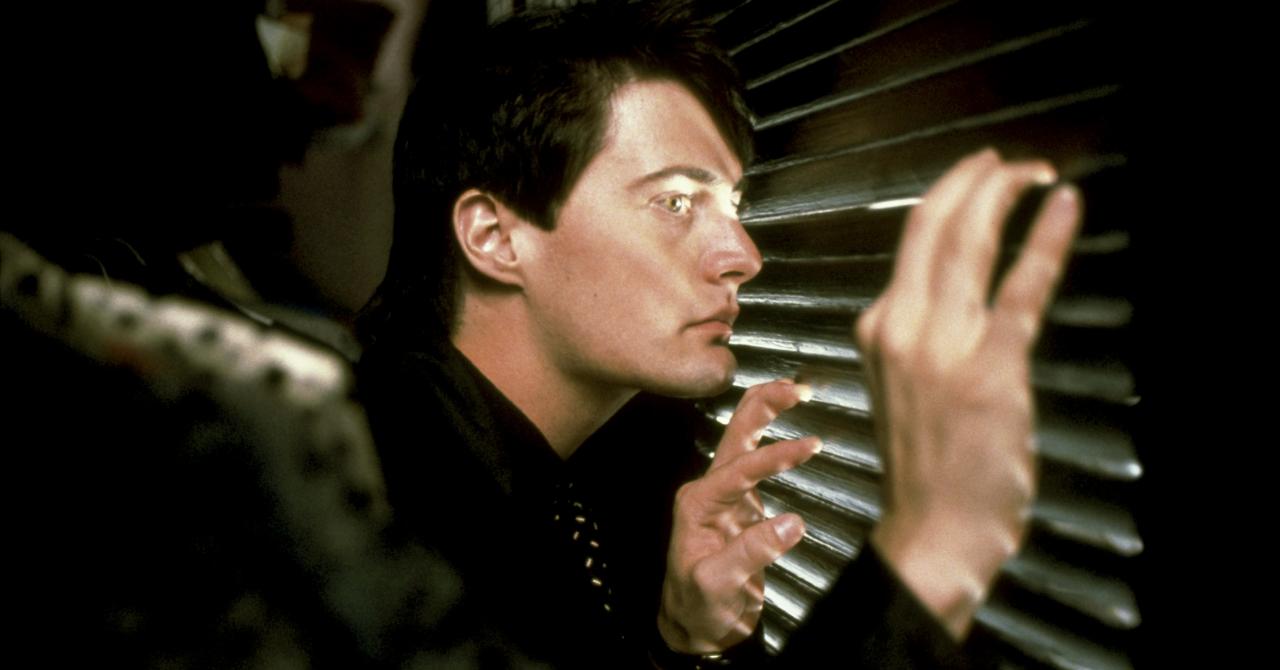
Blue Velvet on France 4: behind the scenes of David Lynch’s first masterpiece
Beyond beauty and evil, the writer Frédéric Ciriez immersed us in Lynch’s original interloping story. With his pen, like a scissor, he cut the blue velvet ribbon of this inaugural vision full of pain, sadomasochistic delirium mixed with black humor. A robin came by.
Blue Velvet is rebroadcast this Thursday evening on France 4, then will be available for free streaming the next day on France.TV. The writer Frédéric Ciriez analyzed this peak in the filmography of David Lynch, who died in January 2025, in this very beautiful text originally published in Premiere Classics.
1986. A film noir with the title of an American song 50s creates scandal with its representation of sadomasochistic violence: Blue Velvet, by a certain David Lynch. The man is known and enjoys an ambiguous notoriety, with a filmography oscillating between decadent experimental (Eraserhead1977) and the general public attempts, sometimes enjoying success (Elephant man1980) sometimes critical and commercial failure (Dune1984). How can we trust this funny director with the temperament of a visual artist who is disconcerting with his taste for the strange and his ability to work from within extremely coded genres, from fairground melodrama in period costumes to epic science fiction?
The scenario of Blue Velvetwhose primitive version dates back to the end of the 70s, is looking for buyers from Hollywood studios, who all refuse. What grips: the erotic violence and the apparent thinness of the narrative – a horrifying investigation into a criminal network led by a psychopath, against a backdrop of fascination with a club singer who is half femme fatale, half battered woman. Nothing very suitable for puritanical America ready to admire sublime and poisonous women on the big screen, but not to see them slapped while giggling with pleasure, blood at the corners of their lips, like in a vulgar giallo…
It is the Italian producer Dino de Laurentiis, son of a pasta industrialist married to the divine Silvana Magano, who will direct the film, in parallel with the production of a colossal thriller, Manhunterby Michael Mann, which came out the same year. For Lynch, the conditions are risky but interesting: a tight budget of six million dollars and the final cut…
Exactly what the director needs to give free rein to his creative genius by summoning all the ingredients of his future masterpieces – chaste heroes caught up in a putrid underworld, the sense of the unusual, the taste for the deformed, the baroque sets, the dreamlike curtains, the sumptuous photography of Frederick Elmes and the disturbing music of the master Angelo Badalamenti.
Blue Velvet marks a turning point in the career of Lynch, who was nominated for an Oscar for best director in 1987. It is certainly the formal matrix of his most beautiful nightmares. The film hasn’t aged a bit and still exudes the same hypnotic force. Below the sexual charge which hit the headlines so much when it was released, generating a mixed critical reception in the United States, flows for the first time in such an obvious way the dark matter of his cinema: the call of Evil, this obscure object of desire, lurking behind the apparent order of an America of its own, happy and immutable like a suburban paradise under the reign of president-actor Ronald Reagan (…)
Want to read more?
Access all articles and reviews for €1.99/month
No obligation, cancellable at any time
Subscribe
Already subscribed? Log in