From COLCOA to TAFFF: 30 years of French cinema in Hollywood
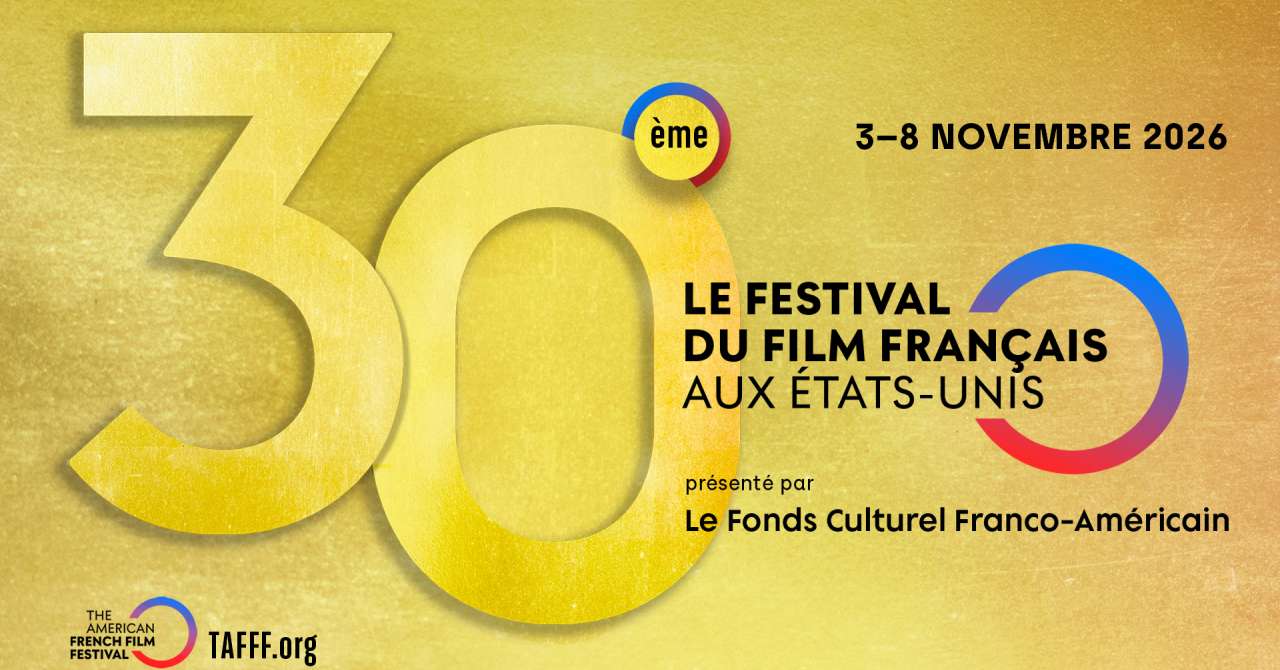
Created in 1997 in Los Angeles, The American French Film Festival (TAFFF) celebrates its 30th edition from November 3 to 8. Co-founded by Sacem and three major American institutions, the festival has gradually established itself as a major event for French cinema across the Atlantic, to the point of becoming a privileged stop in the race for the Oscars. Back to its history.
In 1997, a festival entirely dedicated to French cinema was created in the heart of Hollywood. Its name: COLCOA, for City of Light, City of Angelsin reference to Paris and Los Angeles. At the origin of the project, the Franco-American Cultural Fund, founded a year earlier by four institutions: the Directors Guild of America (DGA), the Motion Picture Association (MPA), the Writers Guild of America West (WGAW) and Sacem. Their objective is to bring together the film industries of the two countries and to offer French films better visibility on the American market.
The festival took place on Sunset Boulevard, in the halls of the Directors Guild of America, where it is still held today. Its first editions offer a selection of French films intended for film buffs and Hollywood professionals. But from the mid-2000s, COLCOA began to think bigger.
Under the leadership of François Truffart, who joined the organization in 2004, the festival seeks to further support the distribution of French films in the United States. A difficult market to penetrate, where foreign productions often have limited visibility. In 2005, COLCOA introduced a competition and began rewarding the films presented. In 2008, an educational program was created to introduce young Americans to French cinema. Nearly 3,000 Los Angeles high school students now benefit from free screenings each year, sometimes accompanied by meetings with the film crews.
The festival is also opening up to other formats. In 2015, series and TV films joined the competition, while in 2018, COLCOA Industry was born. This program of meetings and workshops, organized with the American unions of directors and screenwriters, allows French professionals to establish contacts with their Hollywood counterparts.
In 2022, after twenty-five editions, COLCOA changes its name to become The American French Film Festival, more simply called TAFFF. Behind this new identity, the desire to make the festival more easily identifiable to the international public, while continuing its initial mission.
A springboard to the Oscars?
One of the most important changes in its history comes in 2019. Until then organized in the spring, the festival moves to the fall, in the middle of the American awards season. A choice far from trivial: during this period, films began to campaign for the Golden Globes and the Oscars.
Because TAFFF is not only aimed at the general public. Its audience includes directors, producers, distributors, critics and members of the Oscar Academy. For French films, these screenings therefore represent an opportunity to get noticed in Hollywood, sometimes several months before their American release.
Several works that passed through the festival then had a remarkable run at the Oscars. In 2019, Les Miserables by Ladj Ly won the prize for best first film before being nominated for the Oscar for best international film. More recently, Emilia Pérez by Jacques Audiard opens the 2024 edition, in the presence of his team. A few months later, the film landed thirteen Oscar nominations and left with two statuettes, including that of best supporting actress for Zoe Saldaña.
This year, five films presented at TAFFF were chosen to represent their country at the Oscar for best international film in 2027. Among them, Minotaur of Andreï Zvyagintsev, candidate of France, but also The Braves by Lukas Dhont for Belgium, Fjord by Cristian Mungiu for Romania, Suddenly by Ryūsuke Hamaguchi for Japan and Strawberries by Laïla Marrakchi for Morocco. A presence which confirms the festival’s interest in films engaged in the race for American awards.
If going to TAFFF obviously does not guarantee a nomination, the festival has found its place in the Hollywood calendar and offers French films an additional opportunity to make themselves known to Academy voters.
Sacem, present since the beginning
In this Franco-American history, Sacem occupies a special place. Co-founder of the Franco-American Cultural Fund, she has participated in the organization of the festival since its creation and takes advantage of this event to defend the place of music in cinema.
His commitment includes supporting French composers in Hollywood. In 2025, four artists made the trip with his support: Delphine Malaussena, Guillaume Roussel, Chloé Thévenin and Robin Coudert, alias Rob. The opportunity for them to present their work, but also to meet professionals from the American industry.
For this anniversary edition, Sacem is supporting two new composers: Dom La Nena and Valentin Hadjadj. The first is notably at the origin of the music of the film The golden triangle by Hélène Rosselet-Ruiz, while the second collaborated with Lukas Dhont on Girl And Close and his new film The brave. Two courses which illustrate the diversity of French music in the image, a field which also finds at TAFFF an opportunity to make itself known across the Atlantic.
A 30th anniversary edition
From November 3 to 8, 2026, the TAFFF celebrates its 30th edition with a program of 60 works: 31 feature-length fiction films, 11 series, four documentaries and 14 short films. A program which brings together films already presented in major international festivals, but also others which have not yet been released in France.
For this anniversary edition, the festival continues its work of discovering and promoting French cinema to the American public. Beyond the screenings, these six days are also an opportunity to bring together directors, actors, producers and distributors around meetings and professional exchanges.
Thirty editions after its debut, TAFFF has established itself as the largest festival in the world dedicated to French cinema and television. Since 1997, more than 1,200 works have been presented there. Although its name and programming have evolved, its objective remains the same: to introduce French creation to Hollywood and facilitate meetings between professionals from the two countries.