
Jumpers: a Pixar with Tex Avery sauce (review)
Carried by unbridled and completely cartoon energy, this animated film moves forward with a freedom that makes it joyfully unpredictable
The film opens with a heartbreaking prologue. A soft and suspended vignette, where we discover Mabel, a rebellious child in love with nature who will grow up under the tender gaze of her grandmother on the edge of a pond. Time passes there like a breath; the light slides on the water; and the animation, sublime, adopts the matte softness of a pastel. For a few minutes, Pixar rediscovers the emotional purity, grace and power of its great classics (and vintage Disney): just for this opening (which is very reminiscent of that of Up), the film deserves your attention.
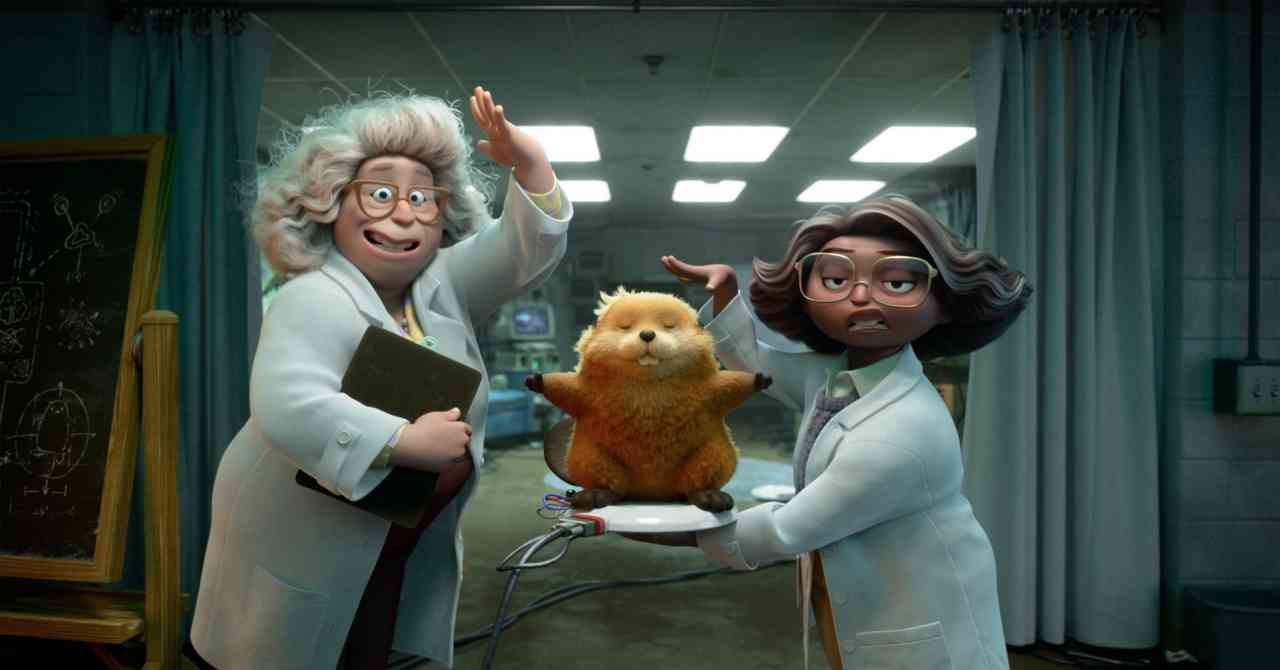
After, Jumpers will take a different direction. Less elegiac and… more zany. The story – that of a young woman thrown into the body of a beaver, in the heart of a forest threatened by an urban project – navigates with ease between assumed influences. There is a part ofAvatar in this experience which consists of slipping into a body that is not one’s own – except that here it is not a question of na’vis, but of beavers. We also think of Pompoko (Takahata’s masterpiece) in the joyful and desperate revolt of the coypu against humans; and even a little Vice versawhen the film takes us into the heads of the animals. This improbable mixture holds together strangely thanks to the energy that Pixar injects into each scene. This energy, unbridled, completely cartoonish, recalls the best period of DreamWorks, the one where animation seemed to be able to explode in all directions without ever losing its guiding line. Jumpers takes obvious pleasure in playing with rhythm, in jumping from one idea to another, in multiplying breaks in tone without ever apologizing. The film moves forward with the vitality of a crazy animal that has finally found its clearing: free and totally unpredictable.
The studio thus relieves itself (temporarily?) of its recent obsession with introspection (Elio, Elementals), for the benefit of a more direct and more playful cinema. Consequence: we feel an almost physical pleasure in the staging, a desire to push the humor sliders very far, even when the plot touches on darker themes: otherness, loss, the relationship with the living or the tension between progress and preservation. This is also the reserve: by dint of running fast, by dint of multiplying crazy ideas (a shark which jumps from the sea onto cars and begins to “fly”, beavers which put on a human mask like Mission Impossible…) Jumpers sometimes leaves certain issues on the sidelines that would have deserved to be explored. And his conclusion, too clear, too optimistic, seems to want to reassure a little too quickly: we would like it to be more ambiguous. But that doesn’t dampen the overall momentum.
Basically, Jumpers is a Pixar that breathes and dares to have fun. A Pixar closer to Tex Avery than the Disney classics (despite its almost misleading prologue). It’s a film that leaps, sometimes stumbles, but always recovers (with humor).
By Daniel Chong. Duration: 1h45. Released March 4, 2026