
Les Évaporés: “A societal series that breaks the codes of crime fiction”
Every year, thousands of French people choose to disappear. It is this phenomenon, as fascinating as it is worrying, that the new France.tv series describes, following a team of volunteers following in the footsteps of those who have decided to step aside. Producer Louis Grangé tells us. Interview.
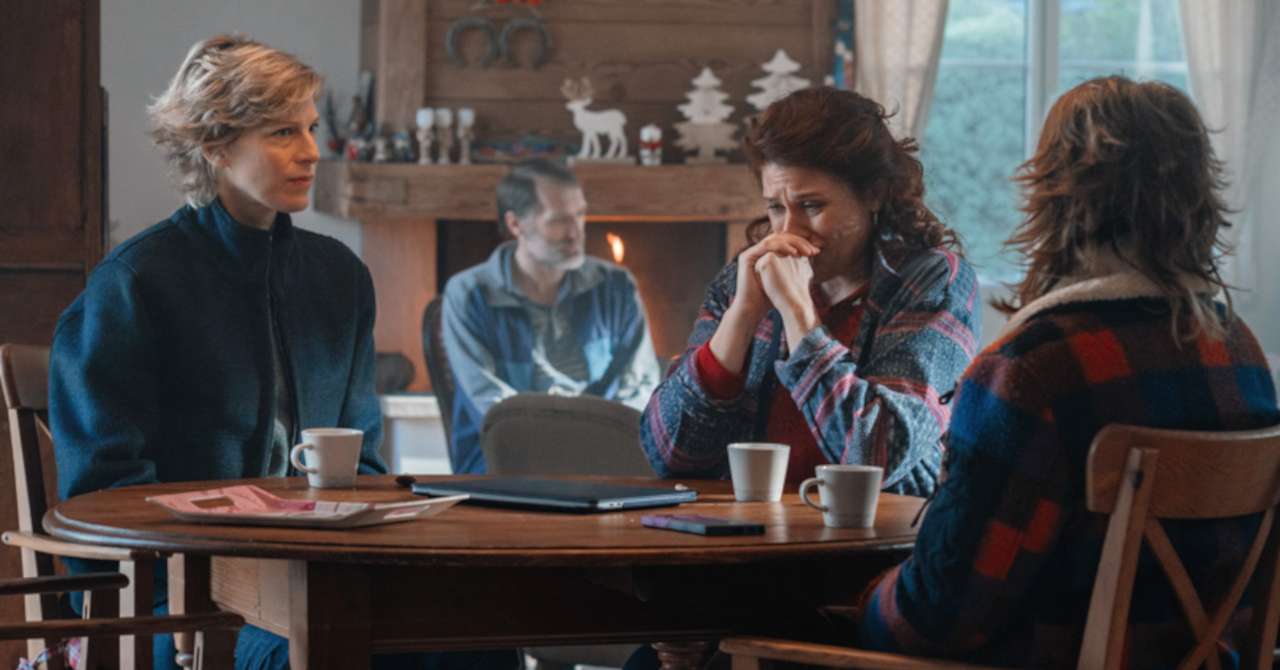
What if, behind each disappearance, there was not necessarily a victim, but a person who simply decided not to be found anymore? With Les Évaporés, producer Louis Grangé and his directors take on a phenomenon that is as real as it is little-known to shake up the codes of crime fiction. Here, there is no murderer to unmask or crime scene to analyze: investigators seek to understand why a person decided to leave everything behind, by tracing the thread of family secrets, wounds and unsaid things. An exciting new series from France Télévision, which follows a team of volunteers set out in the footsteps of those who chose to disappear.
To be discovered this Thursday, August 27 online on france.tv, before its broadcast on France 2 (September 9).
Louis Grangé deciphers for us this unique series, at the crossroads of thriller and societal story. Interview.
FIRST: What gave you the idea to explore this concept of “voluntary disappearances”?
LOUIS GRANGÉ: Less than two years ago, I came across a series of articles in Les Jours which dealt with this subject. It’s a very real phenomenon in France: between 5,000 and 10,000 people disappear voluntarily every year! It’s not about crime, kidnapping or even disturbing disappearances. We’re talking about adults who, for various reasons, one day choose to give up everything. I was very surprised by this figure. Curious also to understand who these people are who suddenly leave. Where are they going? What are they doing? Are they coming back or not? I read a whole bunch of testimonies, stories of people who left before coming back, of loved ones who never knew the truth… In short, a very interesting breeding ground for an author.
It’s not so much a crime series, actually…
It is first of all a very societal subject, but which at the same time turns into an investigation. Not a police investigation, because there is no crime scene. So it’s a way of renewing the genre and breaking the codes of the classic thriller, by offering each episode a different disappearance, with a looped story that explains why and how. And the best thing is that it is volunteers who get involved in these matters. Because the police no longer have the right to deal with it. It’s perfect for a series!
You made Les Invisibles in 2021, which was already taking a step aside…
There is really a continuity between the two, since each time we start from a very concrete social subject that is rarely treated in fiction. In The Invisibles, we talked about these anonymous people who ended up in a common grave. There, there is a big difference: it is not the same mechanics because there are no police officers in Les Évaporés. So there was a whole thriller structure to reinvent.
How do you construct a thriller when the “disappeared” are no longer necessarily victims?
That’s the whole question! Humans must take precedence over technical things that we usually see in detective series, like fingerprints or DNA. There, our volunteers from the GRDV (Research Group on Voluntary Disappearances) investigate family secrets that could explain a desire to fly into nature. We work on emotional chords, starting with loved ones who are very surprised by the sudden departure of a person they thought they knew very well. We are not looking for a culprit, we are not looking for a suspect, we are looking for reasons which motivated this person to leave and therefore we are building on things that are left unsaid. More psychological than criminal motives.
Is there a societal reflection behind the thriller, on the right to disappear?
Of course. We have documented a lot about the reasons why we give up everything. There are many different reasons, with very strong testimonies. Sometimes, these are questions of identity, mental load, pressure from society… There are a lot of reasons, spectacular or intimate, which can push someone to try to disappear. A little thing can turn your life upside down, but leaving everything behind is infinitely difficult. Because ultimately, even if it is the usual term, these disappearances are never really “voluntary”. These are people who had no choice. Who have not managed to overcome their anxieties. The more appropriate term “evaporated” comes from Japan, where the phenomenon is even larger, since there are almost 100,000 people per year who disappear overnight.
Is voluntary disappearance rarely a deliberate choice?
We actually wanted to break this universal fantasy, increasingly prevalent in a society where the pressure is increasingly strong: that of giving up everything. “Fed up! I’m leaving everything behind and starting from scratch.” It really is pure fantasy! In the series, we show that these are very powerful life stories that push us to disappear. Quite dramatic and emotionally charged things. We never disappear out of joy. We mixed up this little fantasy.
Does the fundamental right to disappear really exist in French law?
Yes, absolutely. Since 2013, it is no longer possible to submit a request for tracing in the interests of families (RIF), because this administrative procedure has been officially abolished in France. Before, relatives could go to the police to ask for an investigation to be opened in order to find the person. Today, if you are an adult and in full possession of your intellectual abilities, you have the right to disappear. And the authorities won’t be looking for you. In the eyes of the law, an adult does what they want. And so, if she wants to leave leaving a simple post-it on the fridge, the police won’t come looking for her!
Does the GRDV also exist?
No, not the GRDV precisely, but we took inspiration from several associations which do this work, which take care of these matters. We decided to invent our own association, because we start from various fictitious cases. And we imagined these heroes who represent the approximately 600 volunteers who work across France in reality. They investigate when they can. These are volunteers who have a real job on the side.
The series also talks about families “left behind”: was that the emotional heart from the writing?
What interested us most was less those who left than those who stayed. It’s very painful, a disappearance, for people. Unlike death, it does not allow mourning! There is no responsible person to designate and loved ones are sometimes left hanging on questions that will never be answered. You can imagine how difficult that can be! We are closer to these people in the series, who come to see the GRDV as a last hope to provide a response to this absence.
How did you arrive at the format: a missing person in each episode?
I didn’t want to make a mini-series on a single case. I found it too reductive compared to the phenomenon we are describing. There are as many life stories as there are voluntary disappearances and there are thousands of them per year! It was necessary to do one completed case per episode to treat various characters and cover as many cases as possible.
Why did you choose to place the action on the Nantes side?
Because it’s a city very little represented in French fiction, curiously. We wanted to film there and France Télévisions followed us. It’s a region which also has many advantages in terms of settings, since there are the banks of the Loire, marinas, a huge urban area… And as we had to move to follow these disappearances, we needed a whole range of diverse settings.
The end of the season clearly opens towards a season 2… Where are you in the sequel?
From the start, we wrote Les Évaporés with a season 2 in mind. This was obvious throughout the writing and it shows when we reach the end of season 1. We have already had the green light from France TV to write this season 2 and we are currently hard at work. Which does not mean that it will come to fruition. We don’t have a filming date yet. We are waiting for the hearings. But the chain is quite confident and we know that we still have many cases to explore. Especially since it’s a series that reaches a wide audience: anyone could one day be affected by a voluntary disappearance. It happens more often than you think!


