Venice 2026: Wild Horse Nine, succulent black comedy by Martin McDonagh (review)
John Malkovich and Sam Rockwell play two CIA agents on the prowl on Easter Island in this new, funny and disenchanted fable, from the director of 3 Billboards and Bons Baisers de Bruges.
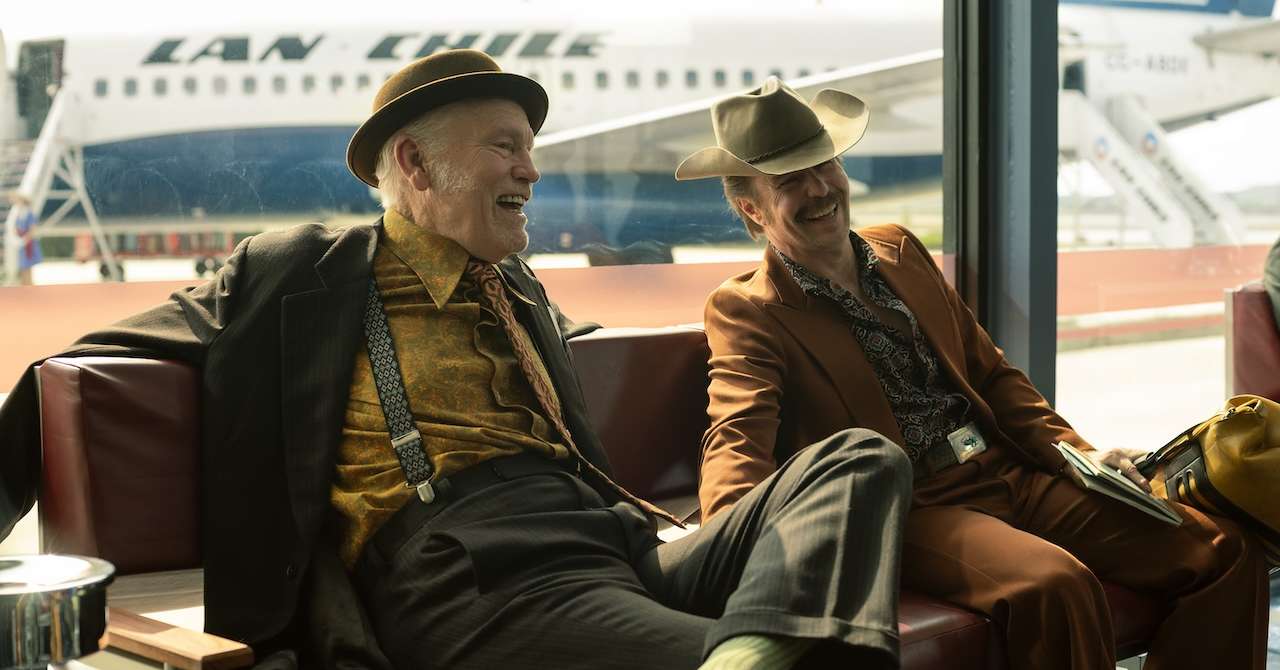
Two men on an island. Guns, despair and author’s words. After five films, Martin McDonagh’s cinema territory begins to be well marked. The trailer for Wild Horse Nine also made people fear repetition, by teasing the adventures of a tandem of American spies (John Malkovich and Sam Rockwell) bickering on Easter Island, guns in their holsters and replicas that kill in their mouths, as in a mix between the duo of hitmen from Good Kisses from Bruges and that of the angry friends of Banshees of Inisherin.
This new film, in fact, will not reconcile with McDonagh those who are allergic to his theatrical style, his very written dialogues, his taste for slightly over the top. The others, those who on the contrary appreciate it, this theater of the absurd sprinkled with neo-noir thrills and political commentary, somewhere between Pinter and the Coens, those, therefore, can start licking their lips.
To them, the film’s argument will no doubt seem irresistible: Wild Horse Nine paints the portrait of Chris (John Malkovich, in a comeback to the forefront that should take him to the next Oscar ceremony), a CIA agent who plots in 1973 Chile, working with his colleagues to bring down the newly elected socialist president Salvador Allende, the better to establish Pinochet’s military dictatorship.
Sick and dying, Chris decides to take a few days off and goes to visit Easter Island with his old man. partner in crime McDonagh loyalist Lee (Sam Rockwell). Lee must be extra vigilant: not only does Chris seem to be losing his mind a little, but he has taken it into his head to write his memoirs, which is not very corporate when you work for an intelligence agency and have dabbled in a whole bunch of political conspiracies, from the assassination of Kennedy to that of Lumumba. But Chris doesn’t care: in the evening of his life, he loves recounting his feats of arms and his top secret operations to everyone who crosses his path, including two leftist students who will spice up the barbouzes’ stay.
In The Banshees of Inisherinthe quarrel between the two old friends served, among other things, as a metaphor for the civil war which tore Ireland apart in the 1920s. What is McDonagh metaphorizing here? The agony of America, the end of its innocence (symbolized by a fabulous flash appearance by Tom Waits, like a postcard sent from the distant country of John Ford), the fascist cancer which has been eating away at it for a long time, and which today would have reached its terminal phase – as such, the film works as much as a historical reflection on the disenchantment specific to the seventies as a commentary on the contemporary United States, in full neo-reaction fever.
We sometimes think here of the brilliant The Hit by Stephen Frears (a great “tourist” gangster film, which McDonagh inevitably drank) including Wild Horse Nine would be a sort of less metaphysical, more overtly political descendant. A particularly dark and desperate descendant too, behind the coolness of the bell-bottom thriller and the punchlines chiseled. Proof that if we thought we had toured the little world of Martin McDonagh, he has not finished adding new nuances. Black, mainly.
Wild Horse Nineby Martin McDonagh, with John Malkovich, Sam Rockwell, Steve Buscemi… In theaters November 4.