Le Sauvage on France 5: three things to know about the film with Catherine Deneuve and Yves Montand
The two stars are stuck on a desert island, in front of Jean-Paul Rappeneau’s camera, in this adventure comedy released in 1975.
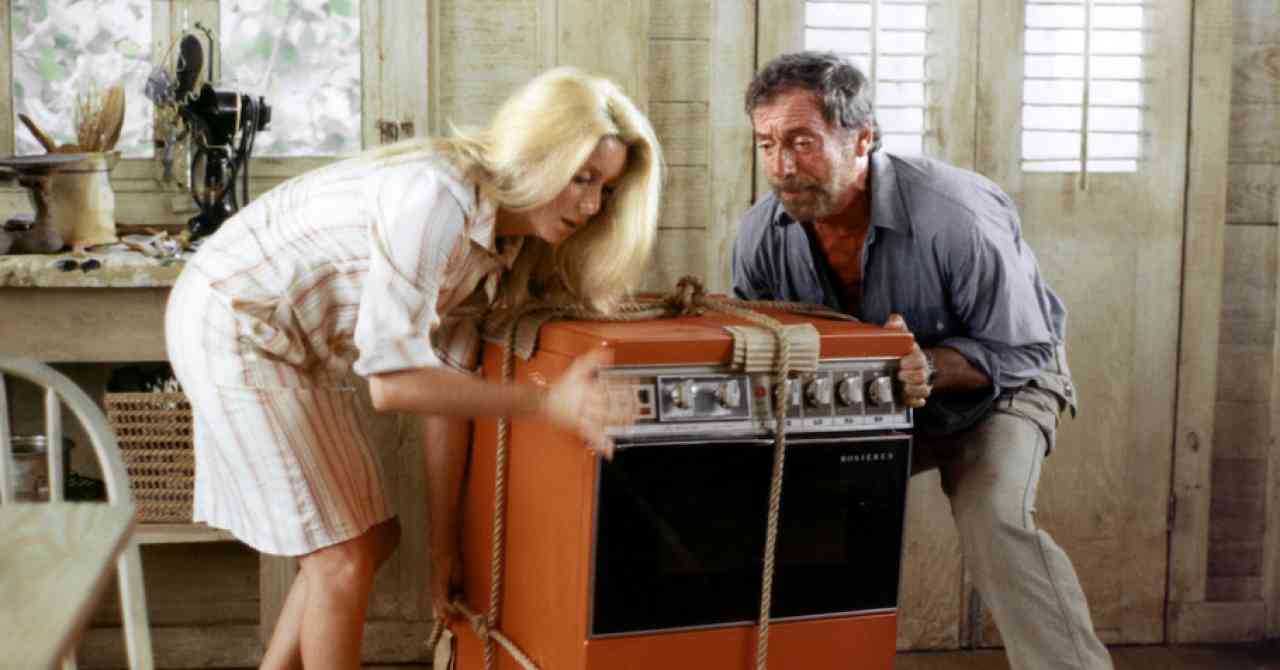
An explosive and unique duo (Deneuve and Montand), a frenzied rhythm, an exotic setting… Jean-Paul Rappeneau has created a benchmark for French comedy with The Savage. A great success when it was released in cinemas in 1975 (more than 2 million spectators), the film is rebroadcast this Friday evening on France 5, and can be watched for free in streaming the next day on the France.TV website.
Dabadie and Sautet as special advisors
Claude Sautet is one of the first people to whom Jean-Paul Rappeneau read his story of a perfumer taking refuge on an island whose tranquility is threatened by a young woman who has men on her tail. From the outset, the director of All-risk classes pouted a little. He thinks viewers will get bored with two characters stuck on an island. He recommends that she add action. What Rappeneau does by adding scenes of chases and fights. Jean-Loup Dabadie believes a lot in the potential of this part, “the heart of the film“, according to him and intimate to the director of “trust yourself“.”In the end“, Jean-Paul Rappeneau will admit, “the idea of the island was and remains delicious while the rest, notably the beginning of the film with the chases, has aged a little.“
A tailor-made role for Catherine Deneuve
Since their meeting on Castle lifehis first film, Jean-Paul Rappeneau found in Catherine Deneuve the ideal interpreter of his bouncy and eventful cinema. The actress’ machine-gun delivery and her sense of movement fit perfectly into her American-style comedies. She reminds him of Katherine Hepburn. For his second film, The bride and groom of year IIthe director offers the role to his favorite actress, but the latter is very busy with her career. The wild comes to seal their reunion and the return of Catherine Deneuve to comedy.
Yves Montand uncomfortable
For the male role, things happened in a less obvious way. Rappeneau first dreamed of an American actor, to establish the international side of his adventure. His choice fell on Elliott Gould, whom he greatly appreciated in Mash And The Private. But Raymond Danon, the producer, demands a French star. The first actor approached is Alain Delon. When he read the script, he refused, seeing himself neither climbing trees nor cooking his little fish. Rappeneau then turns to Jean-Paul Belmondo whom he has just directed in The bride and groom of year II. Delighted, the actor arrives at the meeting on the arm of his sweetheart, the actress Laura Antonelli, dreaming of a romantic comedy that they could both perform. Rappeneau does not see it that way.
The list of possible interpreters of Martin Sanders is growing, as evidenced by a document that Jean-Paul Rappeneau bequeathed to the Cinémathèque Française. It is finally towards Yves Montand that the director turns. And between them, the discussions do not start in the best way. First, Montand is upset at being left behind the others. Then he doesn’t see the panache in his character and demands to have “a brilliant revenge on the system“. Scenes in English in New York were specially written for him. But the worst was to come. During filming, the actor found it difficult to bear the complicity between Rappeneau and Deneuve and was overcome by the feeling of “serve the soup to the little one“. What exasperates him the most: the scenes where he has to run after her. He has the obsession of not wanting to be after her.
For the filming of the legendary scene on the pontoon, he begged Rappeneau to ask Catherine Deneuve to slow down… But, at Caracas airport, he went on strike! Filming is stopped. It will take all the diplomacy of the director to manage to shoot this scene where Montand pursues Deneuve half walking, half running. “I suffered from arguments with Montand“, Jean-Paul Rappeneau later recognized, “replica changes. But in the end, he was very happy with the film, and we decided to make another one where we wouldn’t argue.” It was All fire, all flame.