No Other Choice: A Black Comedy Masterpiece (review)
A laid-off executive decides, to make his job search easier, to kill his competitors one by one. Adapting Westlake, Park Chan-wook mixes thriller, love drama, social satire and cartoon comedy with dizzying virtuosity.
What Park Chan-wook do you prefer? The provocative and cruel filmmaker of the 2000s? Or the more refined and romantic one, which reinvented itself with the splendid Mademoiselle and Decision to leave? If your heart is wavering, don’t panic: they are both reunited at the helm of No Other Choice, a film which revives the most explosive and political vein of the filmmaker of Old Boy and Sympathy for Mr. Vengeance, but by enriching it with a height of view and a sophistication which the director sometimes lacked in his wild years.
This is undoubtedly logical for a dream project that Park has been thinking about for two decades – he was talking about adapting the novel The Cleaver, by Donald Westlake, even before Costa-Gavras delivered his version, in 2005. The film which is being released today clearly benefits from these twenty years of reflection, it is overflowing with ideas and invention, and combines with dizzying virtuosity and elegance the thriller, the love drama, the social satire and the cartoon comedy.
But let’s start again for those who haven’t read Westlake, or skipped Costa-Gavras. No other choiceit’s the story of a senior executive specializing in paper who is suddenly fired, after years of good and loyal service. Very attached to external signs of wealth which are the guarantors of his existential stability, he will embark on a murderous odyssey, weaving one by one at men with CVs similar to his, who complicate his job search. No need for too long an explanation of the text: the frontal simplicity of the political tale imagined by Westlake says everything about the alienating and barbaric character of our societies subject to the rules of liberalism, and the anger that they make rumble in return.
Park anchors his rereading of the book in a vast and superb residence, surveyed from the opening by an ironically voluptuous camera, and which evokes as much the nouveau riche setting of Parasite by Bong Joon-ho as the houses inhabited by Michel Bouquet at Claude Chabrol’s (La Femme infidèle, Juste avant la nuit…), where delusional homicidal impulses also germinated, well hidden behind the bourgeois comfort and the elegance of the furniture. It is there, in this cozy nest, that the threads of the story will be tied, which tells how the desperate unemployed man (Lee Byung-hun, exceptional), wanting to protect his family, in reality threatens to bring about their moral ruin.
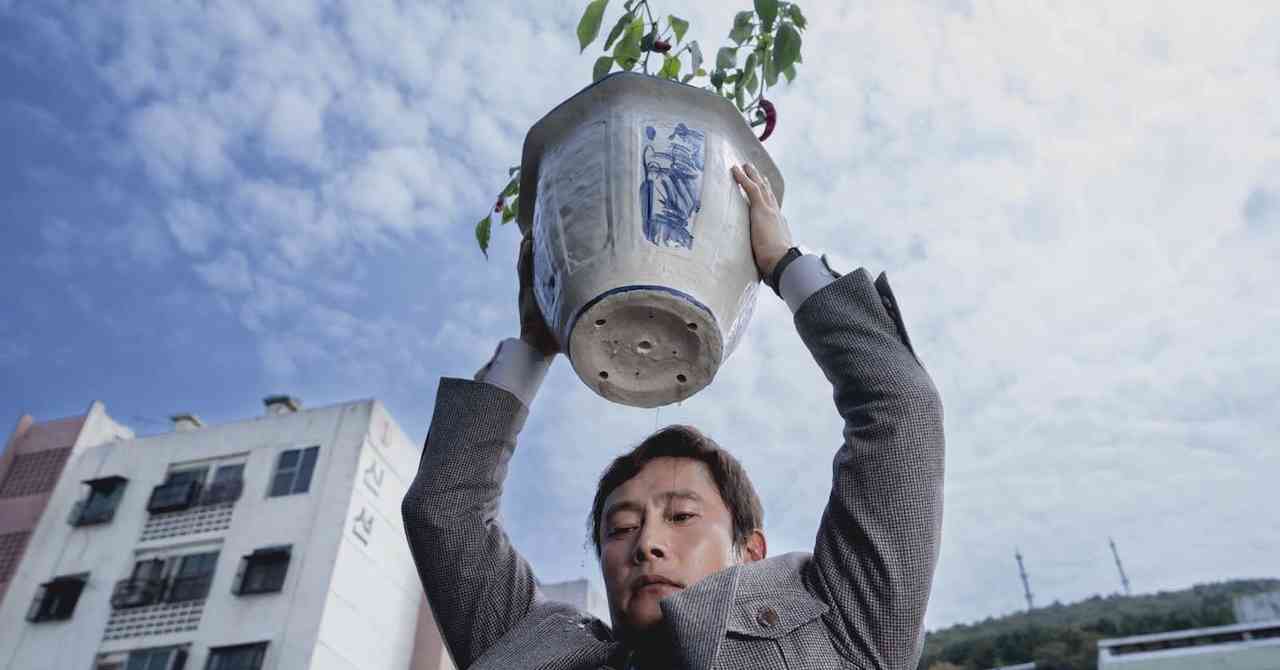
One of the great strengths of the film lies in the way in which Park thwarts the programmatic argument (a list of people to kill, like Kill Bill or The Bride Was in Black) by favoring side roads, by dilating time, by refining the portrait of his antihero over the course of his mirror encounters with his victims, by meticulously delaying the moment of action. And when it occurs, it is in an enormous, anthological, unforgettable sequence, a variation that is both grotesque and heartbreaking on the scene of the Torn Curtain murder, of which Hitchcock said: “I wanted to show how difficult, painful and long it is to kill a man”.
Park, unleashed, crisscrosses a world with absurd laws, brilliantly playing with rhymes, reflections, repetitions, even in the use of the formula “no other choice”, declined by several characters, in all tones. It’s the excuse we give when we have to fire someone, or shoot them in the head, and which resonates throughout the film like a mechanical echo, empty of meaning. The effect produced is as funny as it is desperate.
By Park Chan-wook. With Lee Byung-Hun, Son Ye-Jin, Park Hee-Soon… Duration: 2h19. Released February 11, 2026