Xavier Giannoli: “With Rays and Shadows, I venture into dark territory”
Meeting with the director of Rays and Shadows, a fascinating fresco retracing the destinies of Corinne and Jean Luchaire, an actress and her journalist father, caught in the dizziness of collaboration.
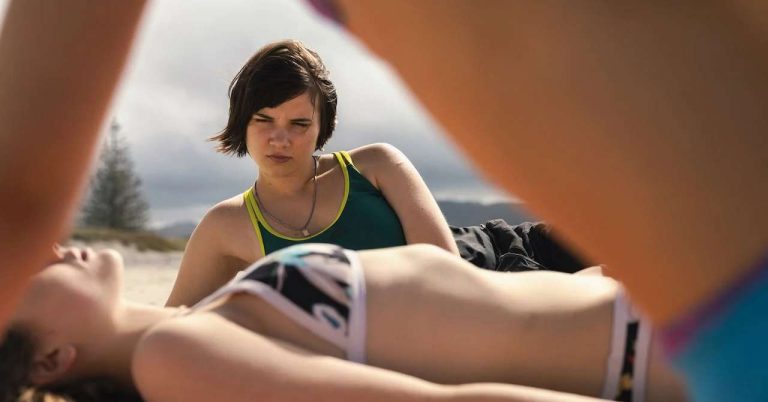
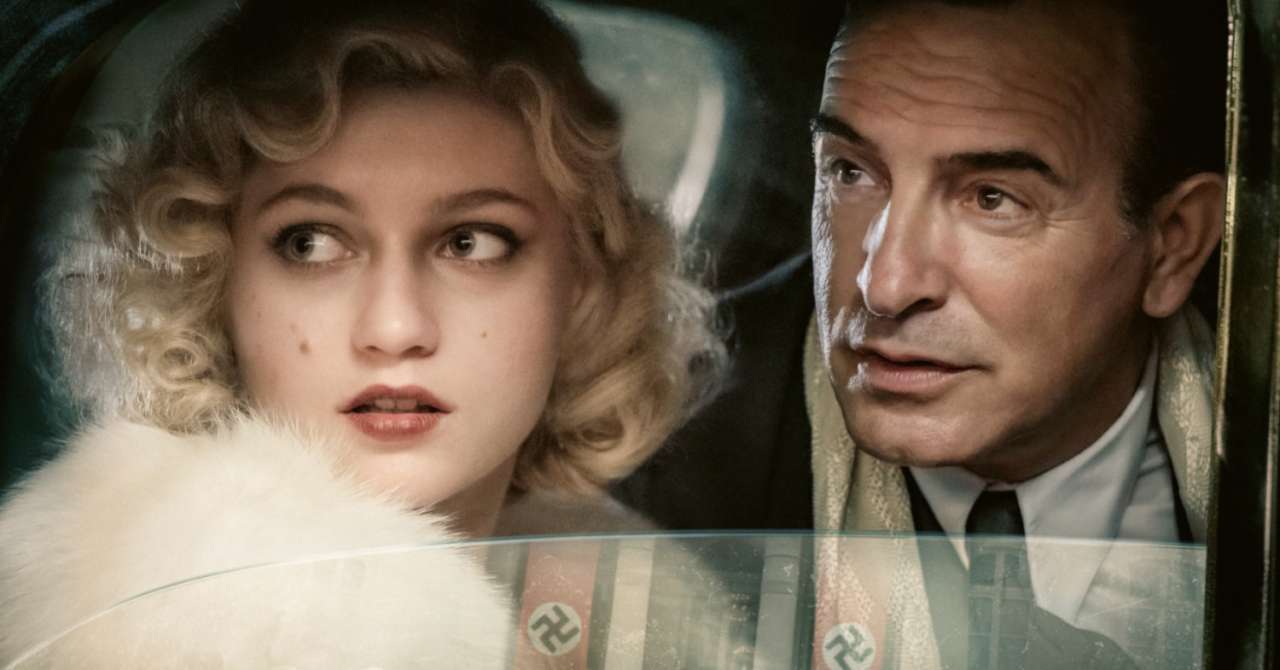
Film after film,Lost illusions to Rays and Shadows – going through a series, Of money and blood – Xavier Giannoli affirms his nature as a moralist filmmaker, tormented by the question of compromise. In his new feature film, he plunges into the heart of the history of collaboration, articulating a river story, a fresco of more than three hours, around three destinies: Jean Luchaire (played by Jean Dujardin), society journalist and pacifist who will slide from ideal to compromise, Otto Abetz (August Diehl), charming and manipulative German diplomat, and Corinne Luchaire (Nastya Golubeva), young actress thrown into the “pit aux lions”, sensitive narrator of a closed world where History ends up burning the bodies. Excerpts from our interview with a concerned director, who cites Hugo, Scorsese and Visconti, and admits “a part of fascination with very dark things”. The entirety can be found in the latest issue of Firstcurrently on newsstands.
First: It seems that the film has had several titles. Corinne Luchaire, Jean and Corinne Luchaire. Because you were looking for the right perspective to approach the subject?
Xavier Giannoli: No, no, not at all. Pff, it’s a tiring thing, that, with the networks… No, I had Rays and Shadows quite early, but I didn’t want to make it public, any more than I wanted to announce the filming in the press. I need to be surrounded by a certain amount of secrecy to work. So there was no official title. It was all just job titles.
On the other hand, from the start, the central figure of Corinne Luchaire, this young film star with a shattered destiny, stood out…
It all started from the intersection of three destinies: Corinne, her father Jean and Otto Abetz, thrown into the lions’ den of a terrible time. What do they understand there, what do they seek there, what do they lose there? We must realize that there is no there collaboration, but of the collaborations. The spectrum ranges from furious ideologues to simply cowardly people. Basically, Luchaire and Otto Abetz are not infamous people, they are young men from the post-Great War who in the 1930s were driven by pacifism. And yet, they will slip… Through them, I found things that I have been interested in for a long time. The role of money, compromise, desire and the law. Now, yes: I immediately had the intuition that we had to start from this character of a young woman. She is not a scholar, nor an activist, nor an idiot. She is a sensitive girl who was abused, who trusted (especially her father) and who was wrong. She is not at all innocent, but not entirely guilty either. And she is the one who tells this story.
Unlike the Resistance, everything about collaboration – or collaborationstherefore – remains a territory relatively little explored by French cinema. Did filling this gap play a role in your desire to make this film?
You can well imagine that I do not have this pretension, nor any calculation of the type “This is the time to do that.” On the contrary, almost. What really offends me, however – through certain press or social networks – is the violence of the unequivocal judgment, the cruelty of the punishment without wanting to understand. I believe that the film is also a humanist response to this deadly hatred of the adversary. In any case, I was raised like that. I came out as a Christian with The Apparition. The film questions important values – values which allow society to be built and to live – and it is surely, in a more or less conscious way, a reaction to this. I also believe that I needed this danger. I like to think against myself, I like to be thought against me. And I was very aware of venturing into dark territory, morally and historically very dangerous. While doing my research, I came across the historian Pascal Ory and I told him that I wanted to ask him some questions. For a simple reason: “I won’t be forgiven if I tell even the slightest lie.” To which he replied: “Sorry, but we won’t forgive you if you tell the truth…”
Because the ground remains mined…
And that’s very exciting. I believe in the novel, I believe in the complexity of the human being thrown into history, in the man who makes mistakes, who has weaknesses and inevitably contradictions. This is where my work begins.
The title, borrowed from Victor Hugo, plays precisely on this…
Of course. The expression carried a promise of humanism. It encourages us to observe these characters without punitive certainty, but without complacency either. And then he also mentions cinema. “The Rays and the Shadows”, in my mind, it’s the light beam from the projector. I also discovered along the way that Robert Desnos published a collection of critiques called that! The film does not end with the line “We still have cinema.” by chance. But it remains a fragile sentence, not a banner. For me, the interest of cinema or literature is to try to face a mystery, a human being, and to reveal all the most contradictory aspects. It is the opposite of political cinema in the sense in which it is sometimes understood. The other evening, I was rereading Serge Daney’s article in Cahiers époque maoïste on Lacombe Lucien. The paper begins with a quote from Mao Tse Tung and the necessary submission of art to the political project. I’m the exact opposite of that. I can’t stand militant, incriminating, unequivocal films. I hate it.
It’s about working with ambiguity… but without being ambiguous.
I hope. At the same time, there is an element of fascination with very dark things, that’s for sure. When I see The Damned by Luchino Visconti, when I see the horrors of which certain Scorsese characters are capable, or when I remember the shock felt upon discovering the end of this atrocious film by Lars von Trier, The House that Jack builtwhere the character crosses the Underworld, there is definitely something there that attracts me.
Comments collected by Frédéric Foubert and Gaël Golhen.
The entire interview can be found in First No. 571, currently on newsstands.
Rays and Shadowsby Xavier Giannoli, with Jean Dujardin, Nastya Golubeva, August Diehl… Released March 18, 2026.