Night flight to Los Angeles: Travolta takes off but leaves his spectators on the ground (critic)
A sixties aesthetic, jazz, a little boy, Manatthan and a plane… For his first production, the star of Pulp Fiction delivers an unfinished aerial camera.
Presented in official selection at the Cannes Film Festival, John Travolta’s first feature film reveals a very personal story with nostalgic, sometimes cutesy colors… The legendary actor was inspired by his novel Propeller One-Way Night Coach, published in 1997, to tell the story of the first plane trip of a little boy who was a fan of aviation, during a night flight taking him from New York to California, in the early sixties.
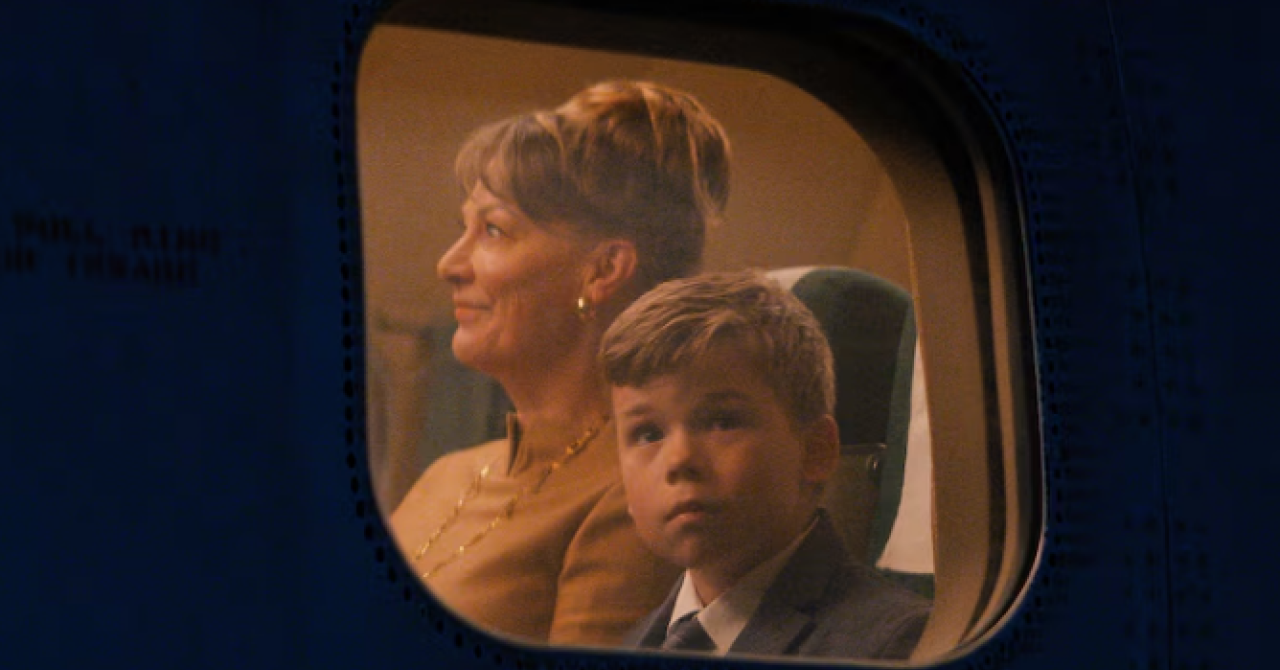
The staging with dreamlike accents places the viewer at child level. We first let ourselves be intoxicated by the vintage charm of the decor. The voiceover (provided by Travolta himself) propels us directly into the thoughts of little Jeff. He looks, head raised, at his mother in her Sunday best, a fallen actress, whom he follows in the excesses of her existence. The polished aesthetic, which tends towards comics, gives the story the air of a children’s tale. This flight to Los Angeles in the shape of a doll’s house combines reflection on the Hollywood dream and the maternal figure. We assume that Travolta is working on very intimate material here, the characters of the mother being able to refer to his own mother (she has the same first name, Helen) and that of the young hero to his missing son, Jett (died in 2009 at the age of 16) as well as to himself, Travolta being a child of the sixties who often spoke of his love of aviation.
In just one hour, the filmmaker brings his childhood dream back to life but forgets his spectators a little. The voice-over, which intends to guide us throughout the film, ends up overwhelming us with its omnipresence.
Of Take Five to Tony Bennett, from Sinatra to the soundtrack ofA man and a womanthe actor-director further invades the sound background of a jazzy soundtrack that is too cliché and repetitive.
It is on the side of Catch me if you can of Spielberg that Night flight to Los Angeles sometimes seems to stare. It borrows its very graphic aesthetic, its retro music, as well as the insistence on the maternal figure, central to the story.
In white fur, a Manhattan in one hand, a cigarette in the other, the mother, although very present, with her glassy gaze and her pink makeup lips, would have deserved to be explored in more detail… If she willingly leaves her son for a night to join a man, or if, without detours, she confides to him the vagaries of her intimate life, the abusive nature of this character is only sketched. It is an archetype often depicted in cinema, which Travolta does not revisit but which he nevertheless looks at with kindness.
The actor of Saturday Night Fever signs a nostalgic aerial tale that struggles to take off. Despite the desire to move people, the spectator remains on the ground… The poetry of this nocturnal dream fades behind its overloaded retro aesthetic, at the expense of the intrigue, which is skimmed over.
Night flight to Los Angeles is available on Apple TV.