
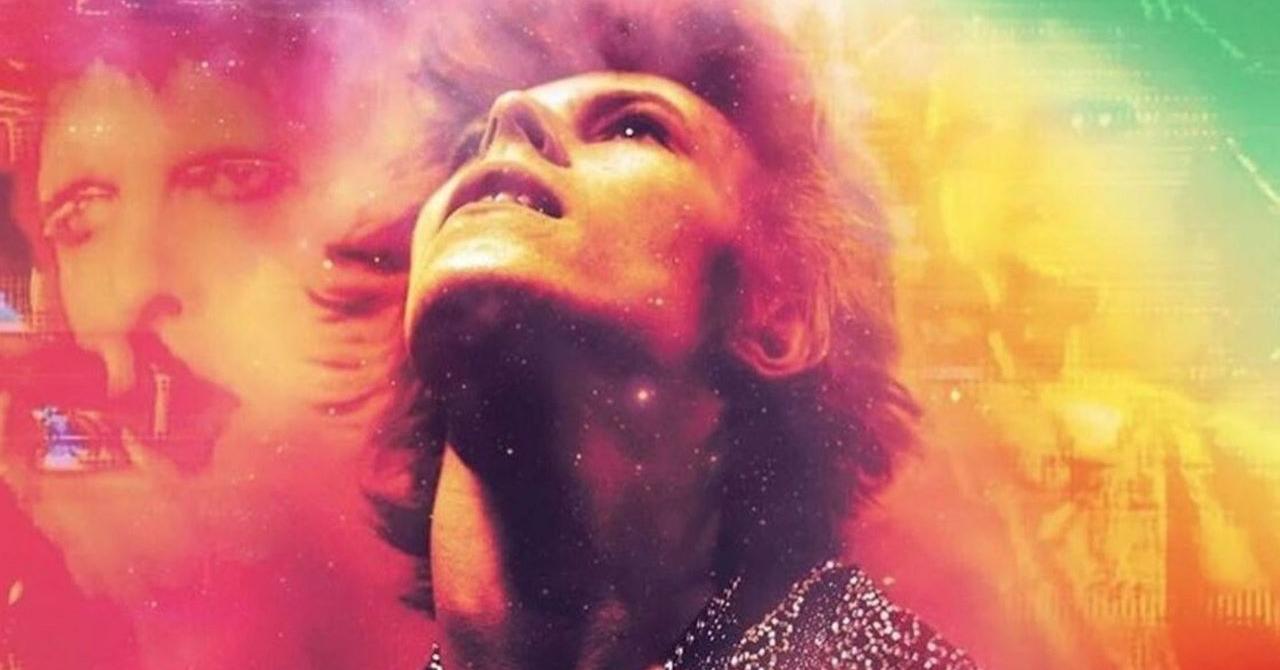
Brett Morgen: “David Bowie created the soundtrack of the 21st century”
Director of excellent musical documentaries devoted to the Stones or Kurt Cobain, Brett Morgen explodes the boundaries of the genre with Moonage Daydream, a trip to the confines of the Bowie galaxy.
Fascinating documentary on David Bowie, Moonage Daydream has been available for streaming on MUBI since August 3. We met its director, Brett Morgen, during its cinema release in 2022.
Premiere: Do you have to be a fan of David Bowie to appreciate Moonage Daydream ?
Brett Morgen: Not necessarily, no. His figure as an artist represents a sort of manual for inventing an enriching life in the 21st century. His journey and his philosophy should allow us to learn lessons that can be applied to our daily lives, whether we are a teacher, a plumber, anything. But hardcore fans will find plenty to satisfy their appetite. To be honest, I don’t see it as a film about David Bowie, even less about David Jones (his real name – editor’s note). It’s a movie about, open quotes, “Bowie.” Not a documentary, not a biography, more of a planetarium experience. A new genre had to be invented.
As Bowie himself would have done…
Like Bowie when he went to Berlin, yes. At first, I didn’t know which way to take it, I was drowning in the inexhaustible magma of archives that I had collected on my computer. I told myself that we would have needed an experimental director at the helm, a Stan Brakhage, a Chris Marker… And then on January 5, 2017, I had a terrible heart attack. My heart stopped beating for three minutes, I was in a coma for a week. The direct consequence of the out-of-control life I had led until then. Way too much work, way too much ego… I have three children, I started to think about the message I would have left them if I had stayed there. “Work hard”? Yep, that was what led me straight to Cedars-Sinai Hospital! I needed to relearn how to live, how to breathe. And David was there, in my hard drive to serve as my guide. So I left my comfort zone.
There are no dates, no temporal markers in the film, as if we were floating outside of time…
The film is a mirror and a kaleidoscope. The Bowie interview I found most inspiring was when he was interviewed by Mick Rock (great rock photographer of the 70s), three months before the release of Ziggy Stardust. Mick said to him: “So, David, your sci-fi thing, Ziggy, what exactly is it about?” And Bowie goes, “Oh, I just throw out words: ‘space creature,’ ‘laser beam,’ and they’ll fill in the blanks, they’ll make up their own story.” I said to myself: here is my film! I’ll let them fill in the blanks.
If Bowie can be a guide for the 21st century, is it because he helped to invent it?
He created the soundtrack of the 21st century, yes. And he said it as early as 1971. As a product of the deconstruction of the great belief systems carried out by Einstein, Freud, Nietzche, Picasso, he invented the soundtrack of chaos. If you don’t evolve with chaos, if you don’t accept the ephemeral nature of things, if you stay rigid, you’re screwed. Bowie was an Internet pioneer, a digital prophet. He used the machines before anyone else. He was one of the first people to speak publicly about bisexuality and gender fluidity. His message resonates even more strongly today. In 2021, according to Spotify, he was the most listened to deceased artist on the planet. We listen to it a little more each year. The Bowie era is only just beginning.
Comments collected by Guillaume Bonnet and Frédéric Foubert


