Anaon (on France 2): how the monster was made in practical effects
The new French fantasy series, to be seen this evening free-to-air on France 2, takes its inspiration from Stranger Things, but goes further by paying homage to the great Amblin tradition of practical effects, by creating its creature from scratch without VFX. Explanations.
No tennis ball at the end of a pole or 3D creature added hastily in post-production for Anaon.
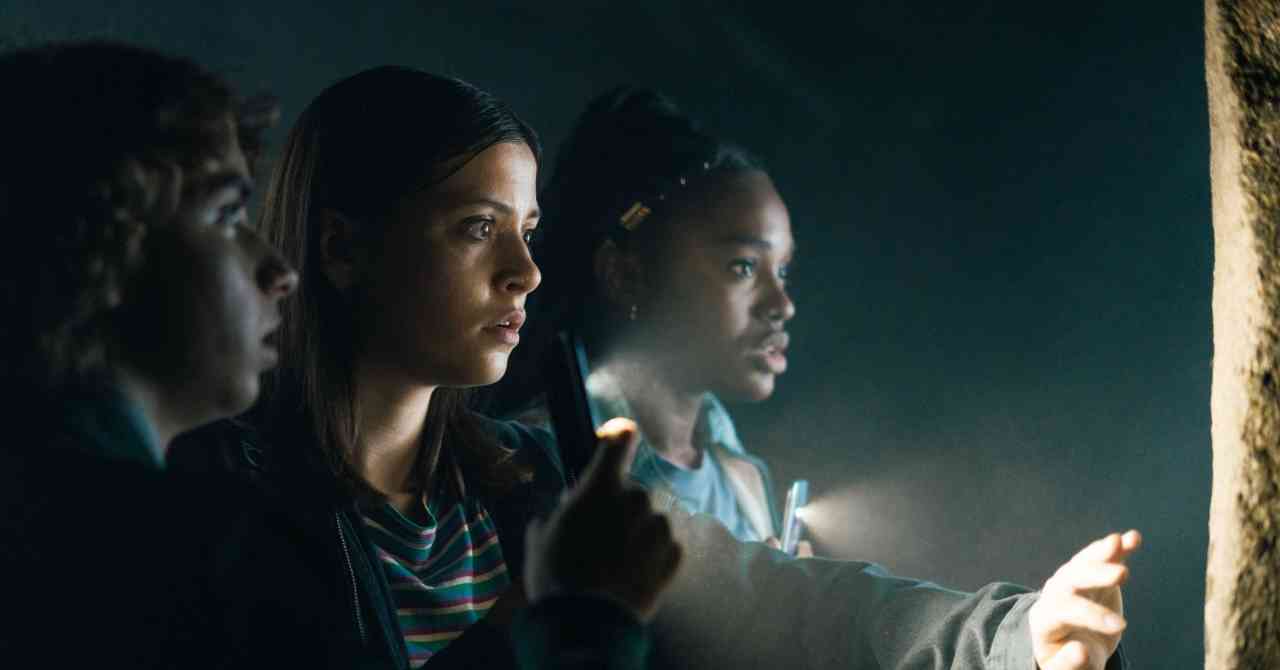
The French fantasy series which will be seen this evening unencrypted, on France 2 (after having been put online on Prime Video), assumes its affiliation with Spielberg’s Amblin cinema and therefore, inevitably with Stranger Things. But she intends to do it with her own strengths: Guillaume Labbé as the investigator, the revelation Capucine Malarre as the local Eleven and above all Breton folklore as a backdrop.
Filmed entirely on real locations, in Îlle-et-Vilaine, between the Monts d’Arée and the Chaos de Huelgoat, Anaon plays the card of the local bogeyman, called Bugul-noz. And to go with these breathtaking landscapes, which give the series its identity, there is no question of making a monster of green backgrounds.
Director David Hourrègue and creator Bastien Dartois, nourished by cult films of the 80s, absolutely wanted to create, from scratch, a creature with real effects:
“Essentially, it’s a monster we made, with a guy in the costume!” rejoices David Hourrègue, who immediately explains to Première: “We did 80% real effects for 20% VFX in the series. It’s more a question of taste than budget. Because we are nostalgic for the era of ‘props’ cinema. The one where Mark Hamill, in The Empire Strikes Back (1980), played with Yoda, who was just a big manually animated puppet. That didn’t pose a problem. no problem, because the actor was playing with something tangible in front of him.”
Since then, he believes, filming on a green screen has disconnected the actors from their environment: “Since we switched to green screens with tennis balls at the end of a pole, everything has become a matter of projection of mind on the part of the actors. I don’t believe in it.”
For Bastien Dartois too, the approach was clear from the start. He tells us:
“We were convinced that we needed a creature present in real life, on set, imagined and created by artists who were able to work on its look and texture.”
A choice that reconnects with a certain love of artisanal work. “I have an immense love for the craft of cinema, and more specifically SFX makeup. I am always amazed by the work of Guillermo del Toro and his teams on Pan’s Labyrinth, on Hellboy 2, or even that of Phil Tippett on Star Wars… All these guys who made tangible monsters for us.”
The duo claims this heritage and wanted all of this for Anaon despite a constrained budget:
“We are from this Amblin generation, that of Spielberg, who did not hesitate to put an alien puppet in a kid’s room to make us believe that he had found a friend for life… In short, we were just content to follow the recipe of our glorious elders.”
Anaon was able to benefit from an alliance between France TV and Prime Video, for production, but this did not allow it to do anything crazy.
On the contrary, we had to be clever to succeed in realizing this desire for French fantasy: “Our budget did not exceed that of a classic television thriller,” explains David Hourrègue. “So we decided to reduce the number of days of filming to increase the daily budget and better concentrate resources. I come from a generation of directors used to filming 7 sequences a day. I know how to deal with that pace. The whole point is to manage to bring the team and the actors along. We didn’t have a lot of time, but we had the means to do things correctly, to have the most cinematic result possible.”


