Annecy 2026: with Le corset, Louis Clichy leans animation strongly towards emotion
With this coming-of-age from Beauceron carried by a sumptuous watercolor aesthetic and a hit by Stéphanie de Monaco, Louis Clichy signs the French animated film of the year.
After Cannes, where it was presented in Un Certain Regard (and from which it walked away with the grand jury prize), The Corset arrives preceded by a persistent rumor. It would be one of the shocks of the year and a great, very moving animated film. Confirmation by the lake: Louis Clichy’s film is indeed one of the most beautiful recent French surprises.
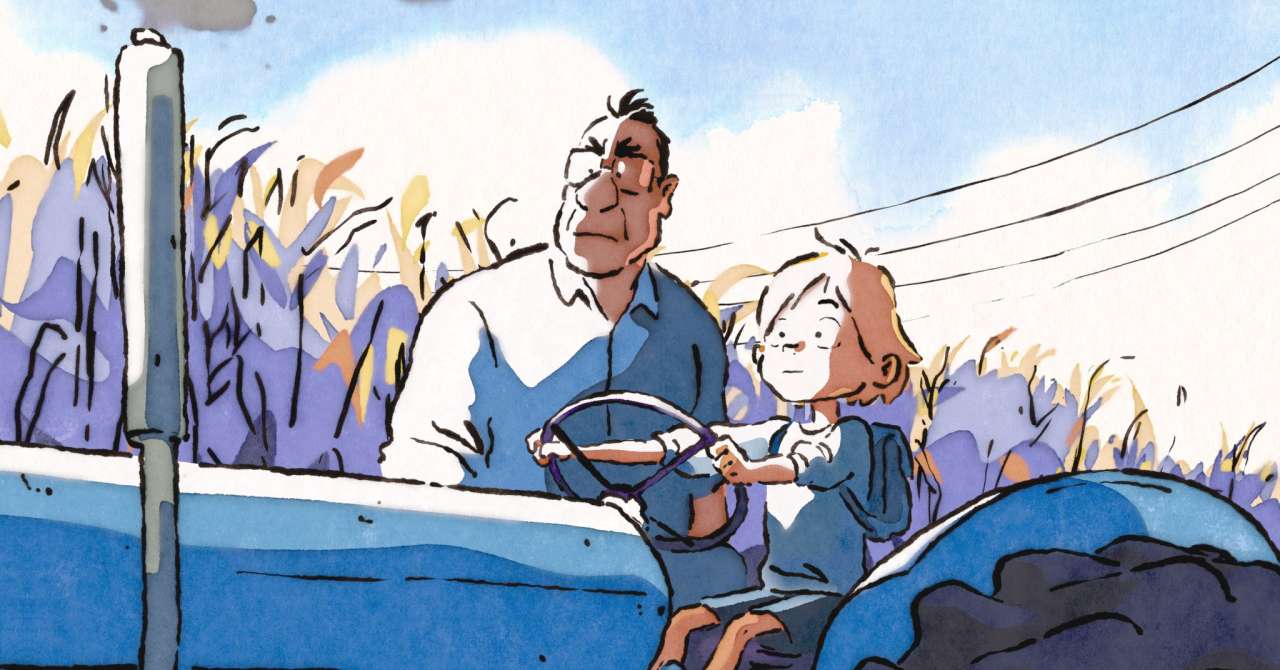
The story: Christophe, eleven years old, grew up in a family of farmers in Beauce, at the turn of the 80s. At school, at home or even on the father’s tractor, the kid leaned over. No matter what he does, he tilts to the right… and falls. Only solution: a metal corset to go straight. The coming-of-age that follows (a romance, the relationship with parents, the thirst for freedom…) could seem classic, but Clichy injects it with a decisive personal charge: he himself wore this type of equipment and grew up on the land he films. After two Asterix co-signed with Alexandre Astier and a long stint at Pixar (Wall-E, Up there), this is his first solo film. And frankly, the shedding is amazing.
The animation is sumptuous, in Indian ink and watercolor. The large Beauceron skies and the reserves of white give each shot an almost spiritual scope. The dynamic line creates a rather intriguing Franco-American connection: there is Sempé for the silhouettes of this kid swallowed up by the immensity of a landscape, for the energy of the watercolor as well. But we also think of Watterson for the cartoon elasticity of the bodies. The result is lively and precise, never miserabilist and always poetic.
That said, the heart of the film is elsewhere. Basically, The Corset held by its father-son axis. It is a rough emotional terrain where speech has no place. The farm falters as the agricultural world shifts towards productivism and Clichy also tells this story through this painful relationship. The relationship between Christophe and his father is made up of unsaid words, misunderstandings, but above all silences. And it is in one of these silences that arises Like a hurricane by Stéphanie de Monaco, a slightly kitsch synth-pop hit that the father listens to over and over (and hums secretly) in his car. The emotion is at its peak, the spectator has a tear in his eye… And we suddenly think of Animal kingdom and to the sequence where father and son found themselves on She is also. Bachelet yesterday at Thomas Cailley, Stéphanie de Monaco today at Clichy: it’s as if ambitious young filmmakers made the variety hit their secret weapon to take the viewer by surprise (and make us cry). Besides, stay until the end of the credits for a new version of the song.