Come I take you, from Alain Guiraudie, sail between anxiety and the fun (critic)
Just three years ago, this film with Noémie Lvovsky opened the panorama of the 72nd Berlinale. It arrives tonight in clear on Arte.
After The unknown of the lake in 2013 and Stay vertical In 2016, Alain Guiraudie presented its new feature film to the public Come I take you at the Berlinale 2022.
Embodied by Noémie Lvovsky,, Jean-Charles Cictitus And Iliès Kadrithis film takes place in Clermont-Ferrand. Médéric (clichet), falls in love with Isadora (Lvovsky), a prostitute of 50, but she is married. While the city center is the scene of a terrorist attack, Selim (Kadri), a young homeless person taking refuge in the Médéric building causing collective paranoia. Everything gets complicated in the life of Médéric, torn between his empathy for Sélim and his desire to live an affair with Isadora.
The feature film, ninth of the director, is also carried by Renaud Rutten, Doria Tillier, Michel Masiero, Philippe Fretun, Farida Rahouadj, Miveck Packa, Yves-Robert Viala And Patrick Ligardes.
Here is the criticism of Firstleft while waiting for its first clear broadcast, this Wednesday evening on Arte.
The Aveyronnais Alain Guiraudie went to seek in the Puy-de-Dôme the decor of this boulevardière and political comedy, a painting from contemporary France sailing between anxiety and laughing, the freak and fantasy. The writing of the film, highly tightrope, first links the sequences according to an attractive surreal logic. Too fast, however, this desire to delirious the real is weighed down by the temptation of a discourse “Reasoned” on the ailments of the country.
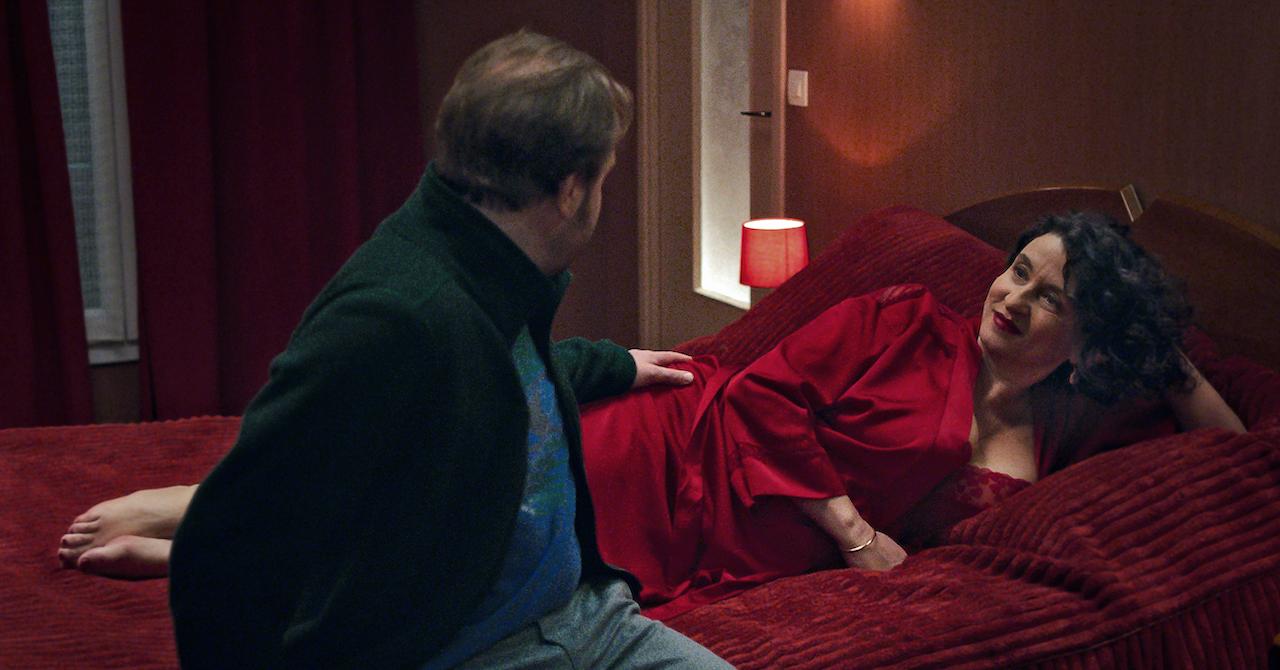
Guiraudie is great when he hacks the old clichés of cinema-see the extraordinary sex scene between Noémie Lvovksy and Jean-Charles Clichet at the beginning of the film, in reverse of all conventions. He is much less inspired when he details the little politico-media circus which circumscribes our imaginations, then falling into the sociotype trap-we end up not looking at the protagonists by wondering who they are supposed to represent in the Social field: the threatening facho, the macronist all-in-one, the girl “Issue of immigration”… Predominates on arrival the feeling that Guiraudie imprisoned his characters more than it releases them.
Mercy, by Alain Guiraudie: brilliantly crazy (critic)