
Magellan: an inhabited film (review)
By focusing on the figure of the great Portuguese explorer, Lav Diaz fascinates with the relevance of his outlook. The last peak of the 2025 cinema year.
The dominant (Western) cinema, even guided by a so-called humanism, imposes an overarching vision of the world through the energy of self-confident staging. It is through this gaze that the new evangelizations are carried out. Conversely, films like Pacifiction torments on the islands or more recently Le Rire et le knife examined post-colonial territories – Tahiti for Serra (co-producer of this Magellan); Guinea-Bissau pou Pinho – in order to question this neo-imperialism through cinema. In both, the staging in perpetual research apprehends a space and defuses any (re)appropriation.
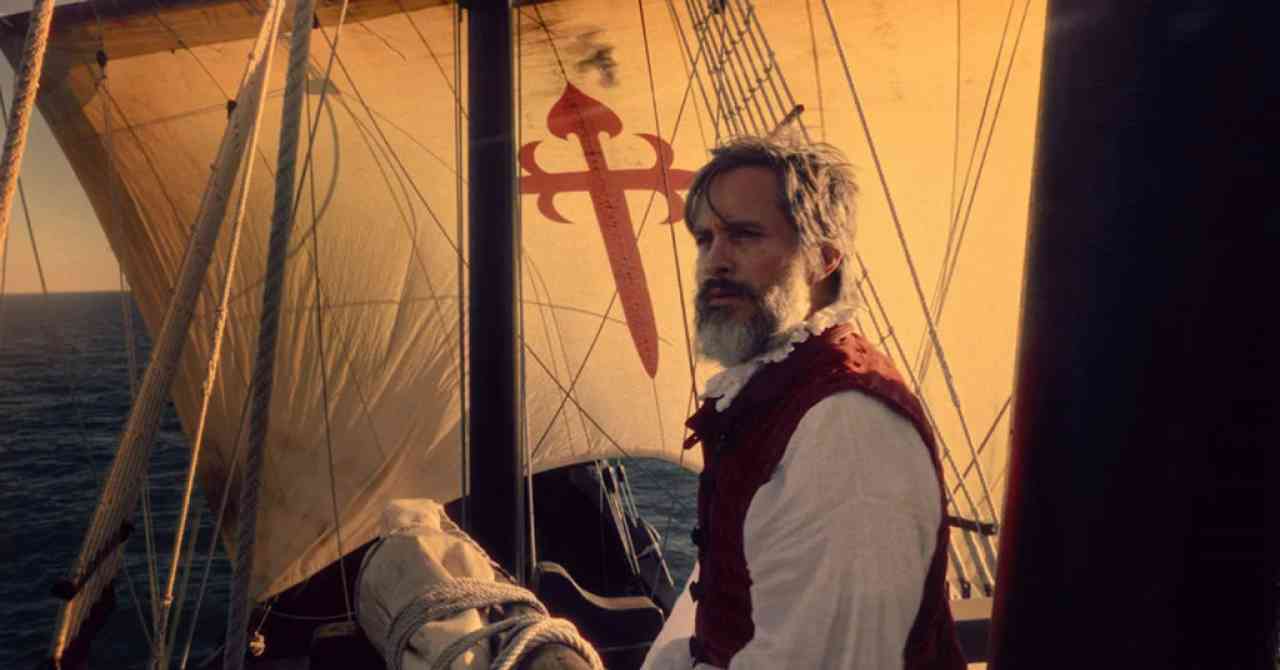
In a similar logic, the Filipino Lav Diaz (The woman who left, When the waves recede…), a great explorer of forms, today takes on the figure of Magellan (1480 – 1521). A way for him to reflect on the past and current identity of his own country. It is in fact on the coasts of Cebu that the “great” Portuguese navigator will run aground and fail in 1521. A fan of the long term, Diaz offers strict frames whose sublime precision opens windows onto horizons of virginal purity. It is up to beings, things but also spectators to experience its power. Pictorial beauty is never the product of tinkering with vertigo. As it is said here, “no gesture” could be “more sacred than a tree”. This egalitarian, deeply sensitive look tells the story of the evolution of a man (the brilliant Gael Garcia Bernal), little by little guided by delusions of conquest of spaces and souls. This produces a dull tension from which a reflection on our own relationship to the world described can arise. Insane.
By Lav Diaz. With Gael Garcia Bernal, Roger Alan Koza, Dario Yazbek… Duration: 2h43. Released December 31, 2025