Once upon a time in America on Arte: “Sergio Leone is not misogynistic, in fact quite the opposite!”
Journalist Virginie Apiou analyzes the representation of women in Sergio Leone’s classic.
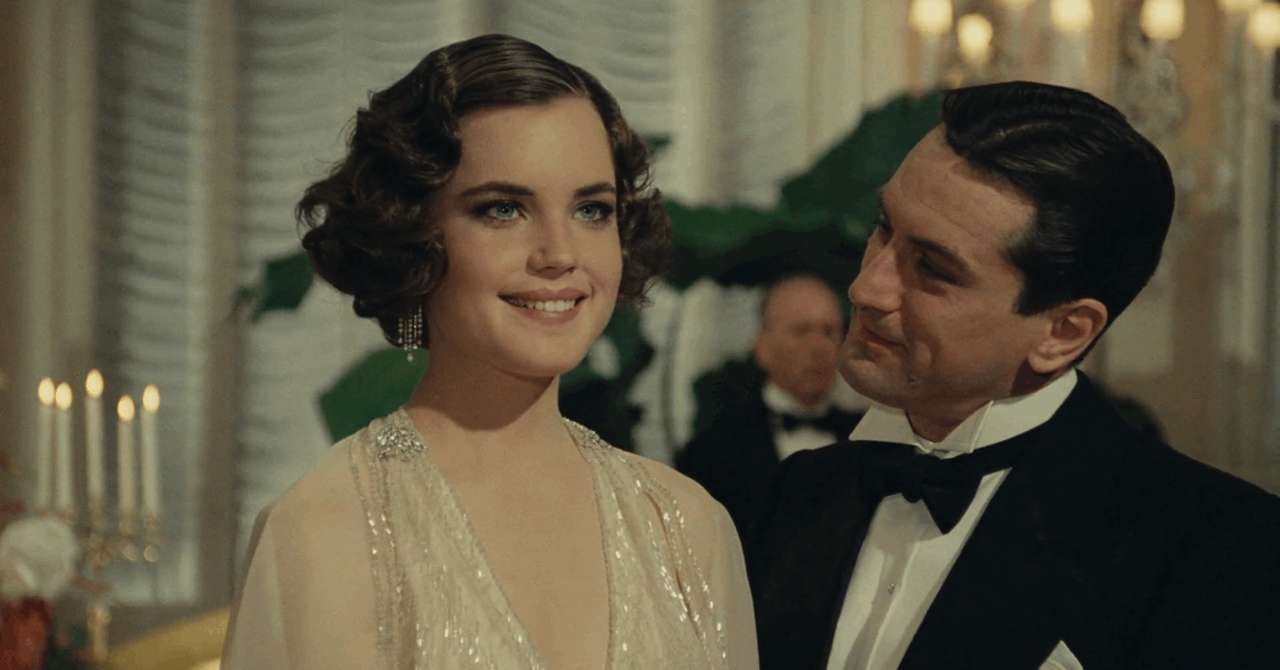
One of the greatest films in the history of cinema returns this Monday evening on television on Arte (and for a month in streaming on Arte.TV). Sergio Leone’s 3h38 fresco, notably worn by Robert De Niro, James Woods and Elisabeth McGovern, has been the subject of criticism for the treatment of its female characters, in particular for the violence they suffer. In 2023, journalist and documentary director Virginie Apiou commented for Premiere Classics this controversial aspect ofOnce upon a time in America.
Comments collected by Thomas Baura
Once upon a time in America is crossed by two rapes committed by the main character played by Robert De Niro. How do you analyze Sergio Leone’s view of this violence?
Virginie Apiou: For me, Leone is not a misogynist filmmaker. It’s actually quite the opposite. Here he describes a precise world in which violent men evolve, without ever avoiding the brutality of their actions, particularly against women. The worst thing would have been to look away. By agreeing to show the horror, he agrees to flirt with a certain transgression. But transgression inevitably induces ambiguity. A filmmaker cannot be associated with the actions of the characters he describes. Is displaying this violence problematic and degrading for women? We could have felt it if the main character, Noodle, was an admirable, even heroic man, who had a dark side in him regarding the feminine. In short, a fairly basic typology. However, Leone does not place his protagonist on a pedestal. Noodle is a poor guy, out of cowardice he always makes the wrong choices…
…We are in the heart of a barbaric world…
It’s all in the title: Once upon a time in America. This is the view of Leone, a European fascinated by a country that he does not idealize. He’s not a fan at all. What does he observe? A neighborhood on the Lower East Side of New York in the 20s and 30s, populated by young, uneducated people, brand new… In the middle of this chaos, it offers its protagonist, played by Robert De Niro, the choice to take charge of his life. And each time, Noodle goes for what seems easiest to obtain. He is a representation of white and materialistic America which destroys everything. If we push the metaphor a little further, the character of Deborah embodies the land that Noodle believes he must conquer. Then this guy shows up who does anything with her, like the pioneers with the Indians. This rape is the cruelest illustration…
The intimate and geopolitics come together…
In this, Once upon a time in America looks a lot like another equally important film, Death in pursuit. In the film Cary Grant is an advertising executive, therefore a pure materialist. This man soon meets a woman, Eve, (Eva Marie Saint) on a train. Eve immediately falls in love with him and is fully aware of it… She looks at him, the music changes. Leone, like Hitchcock, films female desire with intelligence. There is nothing vulgar about it. The first meeting between Noodle and Deborah also takes place in an enclosed space, the small room behind the bar. Hidden behind a wall, Noodle observes him. Deborah knows she is being seen. There too, the musical theme changes, it is that of love, true love. Deborah does not despise Noodle, does not believe herself superior to him and accepts him as he is. She literally stripped herself naked. She cannot go any further in revealing her intentions. It’s not immodest, just a way of saying: “It’s yes, I love you…“Deborah as Eve in Death in pursuit go as far as it is possible to go, as far as society allows them to go. But Noodle, rather than getting involved, prefers to answer Max’s call. It’s always more reassuring to go to someone who isn’t going to ask you for this incredible thing called love.
Deborah almost becomes a time marker in the story that Noodle stumbles upon…
She appears at key moments, and each time, offers Noodle the opportunity to make a choice. But he is always outdated. Noodle copes with his weapons and he clearly has less than her. He follows the path he knows, where everything is marked. That of love is too big for him. Unlike Cary Grant who finally realizes that Eve risked her life for him and finally decides to take the risk of this relationship, Noodle refuses. Hitchcock was an Englishman, and therefore pragmatic. The Italian Leone was a melancholic…
Deborah then decides to move away from him and try her luck as an actress in Hollywood. How to interpret this decision?
His emancipation comes through this. She believes in it, feels that her talent is there. There is nothing of the fantasy of the actress who intends to seduce men in order to dominate them. Deborah is not into seduction. Leone only shows it with Noodle. But Noodle, she is told, is a weak character, he will never make the effort to go towards her. So she decides to leave…
…And pays for it physically…
This is the complexity of human nature. When you get a little too close to a guy like that, there’s danger. The man she loves raped her, it’s absolute horror…
Leone spoke of this rape as a “cry of love“…
Her cry! It is beyond everything, total bruising. In Noodle’s mind the ultimate love is to possess her physically. This is where it is limited. The rape happens in several stages. First there is the physical act of domination, with penetration, then, supreme humiliation, he tears off her top, revealing her chest… He intends to completely degrade her. The camera doesn’t let go. We see it on the road. He is defeated, you can see it in the way he holds himself, his head down, falsely calm. He has reached a horrible milestone, he is aware of it… This is perhaps the only moment when he is an adult. In the director’s cut version, we see Noodle then meet Eve, a prostitute, whom he calls Deborah at the time of the sexual act. It’s very strong. This is how he wants to love Deborah.
He finally finds Deborah thirty years later, in her dressing room. She has become a great tragedian, he is nothing…
… Above all, she remained young and not him! It’s a brilliant idea. She then played Cleopatra on stage. She’s a queen. I come back to geopolitics. This sequence essentially says: “ Come see what you did to me, I’m still here because a continent can’t sink even if you trashed me… » With this rape, a part of themselves died. Time can’t fix anything. It’s worthy of Greek tragedy.
In the meantime, Deborah married Max…
The fabulous ellipse that the story offers leaves an incredible scope for the imagination. Max and Noodle are the same, except that Noodle never knew how to be someone. He could only live under the influence, under Max’s protection.
One of the other female characters in the film is Carol (Tuesday Weld), presented as a sexual derangement…
If the desire to make love often in men is admitted, why should it not be the same in women? In Once upon a time in America we are in The Ship of Fools by Hieronymus Bosch, in the heart of exacerbated violence, where everyone does what they can. Leone is a man of the 20th century, whose life was crossed by a World War. He knows that horror is possible… Already in Once upon a time in the Westbarbarism was there. The protagonists were then in the process of conquering a territory that they believed to be virgin which was nevertheless inhabited by populations. In Once upon a time in Americathe conquest has been fully completed, cities have been built, but it is the same barbarians who live there…
At the heart of this barbarism, women are therefore condemned to suffer the domination of men?
Leone showed women doing what they could, where they were. Claudia Cardinale in Once upon a time in the West manages. She knows it’s going to be hard… Women are then seen as prostitutes who, if they get by, will be able to serve men. It’s cruel. In savagery, we know, it is always physical strength that wins. In Once upon a time in AmericaLeone could have imagined a female character who, in order to place herself above men, would have manipulated them. We would then have been in a clearly misogynistic vision of things, with this idea that if a woman has power, she is necessarily a demonic being. Here, no one manipulates anyone. Leone simply recreated what these women and men were like, at the time in which they lived.