Lalo Schifrin comments on his 8 essential films music: Bullitt, Operation Dragon, Inspector Harry, Mission: Impossible …
The legendary mission composer: Impossible comments on his most famous compositions.
Mission: Impossible,, the minimalist music of Bullittthe syncretism ofOperation Dragonthe avant-garde funk of Inspector Harryjazz/folk/symphonic hybridization of Luke the cold hand… Lalo Schifrin was one of the most inventive composers of the 60s and 70s. While a 5 CD box (The Sound of Lalo Schifrin) came to encapsulate part of his colossal work, the Argentinian composer had been asked, former pupil of Olivier Messiaen and traveling companion of Dizzy Gillespie, to comment some of his most striking themes. When he has just died on (June 26), we republ this interview. Open the ears well, the maestro speaks.
El Jefe (1958) by Fernando Alaya
https://www.youtube.com/watch?
“My first film music. As a child, I was often going to the cinema and after my studies of classical music in France, I returned to Argentina. I wanted to compose for the cinema, but finally, I turned to jazz. One day, a producer calls me. He needed music, something that corresponds to the aspirations of the youth of the time or at least who makes his more sexy film. Me. El Jefe was an anti-pantry film, a good film on a group of young people. Not a big success, unfortunately; After that, there was the meeting with Dizzy Gillespie and the departure for the United States in the early 1960s … “
Foulins (1964) by René Clément
https://www.youtube.com/watch?v=apczl_kzbra
“The producer Jacques Bar was looking for a composer who speaks French because René Clément did not understand anything about English. I did all my studies at the National Conservatory and I think that is the reason why I was hired (laughs). You imagine: Young composer, I find myself on a film with Alain Delon and Jane Fonda! In Paris! An unforgettable experience. Not composing film music according to the scenarios. Foulins. Clément showed me the film and we have long discussed the places where there must have been music, his tone and the interaction with the images. We worked at home, a very beautiful apartment boulevard Victor Hugo. We heard ourselves very well; He was very intelligent, very curious … A living encyclopedia and I think he loved what I brought. The score is a tribute to the Hollywood black films of the 1950s, and mixes jazz, more dark orchestral music and more contemporary atonal music … with, already, howls of female voice, it’s true (laughs). “
Luke the cold hand (1967) of Stuart Rosenberg
https://www.youtube.com/watch?v=E4MHV7HM8CQ
“When I read the script of Luke the cold handI found it really very beautiful. Very moving. I met Stuart Rosenberg and the producers and I explained to them that, for music, there were two ways to do. The first was to compose a very folk score, with banjos, violins … Country. The second option was very American symphonic music, a bit like Aaron Copeland. And I added: “But there is a third too, mix the two”. They liked this idea. I never thought about the themes developed in the film. This is not how I work. I work with instinct. I never said to myself that the idea of imprisonment or resistance had to work. No. My work is more emotional, I tell a story with sounds. “
Friendship (1979) of Stuart Rosenberg
https://www.youtube.com/watch?v=_YSPL8TPH1A
“I really liked working with Stuart Rosenberg. For this film, I wrote horror music, but I also composed a song interpreted by a children’s choir with three voices. It is much more scary. I like the idea of counterpoint. The images can express one thing, the music another and that’s where it becomes really effective. The death slide : To counterpoint the diabolical character who puts bombs in a park, I used a fairground music, very joyful and mechanical. It creates an effective offset. “
Inspector Harry (1971) by Don Siegel
https://www.youtube.com/watch?v=YP8DGOADZ5K
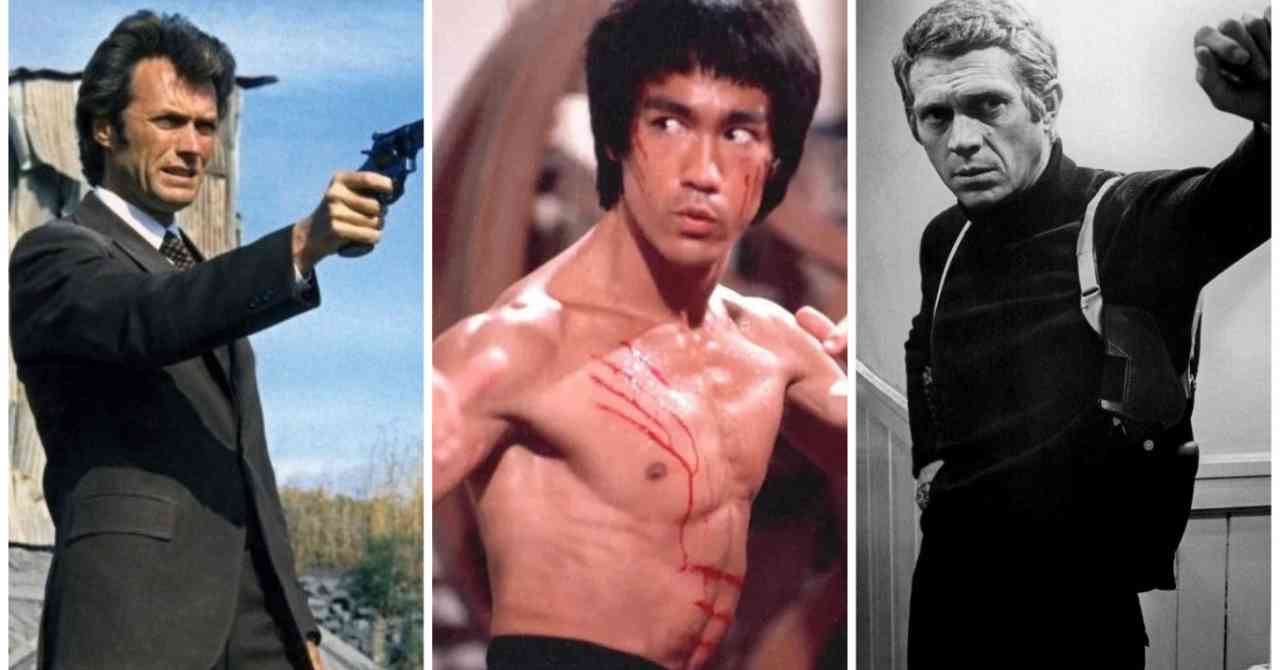
“We had a real bond, Don Siegel and me. Two things that I remember on this film: I had decided to use hysterical women’s voices. And for the theme of Scorpio of the distortions of electric guitars. We were in the middle of Acid rock and it corresponded quite well to the madness of the character. At the beginning, Siegel asked me why the women shouted and I said to him;” He hears voices. “He liked (laughs). The film was made in the midst of the Vietnam War and he is representative of this time. Scorpio for example: he wears a belt with a pacifist symbol! Siegel made a film full of contradictions and I tried to do it with music … The contradiction, madness, it was a lot of music for Don Siegel and Clint Eastwood. Jazz lovers. Kill Charley Varrick And Prey. “
Mission: Impossible (1966-1973) created by Bruce Geller
https://www.youtube.com/watch?v=avbvgsd4lzc
“I always say that if I have to write a word to my wife, film music would be a very long and developed letter and TV music would be a telegram. For Mission: ImpossibleBruce Geller had asked me to compose a theme for the credits. He said to me: “I need music that people would immediately recognize; if they are in the kitchen and the show starts in the living room, I want them to identify it right away”. It was the idea. The genesis of the theme is fun. The producers had to receive the images of the credits (you know, the match, the wick that lights up …) but a week from the Deadline, they still had nothing. And their order was blurred: “You need very dynamic music, which promises action, adventure and a lot of danger”. Suddenly, I did it, without any visual referent and that is probably what is so free, as exciting and that it works as well – not only with the images but also without. “
Bullit (1968) by Peter Yates
https://www.youtube.com/watch?v=9irlcl3dflo
“Many people tell me that they love the music of the prosecution. But … there is none. The theme” Shifting Gears “precedes the race. McQueen looks in the retro, the traffic is slow and the tension gradually increases. Until it turns into a street and that … music stops. Peter Yates asked me for a theme, but Sonores would be more effective.
Operation Dragon (1973) by Bruce Lee and Robert Clouse
https://www.youtube.com/watch?v=kkvpeff7fay
“Bruce Lee was a fan of impossible mission music. I discovered that, in Hong-Kong, he trained on this music every day. The main theme was obsessed. In short, he knew my work and when he had to find a composer for his first American film, he gave my name. I had worked ethnomusicology during my years of study so I knew a little oriental music LukeI wanted to mix genres, mix Asian elements with jazz in a very orchestral score. I loved working with Bruce Lee. I remember that during a recording, he had turned to me asked me if I was playing sports. I replied “a little tennis”. And Bruce then told me that I had to put myself in the martial arts. He was my teacher and I am a black belt! “