What are the main differences between Christopher Nolan’s The Odyssey and Homer’s?
Although he remained largely faithful to the ancient text, the filmmaker made several changes. We take stock.
Yes, his film is faithful to the original work.
The Odyssey by Christopher Nolan takes up in great detail the ancient poem written by Homer.
But of course, its adaptation takes several important liberties with the nearly three millennia old text. Especially the conclusion. Spoiler alert!
A much more tormented Ulysses
First major change: Ulysses played by Matt Damon is no longer really the cunning and manipulative hero imagined by Homer. Nolan makes him above all a former warrior haunted by the Trojan War, victim of trauma and flashbacks. The director thus favors a more psychological reading of the character.
The Phaeacians disappear
Another important modification: the people of the Phaeacians are completely absent. In the original poem, however, it is with them that Ulysses recounts all of his adventures. Nolan therefore deletes this story but keeps a narration made of flashbacks. These are different characters who speak to tell the story.
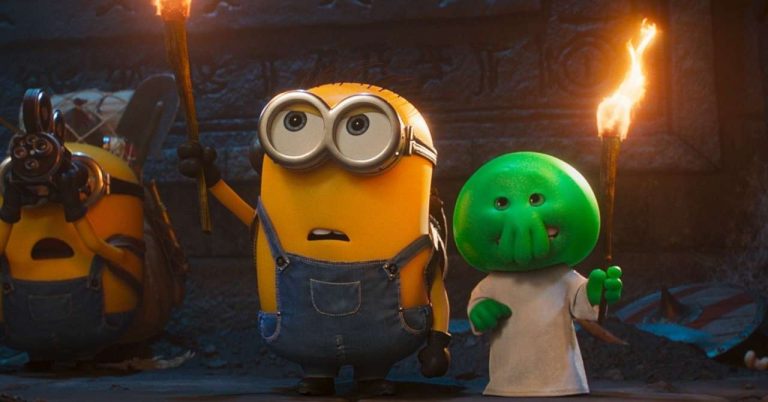
Conversely, the film introduces Autre (Elliot Page), a character from The Aeneid of Virgil, who never appears in The Odyssey of Homer.
Calypso, Circe and the Cyclops revisited
Several mythological encounters have also been reinterpreted by the director.
In Homer, Calypso is a Nymph who keeps Odysseus prisoner for seven years by promising him immortality. And it is Zeus who orders him to free him. In the film, she becomes a benevolent figure who offers him lotus flowers in order to soothe his traumas and ends up reviving his memory. No Zeus. And Nolan also removes most of the interventions of the gods of Olympus, very present in the original poem to influence the destiny of men, but only mentioned in the film as beliefs.
The famous Cyclops episode is also modified: Nolan notably abandons the famous “Nobody” ruse thanks to which Ulysses deceives Polyphemus.
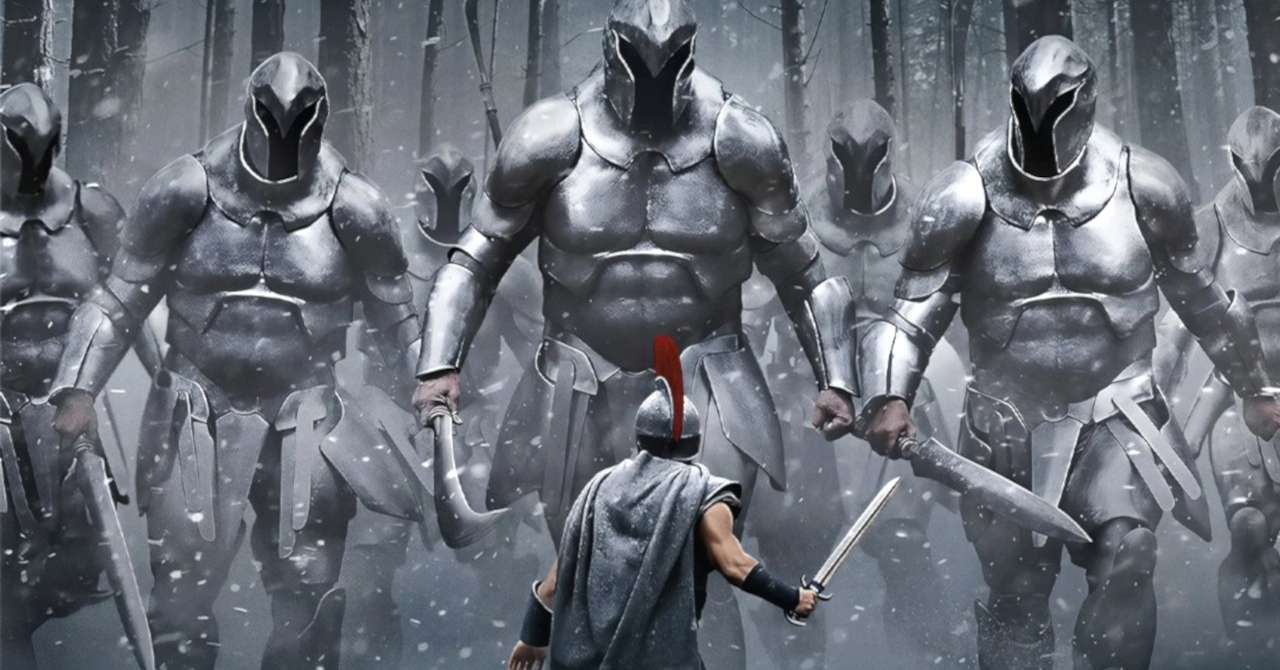
The Lestrygons are not metal-armored, cyborg-looking monsters, but a people of cannibalistic giants, who destroy almost their entire fleet by throwing huge rocks at the ships. In the film, as in the poem, all his boats are destroyed, except that of Ulysses.
As for Circe, she is no longer presented as a manipulative seductress, but as a more mysterious witch, who above all reveals the ferocity of men. In the text, Ulysses stays with her for a year. They even become lovers.
The Sirens also change roles: at Nolan, they reveal to Ulysses that deep down, he perhaps does not really want to return home…
Very contemporary themes
Christopher Nolan also introduces modern concerns, absent from the ancient text. He notably evokes the fear of “peoples coming from the sea”, and thus in subtext migrations, wars of expansion or even the collapse of empires. However, the idea that Troy caused the fall of civilization does not exist at all in the original text.
A completely redesigned ending
The final act is also a bit different.
In Homer, Penelope recognizes Odysseus by asking to move their marriage bed, which is carved from an olive tree trunk rooted in the middle of their nuptial chamber. She hangs twelve servants accused of treason, after the massacre of the suitors. Finally, the poem concludes with the reunion between Ulysses and his father Laertes, a character absent from the film. Nolan prefers to highlight Telemachus, called to become his father’s successor. Homer concludes his story with Odysseus returning to the throne of Ithaca. Telemachus does not take the crown. The film thus transforms the story into a reflection on the legacy left by a generation marked by war. The director finally imagines a final crossing for Ulysses, this time alongside Penelope. A deliberately ambiguous conclusion, leaving doubt: is it a new journey… or a passage towards death?
The Odyssey is currently in theaters;