
Venice 2026: from Ink to Primetime, trash journalism seen by Danny Boyle then Robert Pattinson
Presented a few days apart at the Mostra, two films, Ink and Primetime, respond to each other by recounting the scandalous excesses of the press, from the English tabloids of the sixties to US TV in the 2000s.
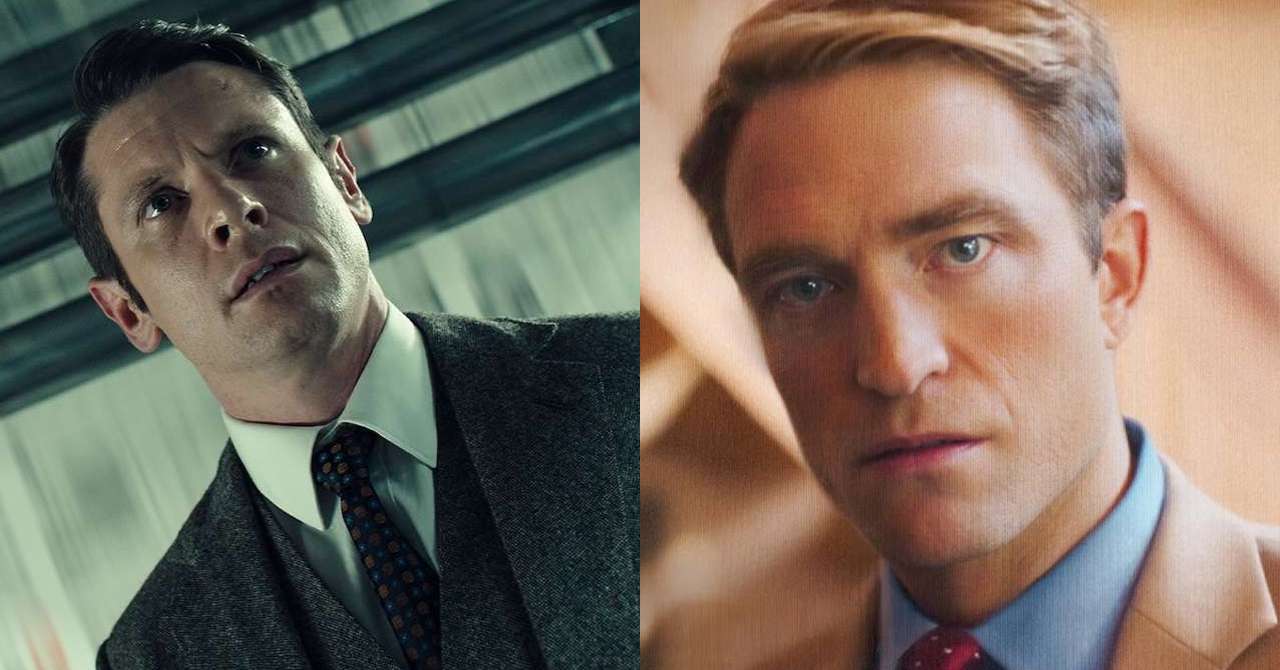
At the opening of the Venice Film Festival last Wednesday, Inkby Danny Boyle, set the tone for a festival everywhere announced as eminently political. After an anticipation film, 28 years laterwhich dealt under the guise of a zombie pandemic with the identity crisis of the post-Brexit United Kingdom, the director of Trainspotting continues, in his new film, to talk about the contemporary world through indirect means. Going back in time this time. Very precisely around 1969, the year when an Australian businessman named Rupert Murdoch (played by Guy Pearce) bought the tabloid The Sun and placed at its head an unscrupulous editor, Larry Lamb (Jack O’Connell), or Larry The Lamb, a rather ironic surname when we know that Lamb was in reality the wolf in the fold of British journalism.
For Danny Boyle and screenwriter James Graham (who here adapts his own play), the editorial decisions that allowed The Sun to achieve astronomical sales figures (populism, bogus scoops, naked girls on page 3, etc.) constitute a great tipping point, the origin of the “post-truth” world in which we struggle today – Lamb and Murdoch are portrayed as outsiders humiliated by the establishment, and determined to take their revenge by dynamiting it.
Dynamite is also the ray of Danny Boyle, who deploys his proverbial rock’n’roll arsenal to tell the story of the orbiting of the Sun like a filthy epic, without faith or law, in the style of “sex, drugs and typewriters”, where the gang of tabloid gunslingers recruited by Larry Lamb first have a lot of fun, before waking up with a nasty hangover, and blood on their hands – or ink, in this case, which can stain just as much.
Boyle has a thesis to defend, things to say, and the dialogues, whose theatrical origin is somewhat audible, have a didactic side, in slight contradiction with the mood Wolf of Wall Street in the English style of the film. Still: Boyle also has a job, and ensures that we don’t get bored for a second, by setting the tempo of Ink on the monster slaughter of its main actor, Jack O’ Connell, in almost every scene, and who, after his very creepy appearances in Sinners And 28 years later – the temple of the deadis quietly establishing himself as the best villain in contemporary cinema.
Inkby Danny Boyle, with Jack O’Connell, Guy Pearce, Claire Foy… In theaters January 6.
If the “boylesque” aesthetic of Ink is clearly identifiable, Primetimewho is also competing for the Golden Lion, is a different kind of animal. A very original, dense and exciting film. Produced and performed by Robert Pattinson, it is directed by Lance Oppenheim, in his thirties, a little documentary genius (Some Kind of Heaven, Ren Faire…) which, for its first fiction, offers a look behind the scenes of another genre of trash journalism: the broadcast To Catch A Predatora big hit on US TV in the 2000s, on NBC, the principle of which was to trap child criminals. They were lured by “bait” (actors pretending to be minors) into houses which were in fact peppered with cameras, and where at the fateful moment – just before the victim was attacked – the presenter Chris Hansen appeared, who caught the predator in the act, interviewed him, then let the police handcuff him.
The show was therefore a hit, Hansen became a superstar (guest on all talk shows, guest in The Simpsonsetc.), but To Catch A Predator skidded very quickly, leading to a tragedy that we will not reveal here, the plot of the film playing around this suspense. This dramatic outcome underlined, in the eyes of those who had not until then been scandalized by the principle of the show, the total confusion which reigned between journalism and entertainment.
Primetime is part of a cinema tradition of criticism of American info-spectacles, whose emblematic masterpieces would be The Chasm of Chimeras Or Networkbut many of whose representatives are generally somewhat clumsy thesis films. Lance Oppenheim skillfully avoids this pitfall by envisioning his film as a sort of woozy thriller, playing on a feeling of diffuse horror and constant unease. In the portrait of Chris Hansen (Pattinson), depicted as a vigilant narcissist gradually losing contact with reality, that of his careerist producer (Merritt Wever) and a beginner actor (Skyler Gisondo), hired as “bait”.
The world that Oppenheim describes is sticky, unbreathable, it is a universe where everyone is perpetually in representation, and where all human relationships seem to obey a transactional logic. In the same way as To Catch A Predator took place in houses which turned out to be reality TV sets, Primetimewith its suffocating close-ups and oppressive interior scenes, locks us in a false world, with no escape.
Oppenheim, who was around ten years old when To Catch A Predator was a hit on TV, is clearly fascinated by the 2000s, a period both near and far, when the notion of primetime still meant something and where the desire to beat the series Lost in the race for ratings could become a question of life and death for someone like Chris Hansen. The film, compact, tense, wraps around the reptilian performance of Robert Pattinson, who brilliantly uses his bizarre, handsome charm to embody this super-vigilante who himself behaves like a predator. The actor delivers a super daring performance, which contributes enormously to the haunting power of the film, the kind that sticks in your head long after the end credits.
Primetimeby Lance Oppenheim, with Robert Pattinson, Merritt Wever, Skyler Gisondo… In theaters September 23.