Cannes 2026 – Focus on La Gradiva, one of the highlights of this 79th edition
Meeting with Marine Atlan, the director of this adolescent chronicle, around which the buzz has continued to grow since its presentation at Critics’ Week.
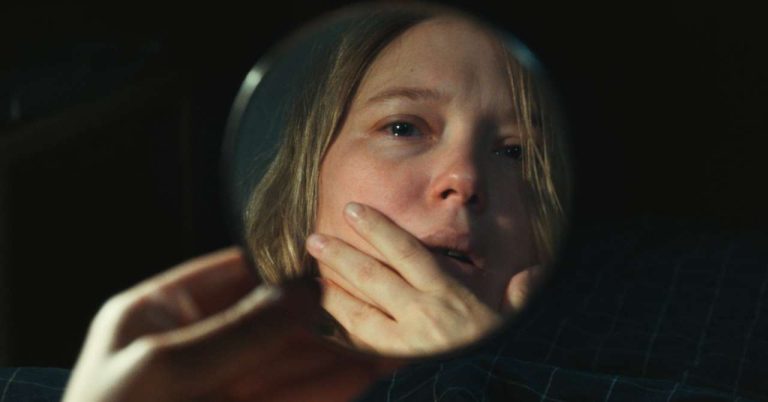
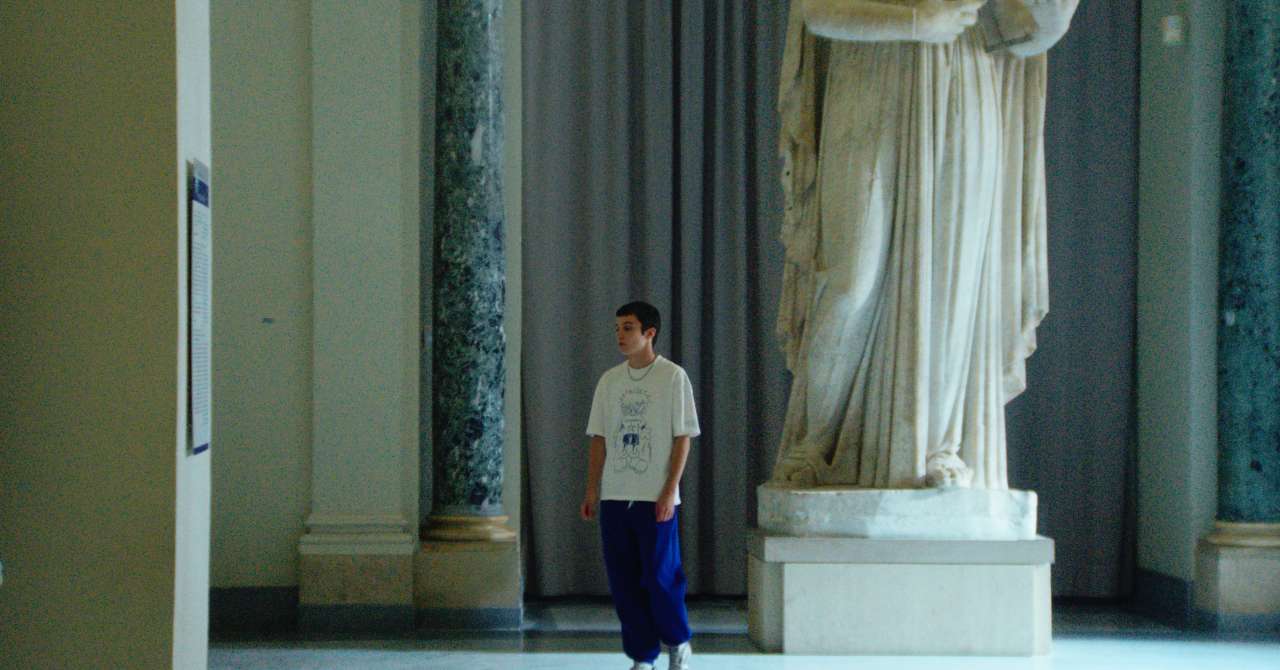
We could have waited for its release in November to tell you about it. But the desire was too strong to share the love at first sight we had for this first feature film by Marine Atlan. Excitement more than shared since many festival-goers even present it as the best film of this Cannes 2026, all sections combined. Presented at Critics’ Week, it features a group of high school students going on a school trip to Pompei. A teen movie which will gradually shift into a Douglas Sirk-style melodrama. La Gradiva is a 2.5 hour fresco which masterfully brings together the sacred and the profane and reveals a group of young actors with no on-screen experience and astonishing accuracy, truth and intensity. We met Marine Atlan, recognized until now for her talents as a cinematographer (The Rapture, The Queens of Drama…) so that she can tell us some secrets of the making of a work that we can hardly imagine leaving without a price from the Croisette.
A first 2h30 long with a majority of non-professionals in front of your camera. La Gradiva has everything on paper about the film which has no chance of seeing the light of day. What encouraged you to get started?
Marine Atlan: (laughs) It’s funny because I have a very close friend who often tells me that I don’t realize the danger. And I think that indeed, everything you are telling me is true but I absolutely didn’t realize it! The idea of La Gradiva was born from the desire to make a film based on the 90s collection All boys and girls their age on Arte. And to be more precise, it all started from a commission proposal which ultimately did not happen but had distilled in me this idea of making a film with a troupe of young, non-professional actors. And very quickly, Pompeii established itself as the place of action. I had never been there before but it was a huge fantasy territory for me. And I wondered what the collision between this sacred place and the trivial aspect of a school trip could produce. The confrontation between these two thousand year old ruins and today’s youth. What can a teenager feel when he realizes that he is part of a story much bigger than his own life? What can this generate aesthetically, dramaturgically? Something crystallized at that moment. And I saw nothing better than cinema to work on this questioning.
Do you immediately find a producer to follow you on this adventure?
Yes, I was lucky that Inès Daïen Dasi was immediately on board with what I had written: a very short synopsis, accompanied by fairly precise intentions. She had seen my short films, which already worked on the collective, on childhood. So she trusted me from the start. And, from there, never stopped reaffirming it.
In what concrete way?
For example, on the casting. I wrote this film for 20 characters. The economic option would have consisted of relying on ten actors and accompanying them with ten extras. But I quickly understood that to create a lively and credible class, I needed twenty real actors. And Inès accepted despite the financial investment – and therefore the risks – that this implied.
So how do you put together this band that bursts the screen, both individually and collectively?
Our ally – as in all places in the film – was time. This time that Inès allowed me. Julie Sokolowski directed the casting. His first for a feature film. She had worked as an actress with Bruno Dumont who made her debut in Hadewijch and she therefore knew very well this relationship to the game that I was looking for. I had immense confidence in his gaze. She went in search of these twenty actors and actresses. Whether in demonstrations, at the end of high schools, in amateur theater classes…
Have you ever thought about integrating young professional actors?
We saw several of them but I felt that I wanted to discover unknown faces, surprising cinematics, ambivalent physiques. I was interested in filming that. And we went through lots of stages. Lots of discussions with Julie. Auditions where we played scenes from other films. Then, when Julie was no longer available, another casting director took over. And we kept looking and looking. To see a lot of people. Because above all I needed to form a coherent group. A group that would pull itself up, agree to take playing risks together and create a real collective dynamic. And I was aware of the responsibility that rested on me. Because I had to support them, protect them and share my desire for cinema so that they could understand where I wanted to go.
Did you show them films?
Yes Between the wallsin particular which we discussed for several hours. This created a real cinema bulimia in some people which I fed with other films. A clown also came to work with them to teach them how to express things with intensity. In fact, it was all about taking the preparation work very seriously. I felt that everything was at stake there. We had to arrive in Italy with a class already formed, already united, young people who know each other and who have been through all the stages together.
Does this also involve rehearsals?
Yes, we rehearsed every scene in the film. It can be scary on paper because you always wonder if you’re going to lose spontaneity. But by reading about the methods of filmmakers that I admire – Renoir, Cassavetes, Pialat, Rozier… – I understood that this preparatory work precisely allowed something else to emerge. We work on the text, we leave room for improvisation, then we rewrite after this improvisation. This is how a moment can happen: because it has been prepared, because it is born from solid work. And once on set, everyone knows what we’re looking for and knows the path to get there. The actors offered me magnificent things. Because the places themselves called for this. We were faced with things much bigger than us, with an immense history that imposed itself on us. Some have even had real aesthetic crises. Basically, the whole challenge was to create a territory of trust and work so that everyone could be overcome by emotions of delight and upheaval.
This dialogue between the present and the eternal could be very educational. How do you manage to make it so concrete, as physical as it is cerebral?
I was very afraid of this pitfall. And to avoid it, I told myself that I had to go through real documentary work. With my co-writer Anne Brouillet, we conducted interviews with each actor. We asked them questions and, based on their answers, we tried, with our cinema tools, to articulate reality as we saw and observed it. You should never try to be faster than reality, nor surpass it. On the contrary, we had to accept what escaped us: a dynamic between two students, for example, could tell of a relationship of domination, but also show how these relationships evolve and shift. What does it mean, for example, to be a racialized person in a territory where there are very few racialized people? What does this cause? But without arriving with preconceived ideas: simply observe and try to grasp what is happening.
All this also goes through the language which has a very literary side but resonates in a very modern way. How do you find this balance?
There is always a first draft of intuitive dialogue which is written without direct intervention from the language of young people. Then this material is compared to the interviews, to the discussions that I have with them. And one idea dominates: never go too quickly in the dialogue. Information often passes through the tape, after four or five exchanges. I was interested in having information stolen from a discussion. And then, little by little, as the film progressed, I wanted this very lively language to become whiter, clearer, more frontal. For example, one of the characters, Suzanne, has almost Rohmerian phrasing, extremely clear diction that I love. She can tell truths very bluntly. And in the end each of the characters has their own style of cinema. One of his partners, for example, is more New Hollywood. With my co-writer, we therefore allowed ourselves, little by little, to work on the language to make it tighter, less recreational, less abundant but more precise. It is therefore both a work of listening and a personal relationship with words because I really like literature and the French language.
Duration is another essential element to the pleasure we take in watching your film. The long time we spend with the different characters that you have time to dig into. Was this idea of a 2.5 hour fresco present from the start?
Yes, it was part of the DNA of the film, even if, again, I hadn’t fully understood what that implied. I had already made a medium-length, one-hour film, so I know that I have a particular relationship with duration. I like to take the time. I love when a scene seems to be going in one direction and then suddenly surprises us completely. And that takes time. Just like the genre of choral film also requires letting the characters exist. Especially since I wanted to work by digressions, by successive turns, so that the film changes shape, moves us, surprises us. The first edit was four hours long. But the film was already there. And I especially didn’t want to lose this density. Everything moves forward in silence, in hollows, in gaps.
We know you as a director of photography thanks to several films screened at Cannes, such as The Rapture Or The Engulfede. What changes when you sign the lighting for your own film?
I was lucky to be able to count on a co-cinematographer Pierre Mazoyer. And if for my part, I had a lot of lights and colors in mind, my obsession remained the game. It was really my beacon, my absolute priority. So I had this requirement for a light that I would call “realistic baroque”. Deploy lyrical means without ever seeming forced. That things arise naturally, through the places themselves, through the settings. What was interesting was that this work left little room for chance, while remaining open to documentary surprises. I deeply believe that when you place your trust in a territory, in people and in reality, something always ends up happening.
By Marine Atlan. With Colas Quignard, Suzanne Gerin, Mitia Capellier… Duration: 2h25. Released November 4, 2026