
Ed Gein’s true story, behind season 3 of monster
The American psychopath who has terrorized Netflix since yesterday yesterday existed. But did he commit all the horrors shown on the screen? And did he really have a girlfriend? The true of the forgery is dismissed.
With Monster: The story of Ed Gein, the screenwriter Ryan Murphy resuscitates one of the most monstrous criminals of the 20th century, whose history continues to haunt popular culture.
But did he really commit all crimes, all the atrocities that the series portrays very graphically, on Netflix? Yes and no, because a part of shadow still remains around Ed Gein.
Concretely, the Wisonsin farmer, arrested in the late 1950s, confessed to having murdered two women. But other crimes were also assigned to him later.
Ed Gein (interpreted by Charlie Hunnam in the series) was born in 1906 in the butt, in Wisconsin. Son of an alcoholic father and a religious fanatic mother, he grew up with his brother Henry on a Plainfield farm, cut off from the world, raised by an authoritarian mother who instills their fear of sin and outside. When their father died in 1940, the two brothers had to support the family. Henry goes away, gets married, but Ed remains stuck in Plainfield, stuck with his mother Augusta. In 1944, Henry died in a mysterious brush fire: officially he died of a heart attack. A conclusion of autopsy mentioned by the series, which goes further by showing Ed Gein assassinating his brother by hitting him with the head with a log. His first murder. However, if suspicions have always existed on his guilt, Ed has never been found guilty of this assassination.
Shortly after Henry, Augusta was struck by two strokes that let her decrease. She died in 1945, further strengthening the isolation of her unstable son. Alone on the family farm, he lives in unhealthiness but preserves the rooms of his mother intact. He makes odd jobs, children’s babysitte, while developing an obsession for morbid magazines and the stories of Nazis and cannibals. It is also proven that Ed Gein cultivated a terrible fascination for Ilse Koch, the wife of the commander of Buchenwald, a sociopath accused of having made objects in human skin from prisoners of the concentration camp.
Meanwhile, season 3 of monster plays the card of sordid romance, and develops a disturbing love story between Ed and a young girl from the town: Adeline Watkins (interpreted by Suzanna Son). This is an invented character. This partner fascinated by the macabre – and which would have even been aware of the actions of his Ed – never existed Aini. This role was inspired by a rumor published in 1957 in the Wisconsin State Journal, where a woman in her fifties claimed to have been engaged to Gein for twenty years before postponing her marriage proposal. Two weeks later, she rectified her remarks in the Stevens Point Journal, explaining that she had known Gein only a few months in 1954. An episode revealing the way in which the press of the time helped to forge, between fantasy and reality, the black legend of the “Boucher de Plainfield”. The series supports this fantasy by making Adeline a kind of accomplice. But no woman has ever been accused of having attended Ed Gein, in one way or another.
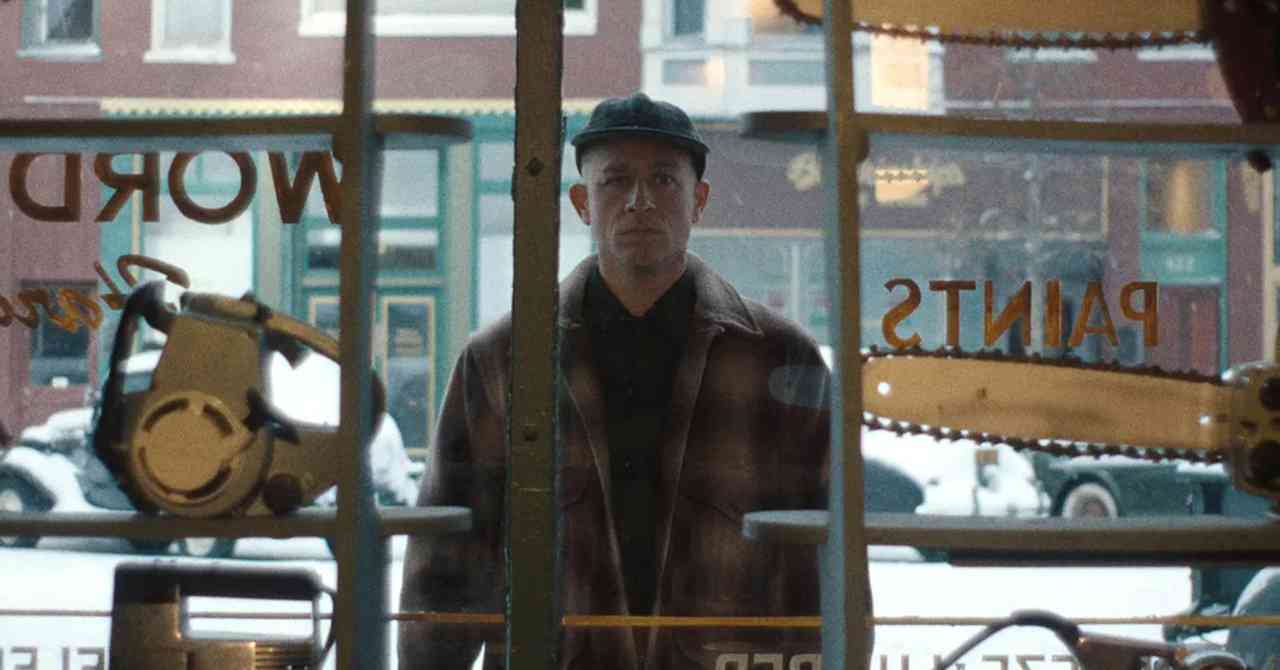
It was in 1957 that the dark farmer’s company ended: suspected of having removed Bernice Worden, a local trader (embodied by Lesley Manville), he was arrested. At home, the police discovered his flayed body, beheaded, hanged in the barn. What the series shows. But the sexual intercourse between Ed and Bernice portrayed on the screen is nothing official. We know that Ed went to the hardware store run by Worden to kill her and take her body. His son, sheriff assistant, immediately considered the farmer, a strange character of the village, as the main suspect. The search of his farm will reveal the inexpressible. In the kitchen, investigators discover organs in the refrigerator, a heart placed on the stove and skulls transformed into bowls. Elsewhere in the house, chairs covered with human skin and remains preserved as well as trophies. Gein thus kept organs taken from his victims or unearthed in neighboring cemeteries, which he used both as “memories” and as an elements of macabre decoration. Among the victims identified in this small horrors store: Mary Hogan, a tenant of a bar missing in 1954. In the series, we actually see Ed cutting the boss of bar.
In reality, he admits to having killed Hogan and Worden, but also having unearthed corpses in cemeteries to make a “skin suit” in order to “become” his mother. His trial is chaotic: his first confessions, obtained under the violence of a police officer, are deemed inadmissible. Diagnosed schizophrenic, Ed Gein pleads madness and is interned. In 1968, a new trial declared it definitively criminally irresponsible. He will end his days in a psychiatric hospital, where he died in 1984, at 77 years old. If he has only been officially guilty of two murders, some suspect other disappearances, including that of two young girls never found.
Even before the end of the case, his house was burnt down and his story entered the black American legend.
Alfred Hitchcock was inspired to create Norman Bates in Psychosis, Tobe Hooper for Leatherface in the chainsaw massacre, then Thomas Harris for Buffalo Bill in the silence of lambs.
And we understand that Ryan Murphy and Ian Brennan did not necessarily seek to produce a “True crime” sticking to the reality. They deliberately woven a nightmare story to stick to the way that the butcher left in the collective imagination, somewhere between a real criminal affair and a horrific fantasy.


