Gus Van Sant: “I was offered GI Joe, but when I read the script, I saw that it was a right-wing film”
Gus Van Sant retraces 40 years of cinema: from its indie beginnings to the studios, from stars to radical forms… A masterclass rich in anecdotes.
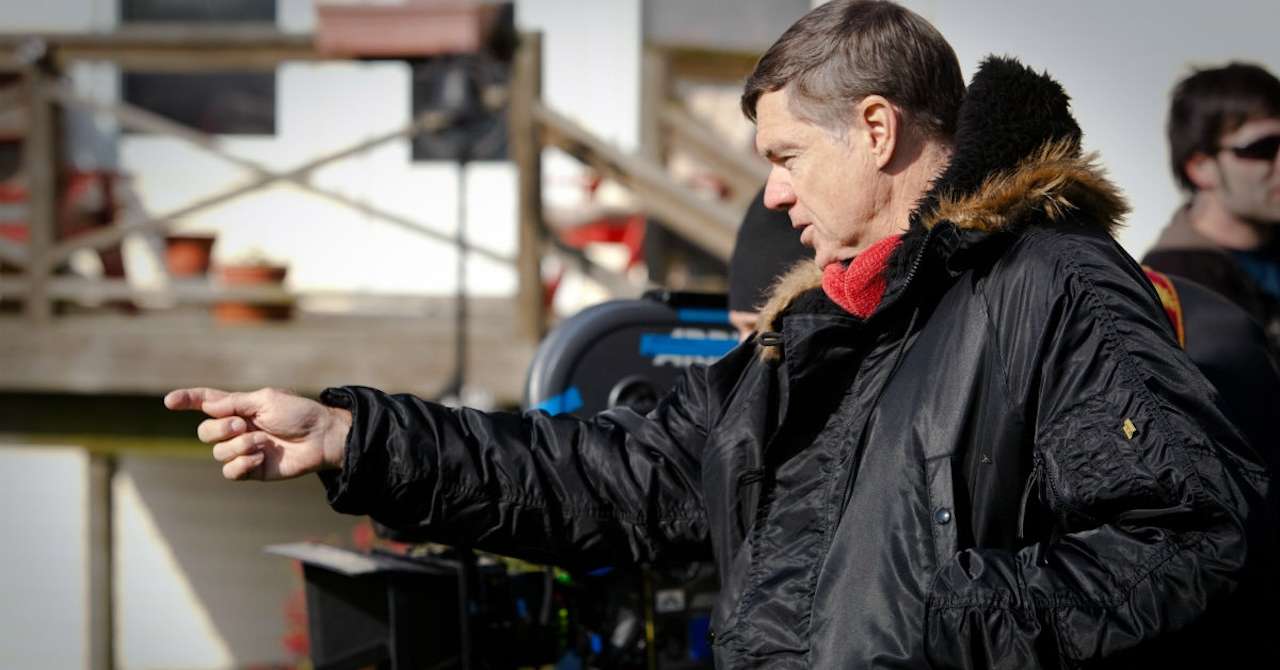
As part of the Reims Polar festival, Gus Van Sant gave a free masterclass for more than an hour and a half, often funny and full of anecdotes, in front of a packed room. The filmmaker retraced his career in fragments, looking back on his beginnings in independent cinema in the 80s, his forays into the studio system, then his regular returns to more radical forms – until his last film, The Rope around the neck.
The conversation sketched the portrait of a director who never stopped navigating between worlds. That of the actors – from River Phoenix to Matt Damon, from Nicole Kidman to Sean Penn, without forgetting Robin Williams – with whom he claims a relationship based on trust. That of the studios then, between improbable proposals (a G.I. Joe refused) and conceptual bets became reality. And always, in the background, this tension between mainstream cinema and contemporary art, inherited from his years in art school.
During this discussion, Gus Van Sant recounted how he constructed a work that was both fragmented and deeply coherent – made of bifurcations, returns, and intact curiosity.
Selected pieces.
The relationship with the actors
“On my shoots, I try to be friends with my actors. It doesn’t always work, but I think it’s a good starting point. When we’re on a set, very often the actors love the camera. Well, they love it and at the same time they’re afraid of it. At the time, the cameras were really very big, they were imposing machines, so there’s a mixture of respect and fear among them. What I try to do is, it’s to play it down, to tell them: well, OK, it’s not going to eat you, this camera, there’s no problem and even if you have ideas, even if you want to do things, you don’t have to be frozen in front of it, you can move freely.
Like this, a more relaxed relationship is established. It allows them to try things out, and I always encourage them to see what they can come up with on their own. If they ever have an idea, something interesting that’s not in the script, I welcome it. They must feel that their ideas matter. It can be dangerous, of course, but it’s part of the process. And suddenly for them too the experience becomes exciting, and funny too. We have fun on set.”
The transition from indie to blockbuster
“When I did Drugstore Cowboywe were experiencing a pivotal moment in American cinema, because many independent films suddenly attracted the attention of the big studios. Miramax, for example, initially made low-budget films, independent films, and then suddenly they had very big successes. And obviously that attracted the interest of the big studios, who all started to look for directors in the American independent scene to ask them to make ‘independent’ films, at least on a low budget – but small budgets which were still larger, let’s say more comfortable, than what we had until then.
Sony, Universal, Warner Bros…. have all started approaching directors from the indie scene. The films I made for the studios were still films that I considered small films, even if on a studio scale it was no longer the same thing. Will Huntingfor example, it was a Miramax film. To Die For also, it was a film with a larger budget. But switching to this system has not fundamentally changed the way I work. I was doing the same thing, but more comfortably, with more resources, and always with the aim of making films that I thought were independent. I never said to myself: now I’m doing something else.”
The remake of Psychosis (and how he almost made GI Joe)
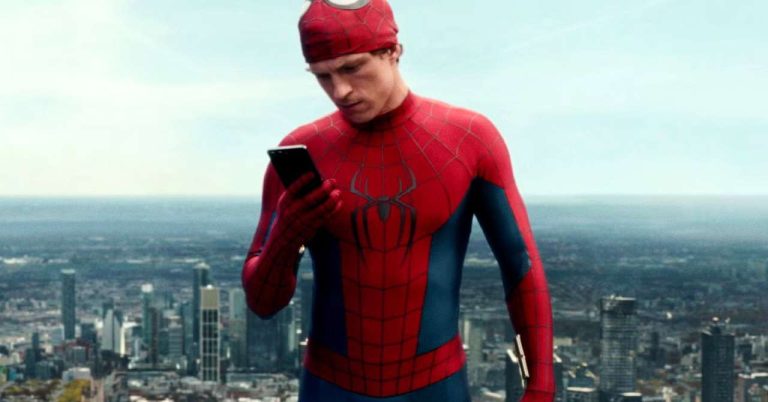
“After Drugstore CowboyUniversal was interested in me. The president of the studio, at the time, was quite young and he said to himself that if I made films for them in the same spirit, it would also attract actors, because a certain number of actors wanted to work with me. So they offered me G.I. Joe. It was the heyday of Hollywood action films, it was very successful, and you should know that a film like that had a budget ten times higher than what I was used to, and the salaries of the director and the actors were also ten times higher. Yes, I looked. I read the script. But I immediately saw that it was a truly right-wing scenario, and it wasn’t possible for me.
In the same meeting, they told me: “by the way, we also have the entire Universal back catalog, with lots of old films that we could remake, as well as scripts that were never filmed.” It was the era of remakes. For the studios, it was reassuring, and for the American public too: we already know the story, so it’s easier to get to it. I was divided on that. I said to myself: if it’s to take a story from the 50s and remake it by softening it, with a happy ending, that doesn’t interest me. I told them that what might amuse me would be to take a film that we already know is a masterpiece and to remake it, but shot by shot. Without changing anything. And I proposed Psychosis. Every time I came back to see them, I put it back on the table: “it would be a good idea to do it again Psychology shot by shot”. And each time I was told that it would never happen like that.
And then I did Will Hunting. And the film was nominated ten times for the Oscars. And then the president of the studio called me back to ask if I had an idea. I said: “yes, do it again Psychologyshot by shot”. And the response came: “great idea”. That’s how the film was made.”
The story of Milk
“Initially, it was going to be a film by Oliver Stone, who wanted to adapt a book, a very beautiful book, The Mayor of Castro Street. In the 1970s, Harvey Milk was one of the first openly gay politicians, as well as an important gay rights activist in San Francisco. Oliver Stone wanted to make a movie about it. And I thought a character like Harvey really deserved a movie about his life and his struggle. In the mid-1980s, Rob Epstein directed The Times of Harvey Milk, a documentary about his life, which won an Oscar. By this time, Stone was associated with films about political assassinations, because of JFKand I think he didn’t particularly want to remake a film centered on the murder of a politician. So he started looking for someone to replace him on the project.
He knew I was interested, and he really liked Drugstore Cowboyhe told me about it. At the time, there was talk of making the film with Robin Williams as Harvey Milk. But the project dragged on. I read an early version of the script, which focused mostly on what happened after the assassination, the defense, the trial, and the fact that the assassin only took five years. What interested me was the history before: how Harvey Milk had arrived in politics, how he had built himself, the years which had preceded the assassination.
I wrote another version, which never came to fruition. This all lasted a very long time. Seventeen years old. For seventeen years, the project stagnated. Then, years later, a new script was written for Bryan Singer. In the end he didn’t do it. The script arrived in my hands, and then I said to myself: this time, it’s good. I managed to approach Sean Penn, who wanted to do it, and everything aligned. He had nine Oscar nominations, and Sean Penn had the Oscar for best actor.”
Her relationship with Matt Damon
“I met Matt at a time when he was absolutely unknown. He had been casting for a role in Ready for anything. In the end he didn’t get the role, he was a little too handsome for the character – ultimately played by Joaquin Phoenix. When I think about it, with Nicole Kidman seducing a boy younger than her, if Matt Damon had played the role, the film would have been completely different… Years later, I found myself facing him, this time as screenwriter, with Ben Affleck. And then I realized that he really was a boy who had a lot of talents. I was very surprised. Miramax had purchased their script from Castle Rock, and they had a list of possible directors. I think I was probably last on the list – but it was still with me that the film was made.
He is someone with whom it is very easy to communicate, to work, because he has a kind of sixth sense. He understands things, he visualizes, he picks up very quickly. When we did a take on Will Huntingat the end of the take, without me saying anything, he already knew what I thought about what he had just done. So it was very quick. So much so that, for most of the scenes, we agreed to do just one take. We did the take, we looked at each other, we knew, and we moved on. When we finished the film, and it was nominated ten times for the Oscars, and Matt won the screenplay award with Ben (Affleck), we were all genuinely surprised. On Gerryon the other hand, it was a completely different experience. As much on Will Hunting they had spent a huge amount of time writing the script, refining it, polishing it so that it was like a diamond, as much on Gerry we went in an opposite direction, towards improvisation. And I think that confused Matt a little bit at first, because he was wondering where I was going with this, what I was trying to do. It wasn’t the way he was used to working at that time.
The story of Gerryhe was the one who found it in a Boston newspaper: two young guys had gotten lost in the desert, almost absurdly, even though they were right next to the road they were looking for. They were close, but for some reason they couldn’t find her. At first, they found it very funny, almost comical. When Matt Damon and Casey Affleck went into the desert to do location scouting, they were telling jokes, they were talking non-stop, it was light. Then, when we really started shooting, they changed. They told themselves that if they continued to be so natural, to talk like that, to make jokes, it wasn’t going to work, that they would look stupid. So they decided to go a lot quieter, and the film went in that direction.
And then the third time we worked together, it was on Promised Land. We returned to a working method closer to Will Hunting. The screenplay was co-written by Matt Damon and John Krasinski. It was very well written, very constructed, and as a director, it was very comfortable: I simply had to follow them, follow the story they had written.”