
Rays and Shadows: the first French summit of the 2026 cinema year (review)
There have been great films about the Resistance. On the Occupation, too. On Collaboration? Xavier Giannoli attempts (and largely succeeds) the great unthought/impossible of French cinema.
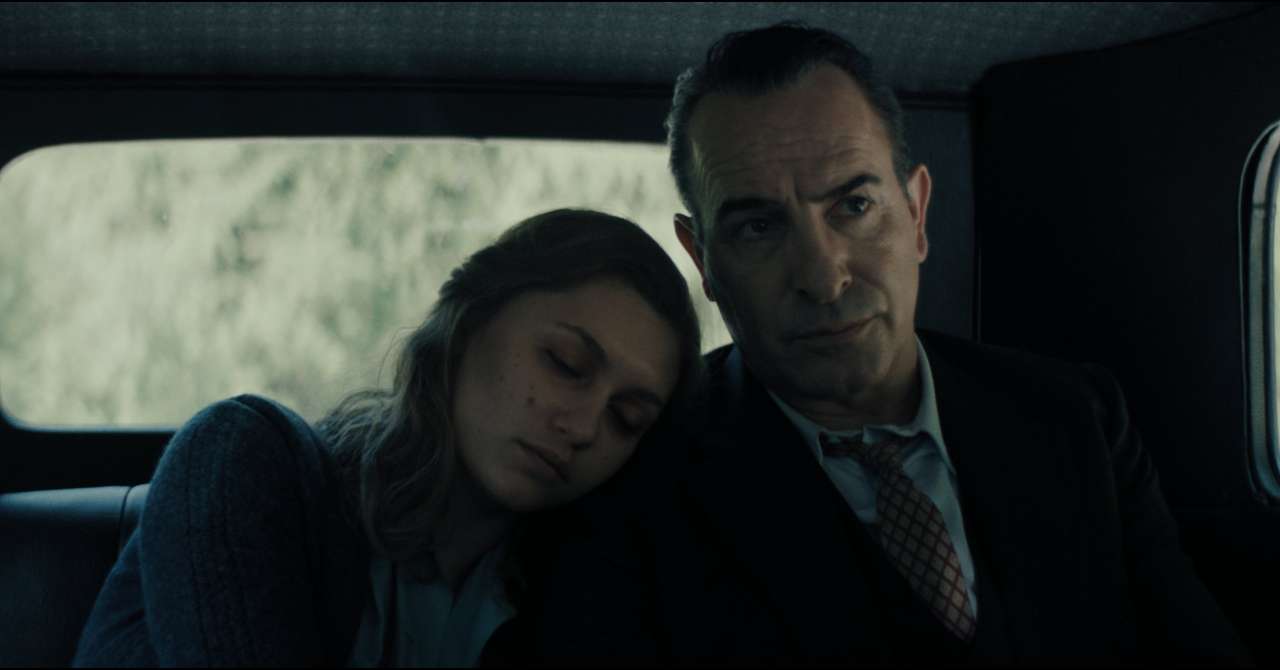
Before borrowing its title from a collection of poems by Victor Hugo, it seems that this film was for a time titled Corinne Luchaire, from the name of the starlet who offers her rays of desperate innocence. The 39-40 emerging actress is played by an emerging 25-26 actress, Nastya Golubeva, who, due to the change of title, no longer has to define the film but just to steal it, which she does with disconcerting ease.
But here, there are also “shadows,” which are not those of the well-known Melvillian army but those of its cursed counterpart, the Collaboration. They will lead to the disgrace of the young star in the wake of that of his father Jean (Jean and Corinne Luchaire, another working title), press boss and close friend of the ambassador of Nazi Germany in Paris, Otto Abetz.
Giannoli applies the gimmicks and reasonings of his Lost Illusions, another ethical reflection on the intersection between ambition, the realities of an era and the (not very pretty) world of the arts and journalism: voice-over, story over the years, oppressive immersion in a sumptuous world building, character arcs where moral ambiguities and tragic drift sleep head to tail, as in an erotic position sung by Birkin.
The cinema angle is irresistible, it tells of the dizziness of stardom, the rise before the fall of the teenage star, the behavior which changes for the better (passes, ovations) then for the worse (spitting, indignity) as soon as we recognize her in the street. Her incarnation by Golubeva is astonishing, whether she finds 1940s phrasing here or whether she dances among beautiful people who become increasingly uglier as we sink deeper into the opaque rot of the war years.
Journalism is the other breast of the film and the shattered destiny of its (anti)heroes. Jean Luchaire (Dujardin, fantastic) embodies guilty blindness, when the syllable “-sion” is added to the end of the word compromise. When does this happen? So when does the left-wing pacifist at the beginning of the film turn into a complete bastard, pilloried by the indictment of the tribune prosecutor Philippe Torreton, a sort of Mélenchon re-envisioned by Tavernier? The film spreads its wings, its effects, its Hollywood references (Casino, always, Babylon, already), its aesthetic effervescence, in the service of a transparent parallel with our present, under the tutelage of Hugo, beacon in the night and prophet in his country.
The new times of 2026 being a stutter of those of the 30s/40s, the poet (the filmmaker) cannot shy away from his political role. His ability to articulate the debate imposes on him the duty to do so. This reading of the film’s intentions, clear, almost too clear, is established from its very first sequences. The mass is said immediately, the sentence is recorded – and executed – in advance, the shadow will cover everything. The rays? Which rays? Therein lies the small reservation (relative, but fundamental) in the face of an otherwise objectively astonishing film.
It examines the hypothesis of a tipping point, but does so by creating a continuum, an inexorable gear, with no return, already definitively engaged at the time of the pacifist illusion of 1932. The film loses in romantic nuance what the demonstration gains in implacability for turnkey contemporary use. It’s likely that Giannoli knows it, and even wants it. Otherwise, why cite Victor Hugo?
By Xavier Giannoli. With Jean Dujardin, Nastya Golubeva, August Diehl… Duration: 3h15. Released March 18, 2026


