Reims Polar: a day with restless Damien Bonnard
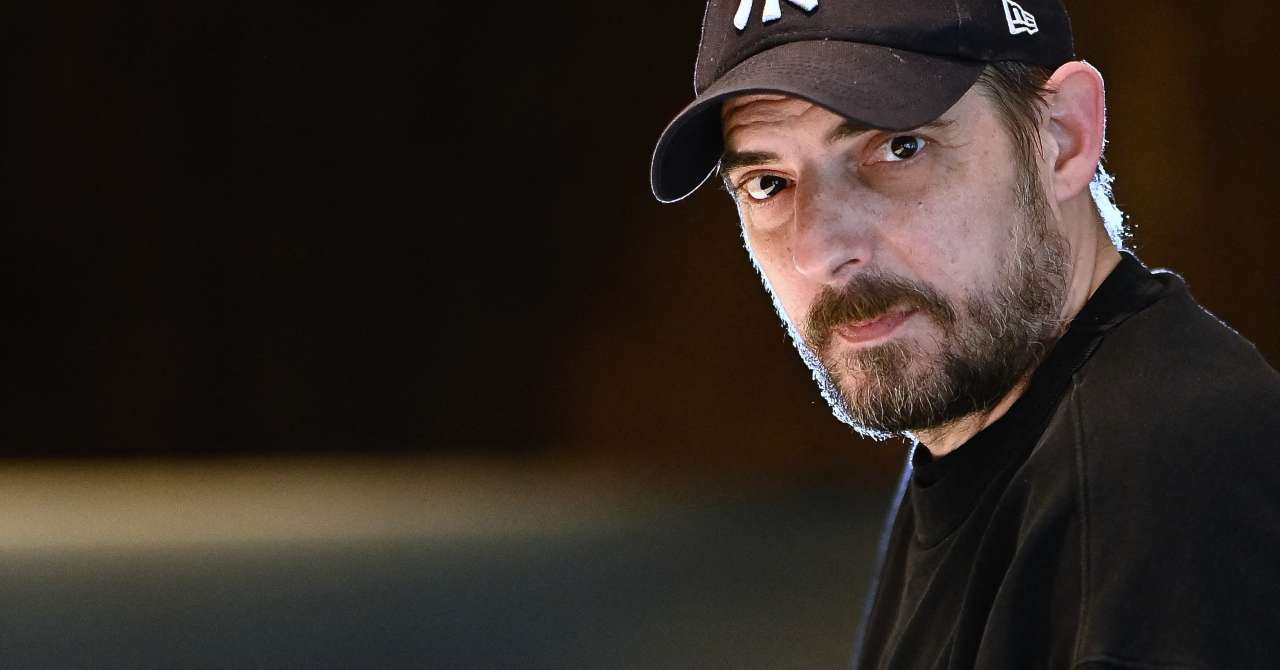
Three thrillers, an inhabited masterclass and a prize: Damien Bonnard has marked Reims Polar. The actor, as generous as he is intriguing, asserts himself as one of the most unique faces of French cinema.
In the midst of screenings and too-short nights, a silhouette stood out yesterday in Reims. Not the loudest, nor the most demonstrative. But a figure who returns, film after film, shot after shot and impresses every time. Damien Bonnard went through this day as he goes through French cinema: sideways. Three thrillers, an acting lesson, an award in the evening… and this persistent feeling that this guy definitely escapes all boxes and definitions.
Three films, three ways to disappear
You see it in the movies. At the Opéraims, we could see again at choice Les Miserables, Only the beasts Or Big Sky : three thrillers, three territories of play (the real thriller, the dark and the vertigo), and each time a different Bonnard.
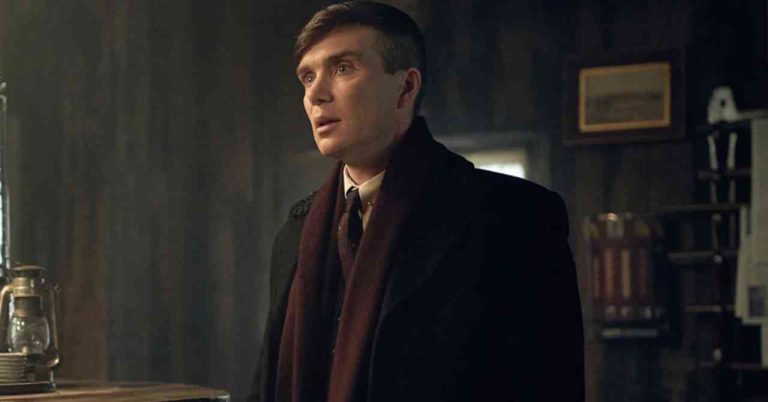
In Ladj Ly’s first film, Damien Bonnard played Stéphane, known as Pento – a transferred cop from Cherbourg who arrives at the BAC in Montfermeil without understanding what he will find. A blue, a candid, the look of the one who discovers. Faced with the methods of his teammates, he takes it, observes, and finds himself embroiled in a blunder that will blow everything up. Bonnard here embodies the spectator of the film: he is the moral compass of the story, a taciturn and tense guy, with an inner rage that he contains until he can no longer. Impressive. César for best actor 2020.
In Only the Beasts, an ensemble thriller by Dominik Moll, he is Joseph Bonnefille, a solitary breeder who has lived alone since the death of his mother and is having an affair with Alice (Laure Calamy), the social worker in charge of his case. A character who is both disturbed and disturbing – hermetic, disturbing and difficult to read. Where in Les Misérables he was the entry point for the viewer, here he is the wall we come up against from the start. Fascinating opacity.
Finally, in the first (and very beautiful) feature film by Franco-Japanese filmmaker Akihiro Hata, he plays Vincent, a temporary worker on a futuristic nighttime construction site in Lorraine. Hard working, he just wants to get through it. When his colleagues begin to disappear and the hierarchy covers up the affair, Vincent chooses to turn a blind eye. The film crosses social drama and fantasy, and creates a morally ambiguous character, caught between solidarity and survival. It is no longer opaque or, on the contrary, a common thread: here, the actor demonstrates a chilling ambiguity.
Through these three films, we discovered three ways of refusing any fixation.
A masterclass as an extension of the game
Confirmation on stage where his generosity, his energy won over the audience. His acting lesson was nothing like a lecture. No clearly stated method, no major formulas to remember. Instead, a flow of speech, often digressive, constantly exciting and always inhabited. Bonnard speaks as he plays: while searching.
He thus returned to his atypical journey. First of all, the Fine Arts, the taste for the image, the material, the contemplation. Then the theater (it was by seeing a Shakespeare play that he knew he wanted to become an actor), meetings, and finally the cinema, almost by accident. Nothing linear, nothing programmed. What fascinated him, each time, were the codes of each profession, the universes – different functionings, like mini worlds. This absence of a clear trajectory, he claims today as an opportunity: that of not having built himself in mastery, but in openness. “When I decided to become an actor, I told myself that I would find in each role the pleasure I had in being interested in unknown worlds. »
What runs through the entire discussion is his very physical relationship to the game. The body before the text. Rhythm before meaning. He evokes this need to feel a situation before understanding it, to let the character emerge rather than creating it. “I look for things physically, or through readings, music. I try to find new ways to put things together every time. » A way of being in a state of permanent availability, ready to capture what emerges on set. He also emphasizes doubt. On the importance of not knowing exactly what you’re doing. Where many seek to lock in, to define, Bonnard prefers to remain in a form of productive instability – this is where something living can appear.
His influences go in this direction: Dewaere, Auteuil… But more than actors, it is roles that mark him. He also evokes the relationship with reality, essential in his work. Go to worlds he doesn’t know, meet people, observe, immerse himself. “I spend my time observing the little details of life. This look helps me compose my characters. » Not to reproduce faithfully, but to nourish a feeling. With him, the character is never a concept: it is an experience.
And then, finally, there is this idea (in the background) that acting remains a mystery. Something that cannot be resolved. That we approach without ever really catching it. And rather than trying to explain it, Bonnard seems to want to preserve this part of the unknown. The room, inevitably, follows. Because what he tells does not resemble a lesson, but an attempt to formulate the elusive.
A reward as a highlight
In the evening, Bonnard received a prize for his career on the stage of the Opéraims. Logic. Its diffuse presence, established throughout the screenings and discussions, ended up imposing itself. Three films, a thought of the game, a reward: Damien Bonnard confirms, in Reims, that he is one of the most unique actors of his generation – precisely because he refuses to let himself be captured.