
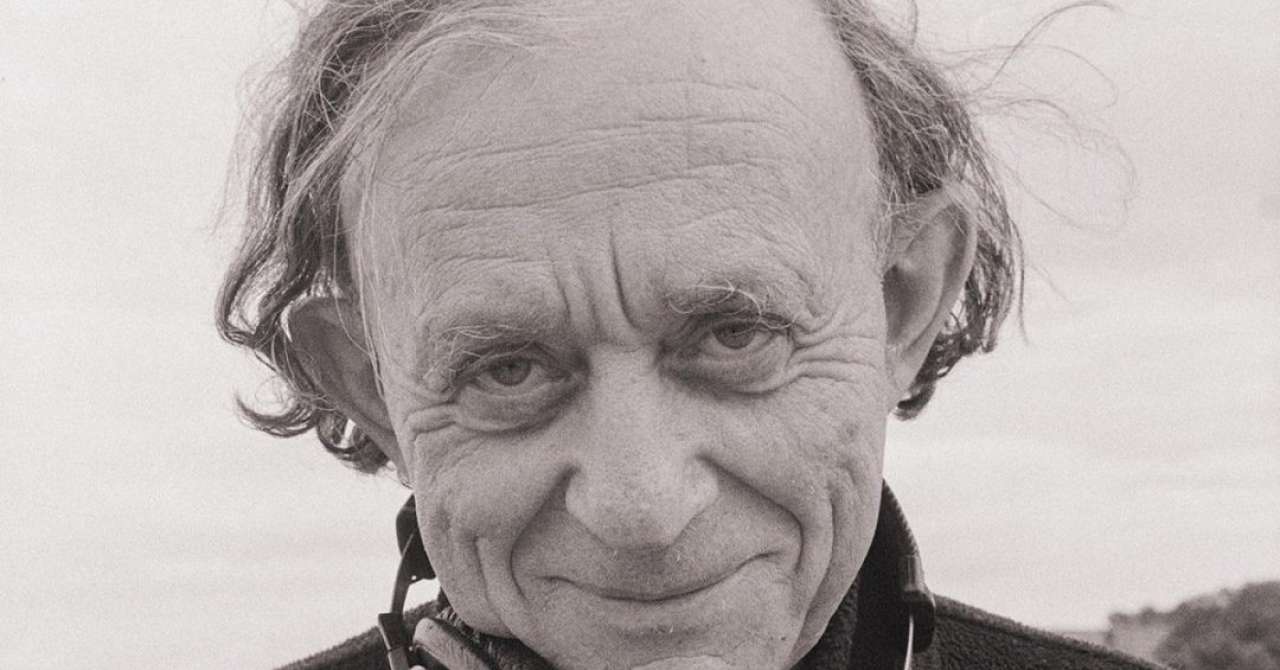
The essentials of Frederick Wiseman… by the filmmakers who admired him
On the occasion of the retrospective of his work at the Center Pompidou in 2024, Première asked Arnaud Desplechin, Alice Diop Arthur Harari, Nicolas Philibert, Claire Simon and Rebecca Zlotowski to tell us about one of his documentaries which had particularly marked them, all available on VOD. Tribute to this immense director who died Monday at the age of 96.
Law and order (1969) by Arnaud Desplechin
In this film which borrows its title from the formula hammered out by Richard Nixon during his victorious presidential campaign, Wiseman follows the daily life of a police station in a black and disadvantaged neighborhood of Kansas City With an Emmy Award to boot.
“It’s his third film but one of the first I saw, at 17. And I never forgot it. Because Wiseman has this talent for filming faces that we then remember for the rest of our lives and this genius for being accepted by those he films and giving us back characters. We all lead more or less brutal, more or less derisory lives. But filmed by Wiseman, you become immense! Law and order had a direct impact on Roubaix, a lightboth crossed by the same central question: how to respect people on screen who are not respected in life? I am lucky to know Frederick and there is something that I adore about him: his way of talking about “his” characters and “his” dialogues, like a novelist. Never as a documentarian. »
Juvenile short (1973) by Arthur Harari
A dive into the functioning of a Memphis juvenile court and its judges balancing the obligation to punish young criminals with the need to create a path to possible rehabilitation for them.
“It was Justine (Triet) who introduced me to it. This is his favorite Wiseman. Two of his “characters” particularly struck me: this teenager accused of sexual abuse of his neighbor’s children and this young man on whom the film ends and of whom we gradually understand that he participated in a robbery, even though he claims to have done it under duress. Because through them, we perceive what Wiseman records with this film: the exercise of justice in a democratic country through the judge’s listening, calm speech and sense of compromise. The repressive dimension never takes over here. We didn’t see again Juvenile short For Anatomy of a fall but he was very present during the writing. Particularly through this figure of the adult facing the opacity of the child that he seeks to decipher by trying to reconnect with something that he possessed but lost. We were nourished by our memories of the way in which, in this film, children become receptacles and then reproduce the violence of society. With the court as both a protective and negotiating zone. »
Aspen (1991) by Rebecca Zlotowski
For this first part of his community portraits before Belfast, Maine, In Jackson Heights And Monravia, IndianaWiseman films the most exclusive ski resort in the United States, its wealthy vacationers and the seasonal workers who work there.
“What took me to Frederick’s cinema were not his great classics like Welfare but the films where he opens the door to transgressive places of richness, to worlds that seemed inaccessible to me. Namely the trilogy Model (on a New York modeling agency), The Store (on a Dallas department store) and Aspen. Aspen is even the very first film I saw of his. The more sparkling these worlds are, the more the young girl that I was and the little girl that I am remains a customer! Because Frederick has a unique way of looking at them. He often says he only does comedies. And it’s extremely noticeable in these films. To have the chance to know him well and to have done it with him recently, you should know that Frederick is a very great skier. Aspen therefore brought him to the field of one of his passions. There is obviously a militant part to his work but to understand it, you must also keep in mind the hedonistic aspect of his work. »
Zoo (1992) by Claire Simon
Journey to the heart of an anthill: the Miami zoo, its 2,800 animals, its visitors, its ethical, organizational and financial aspects.
“For me, he is the greatest American filmmaker. And my master. With him, each film tells a different story. Zoo is thus entirely constructed on field against field between animals and humans, in a mirror relationship which tells of our relationship with the wild. With this mind-blowing sequence of the birth of the mother rhino. An incredible gesture of editing where several hours are told to us in five minutes. I am amazed by his ability to make subjects exciting that, like this one, did not interest me at all on paper. All while following very simple rules. : no heroes, no story, very little action. Some see Frederick as a sociologist. They are wrong! He’s a novelist-filmmaker.”
Public housing (1997) by Alice Diop
Filmed in a city in the black ghetto of Chicago and more particularly in a home reserved for the most deprived, the behind-the-scenes story of the American way of life through those it left behind and their refusal to let themselves die despite the inaction of the public authorities.
“I’m a big fan of Wiseman. I have seen all his films, real blocks concentrating a dramaturgical density which makes even the greatest fiction directors pale. And each one has come to illuminate or console a moment in my life. By going to present Saint Omer in New York, I had the chance to do a master class with him and to be able to tell him directly everything that my cinema and my life owed to him. Starting with Public housing. I’m 23 years old, I’m in visual sociology with a confused idea of what cinema is. It’s one of the first documentaries I saw and I came away dazzled. Especially in the face of beauty – because it embodies justice! – of the toothless face of this woman, Helen Finner, in this 17-minute sequence, where she tries to find accommodation for this 17-year-old single mother, while we feel that she herself is on the verge of great poverty. That’s when I promised myself that this is what I would do with my life! When, in 250 years, we want to understand the human being of the 20th century, it will be enough to watch Wiseman’s films which documented Western society. I was able to experience it recently. My son is going to a major cooking school. And with his father, as this world is foreign to us, we watched with him Pleasure menus dedicated to the restaurants of Troisgros. And in the process, my son was able to formulate what he couldn’t articulate – why he was fascinated by this world – and I was able to access what his life was going to be like. It was beautiful to experience. That’s also the genius of this man”
Monrovia, Indiana (2018) by Nicolas Philibert
A look at the heart of Trumpian America through a small agricultural town of 1,400 inhabitants which had just voted 76% for the man who had just been elected President.
“Wiseman says he feels like he’s made one long film. But Monrovia, Indiana contrasts with a large part of all the others. A film shot in a very small town, while most are in an urban environment. This small town in the Midwest whose inhabitants seem to have no interest in what is happening outside. The conversations there are narrow, banal. Those of a small world closed in on itself. Unlike the praise of multiculturalism of a Jackson Heights. The images of the cornfields returning give a feeling of emptiness. But the strength of the film lies precisely in the fact that nothing happens, in the absence of moments of bravery. This allows us to understand Wiseman’s approach as a filmmaker, the way he looks at the people he films. The fact that while he doesn’t mince his words about Trump, he doesn’t pass judgment on them. Never in contempt, this film is the symbol of his insatiable curiosity for the way in which men live. »


