
Who to send for the 2027 Oscar for Best Foreign Film? France’s new dilemma
What if Minotaur, by Russian director Andreï Zvyagintsev, was chosen by the committee? Or Asghar Farhadi’s Side Stories? This year again, France faces a delicate choice.
The French race for the Oscar for best international film 2027 promises to be particularly open.
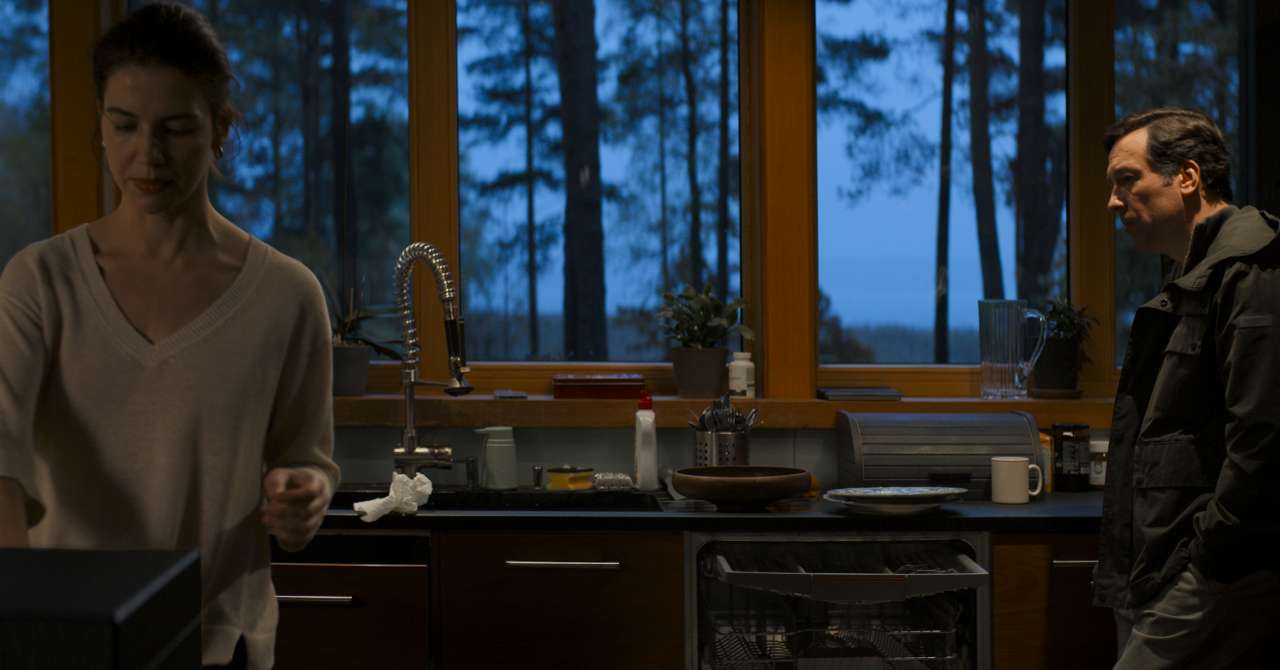
And above all, it could be played out around a film which, apparently, has nothing of a classic French candidate: Minotaurthe feature film by Andreï Zvyagintsev, Russian director of Leviathan And lack of lovewon the Grand Prix at the Cannes Film Festival last May and could be selected by the French selection committee, according to Variety.
The film is indeed eligible to represent France. Since 2025, the Academy has modified the rules of the Oscar for best international film to allow a country to present a film when its creative control is mainly ensured by its citizens, its residents or filmmakers benefiting from refugee or asylum status. A modification designed in particular for dissident filmmakers forced to work from their host country. Zvyagintsev falls precisely into this category. Installed in France with asylum status, the filmmaker directed Minotaur with essentially French production. His film, Charge Against Corruption and Putin’s Russia, is a co-production between France, Latvia and Germany. Russia should obviously not select him, while Zvyagintsev notably took advantage of his visit to Cannes to call on Vladimir Putin to end the war in Ukraine. Germany and Latvia, for their part, have already made their choice.
If France therefore decided to also pass its turn, Minotaur could find itself without a country to defend it in the Oscar race. A scenario reminiscent of that of Beyond the light by Payal Kapadia (2024), a film that was considered by both France and India before ultimately representing neither country.
A new rule that changes the game
Zviaguintsev’s situation is all the more interesting since the rules of the Oscars have just evolved on these questions of nationality and belonging to a country. For the 2027 edition, a film can still be sent by one of the approved national committees, but the Academy now explicitly recognizes refugee or asylum filmmakers among those who can ensure the creative control necessary for a film to be eligible.
A second new feature also allows a non-English language film to bypass the national selection when it wins certain major festival prizes: the Palme d’Or in Cannes, the Golden Bear in Berlin, the Golden Lion in Venice, the World Cinema Grand Jury Prize at Sundance, the Busan Award in Busan or the Platform Award in Toronto.
But Minotaur does not fall into this second category, having won the Grand Prix, and not the Palme d’Or on the Croisette. It therefore does not benefit from this automatic qualification. Its fate at the Oscars depends on the French committee. And this one will have his work cut out for him.
The debate is inevitably reminiscent of last year’s choice. In 2025, France decided to send A simple accident by Jafar Panahi, a dissident Iranian filmmaker, rather than a more traditional French film. The choice may have been surprising, but it turned out to be particularly relevant: Palme d’Or at Cannes, A simple accident then received two nominations for the 2026 Oscars, in the categories of best international film and best original screenplay. Without allowing France to win the statuette however.
This decision, however, had revived the debate on the place of a foreign director in the French selection, particularly when the film is not in French, which is also the case with Zviaguintsev’s film.
Chaired by Charles Tesson, the commission must establish a shortlist on September 10, then hear the directors/distributors on September 16 before choosing the French film.
Not Asghar Farhadi?
Another Iranian filmmaker, Asghar Farhadi, double Oscar winner for A separation And The Customercould have been chosen.
He shot his new film in France, Side storiesand in French what’s more, with a most prestigious local cast: Isabelle Huppert, Virginie Efira, Vincent Cassel and Pierre Niney. But the film, also presented in competition at Cannes this year, was not submitted to the French committee, according to information from Variety. Farhadi should therefore not enter the French race.
Not Suddenly neither
Another potential candidate that disappears from the equation: Suddenly by Ryusuke Hamaguchi. The film, shot in French and Japanese, was largely produced in France, notably by David Gauquié and Julien Deris, and could therefore have claimed a French candidacy. But it will ultimately represent Japan in the race for the Oscar for best international film. A small disappointment for France, since the feature film had been one of the Cannes events. It notably earned Virginie Efira and Tao Okamoto a shared prize for best female performance. The film therefore had all the arguments to enter into French thinking. But he has now chosen the Japanese route.
Moreover, we note that the Cannes Festival will still weigh heavily in the race for the Oscars this year: the Un Certain Regard 2026 Prize, Everytime, by Sandra Wollner, will represent Germany while Belgium has chosen Coward by Lukas Dhont.
What other French films are possible?
Beyond MinotaurFrance has other credible alternatives to send to the big American ceremony: The Unknown by Arthur Harari, or even La Gradiva by Marine Atlan, and Our Salvation by Emmanuel Marre, screenplay prize at Cannes. We also talk about Xavier Giannoli’s latest film: Rays and Shadows.. Animation is also a real French strength this year, with In Waves by Phuong Mai Nguyen, adapted from the graphic novel by AJ Dungo or even The Corset by Louis Clichy, who won the Un Certain Regard Special Jury Prize at Cannes.
The battle is therefore far from over. But Minotaur has an advantage that few of its competitors can claim: a director with considerable international pedigree, a Grand Prix at Cannes and a political history that could give the campaign particular resonance in the United States.
Can France still afford to let its best candidate pass?
It should be remembered that France has not won the Oscar for best international film since 1993 and Indochina by Régis Wargnier.
And the last few years have left some regrets. In 2023, the commission preferred Dodin Bouffant to the Palme d’Or Anatomy of a fall. Tran Anh Hùng’s film was ultimately not nominated, while Justine Triet’s film received five Oscar nominations, including best film and best direction, and ultimately won for original screenplay. Then Emilia Pérezchosen to represent France at the 2025 Oscars, was nominated in the best international film category but did not win the statuette, despite 13 nominations in total and two Oscars, for Zoe Saldaña and the original song.
After these missed opportunities, the French committee finds itself faced with a highly symbolic choice. Should we favor a French film in the French language, or seize the opportunity to defend a dissident filmmaker whom France welcomed and whose film it largely produced?