Salif Cissé: “Not seeing people like me on screen, I forbade myself from thinking about cinema!”
The 32-year-old actor continues to impress the screen with his sovereign presence. After The Answering Machine where he took the voice of Denis Podalydès, he played an entrepreneur in Météors. Encounter.
Salif Cissé appeared on our radars in the middle of the Covid crisis when theaters no longer knew where to turn. On board by Guillaume Brac, a holiday film shot with students from the Paris Conservatory, was a great escape from the gray. In the center of the frame, the gentleness of the character of Chérif (Salif Cissé), a priori the most self-effacing, was immediately evident. There was a poetry in the eyes, a serenity in the gestures, an electricity that immediately went up a notch…
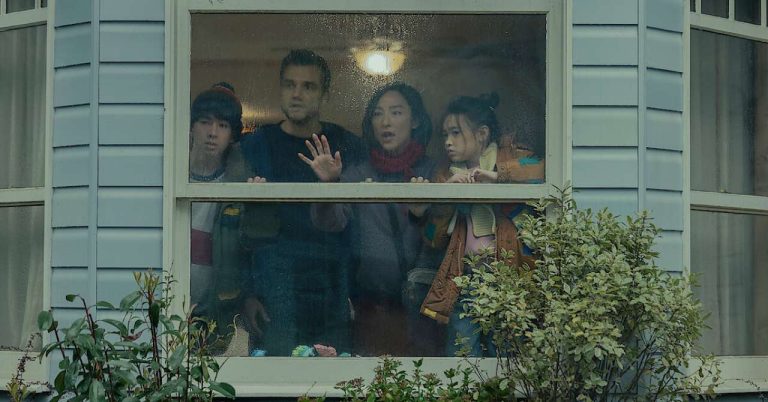
Since then, the actor has made his way: theater (his first love), series (UFO(s); Irma Vep, Lupine…), radio (Less than 10k a show dedicated to young talents on the Movement) and cinema and a first production with the short film Allies (2023). He landed the leading role alongside Denis Podalydès in The Responder by Fabienne Godet (2025), a comedy where he shows surprising gifts as an imitator. Here he is today in Meteors by Hubert Charuel and Claude Le Pape, third thief in this comedy-drama around young people exposed to radioactive waste. It was well worth a quick call to find out a little more. We start with the boards…
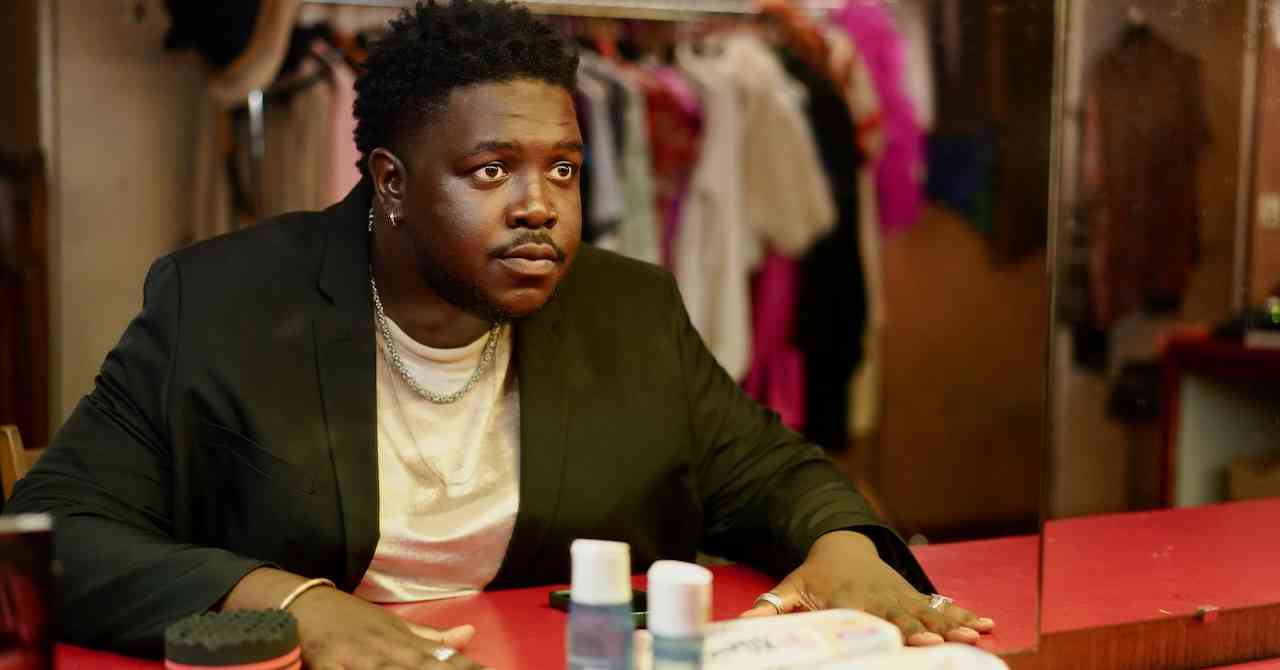
First: You are currently performing in a play. Can you tell us more?
Salif Cissé: It is a French adaptation of Barber Shop Chroniclesa show originally created at the National Theater in London. The action takes place in afro hair salons. The author, Enua Ellams, realized that these men of African origin sometimes confided more in their hairdressers than in other relatives. Some of these hairdressers are also taking psychology training to better welcome speech.
Does this subject affect you personally? Have you experienced these fairs?
Enormously. I grew up in these salons. I have the chance through the exercise of my art to express my emotions, but I have many friends for whom it is more difficult. The living room was one of the rare places where they could freely discuss certain subjects, sometimes more easily than with their parents or loved ones.
Tell us a little about your own family background. What environment did you grow up in?
I grew up in the Paris suburbs in a happy family. My mother is Senegalese, my father Malian. I have three sisters, so I was the only boy. I tended to isolate myself a lot, so I immersed myself a lot in my imagination. I watched a lot of movies, I read, I played video games… That’s when I felt good. I really liked being in my bubble. Not because I felt excluded, but because I loved it. I was happy in my solitude.
How did you discover theater?
In high school. It was a revelation. Before that, I had never done one or even attended a performance. And then one day I tried it, it hit me like a cold shower. It was immediate. Others noticed something in me and encouraged me. I let myself be convinced, I didn’t want to stop.
Did you feel, like other black actors, having difficulty finding your place in this still very white environment?
Yes, in part. I saw the documentary The Death of Danton by Alice Diop, who touched me. I didn’t experience exactly what the protagonist went through, but I did experience a form of symbolic violence. When I arrived at the Conservatory of the 1st arrondissement of Paris, I came from another universe, with other references. It was hard to feel understood.
And how did you manage to assert yourself?
I was lucky to come across a teacher who helped me a lot. He said to me one day: “I’ve seen lots of similar profiles but you came up with something unique. Never lose this.” At the time, I took it badly. “Why is he talking to me about difference?“Over time, I understood that it was a strength. Being unique is precious in this profession.
When someone tells you that you have a “presence” on stage or screen, is that an easy compliment to receive?
Not always. I have often been told that I have a beautiful presence, but for an actor, presence is not something he masters. I asked myself: “ Am I just that, just nice to look at? »It’s destabilizing. The eye of the beholder is very subjective. There are people we want to watch, others less so, that’s how it is. There is a part that escapes us, and I find that ultimately very beautiful.
You were noticed from your debut in the cinema, notably in On board. We feel a form of evidence when you are on screen. But I imagine that behind it, there is a lot of work?
At first, I didn’t really understand what “work” meant for an actor. It was only by observing people I admired on tour, seeing them rehearse rigorously every day despite their experience, that I understood what being an actor really meant. My goal is to work a lot… while giving the impression of not working at all!
In the movie The Responder, you played a character whose job is precisely to take the voices of others, a sort of mise en abyme of your job…
Exactly. It was very special and fun to play. These scenes allowed us to show a rarely visible side of the interpreter’s profession: the level of precision necessary even in the simplest things. Spectators only see the result, never the work.
When you were a young actor, did you have any role models or figures who inspired you?
The first actor who struck me was Jean-Christophe Folly. If he played in Claire Denis films, I mainly saw him at the theater, at La Courneuve. He played Creon in Antigone. He was incredible. He was a black person, like me, he had gone to the Conservatory. I said to myself: “It’s possible!” Of course, there are also actors like Denzel Washington, Forest Whitaker or even Brad Pitt, who I really like. But they are less “referent” for me, because they seem very distant to me.
Was cinema always in your sights, or did it come later?
Basically, I only thought about theater. I was in total amazement at having discovered something that changed my life. I wasn’t thinking about cinema at all. I even think I stopped myself from thinking about it. Not seeing people like me on screen I didn’t imagine it was for me.
Do you think that representation in cinema is really changing?
The lack of diversity on screen is a huge anomaly. A director once said that he had to “dream” people before putting them in his films. Now that he encounters more diversity in his field of vision and particularly in films, he can finally “dream” them. It’s crazy to think that everything depends on that, on the imagination of the creators! Paris is a cosmopolitan city. There are people like me everywhere on the street.
As a performer, does this question of representation affect you?
I want to think of my roles like any of my white classmates at the Conservatory. They never ask themselves: “Can I apply for this role?” They do it, naturally. When they watch a film, they see themselves there, they see their parents, their grandparents. I don’t have that. But if I only think about that, I don’t move forward.
Beyond skin color or origins, an actor is always in constant reflection on his place in the world, on how he will be perceived, desired…
This is indeed a universal question. Place in the world is a profoundly human question. My goal is to speak to everyone.
In MeteorsTony, your character seems more solid than the other two heroes. It nonetheless remains very ambiguous. How did you compose it?
Tony carries with him a real moral dilemma. He starts a business that pollutes his own region and chooses to expose his friends to radioactive waste. He said to himself: “As much as I’m the one doing it, at least my loved ones benefit from it.” I come from a city, so the question of success is relative. There are some who “get by” but who have imposter syndrome. Tony, he carries this conflict within him: he wants to remain linked to his origins so as not to get lost. And then it’s difficult to judge him.
Between the series, the feature films, the theater…, the rest promises to be busy?
This year, I had barely twenty days of vacation. Working with Denis Podalydès inspired me. It never stops. I think I’ve become just as “addicted” to work. It suits me very well.
Meteors by Hubert Charuel. With: Paul Kircher, Idir Azougli, Salif Cissé… Duration: 1h48. Currently in cinema.