
Etty: a masterful series on the big screen (review)
Hagai Levi adapts the diaries of Etty Hillesum, a young Jewish woman who died in Auschwitz in 1943, in a deliberately contemporary Amsterdam. A radical bet, a revelation as an actress, a major success.
Bicycles pile up by the thousands in an open dump. Confiscated, abandoned by those to whom they belonged. Earlier, men in uniform were beating Jews in the street. And then there were those Hitler salutes, which cracked in the air. Etty Hillesum’s story takes place in Amsterdam in 1941, in the midst of Nazi occupation. But the series by Hagai Levi (BiTipul) transports us to Amsterdam today – or almost. The cars are contemporary, the faces too. Nothing really points to the past except what is happening now.
Etty therefore begins in this unstable gap, where it is no longer a question of reconstituting the past but of letting it contaminate the present: History does not return, it infiltrates, and the series advances like a dystopia without signal, a world barely displaced, just enough in any case to become disturbing. The formal bet was confusing, and some saw it as a simple gimmick. But this is to misunderstand what Levi is putting in place. We have known for a long time that historical reconstruction protects us, that it establishes a reassuring distance by relegating the horror to another time, another world.
Here, this shield disappears: the characters look like us, walk like us, dress like us, and the occupation falls on them as it could fall on anyone, anywhere, at any time. A few years ago, Ari Folman took Anne Frank out of the museum to transport her today (Where is Anne Frank?). It was in animation. Almost fantasized. Levi pushes things further – here no more filter, no more detour. And suddenly it really becomes our problem.
At the center of these 6 episodes (broadcast on Arte.tv, the week following its theatrical release in two parts), Etty Hillesum, 27 years old, an unstable, worried student, who begins therapy and begins to keep a diary. She will experience oppression but does not enter the gallery of fighting heroines that the TV series has accustomed us to frequent – exemplified by June Osborne from The Handmaid’s Tale. Etty is not the heroine of a visible response, a heroic gesture or a spectacular resistance. She is a heroine of inner endurance, lucidity and above all the refusal of hatred.
Her story follows an inverse trajectory to that of the world around her: the more the Nazi grip tightens, the more it opens. To the world, and to her especially. And where the great serial female figures organize resistance, Etty disarms it. It simply holds; without adopting the forms of violence that she suffers. Her diaries tell of her refusal to run away alone when everything pushes her to do so. His refusal also to believe himself indispensable. “It is a curious overvaluation of oneself to consider oneself too precious to share a mass destiny with others. »
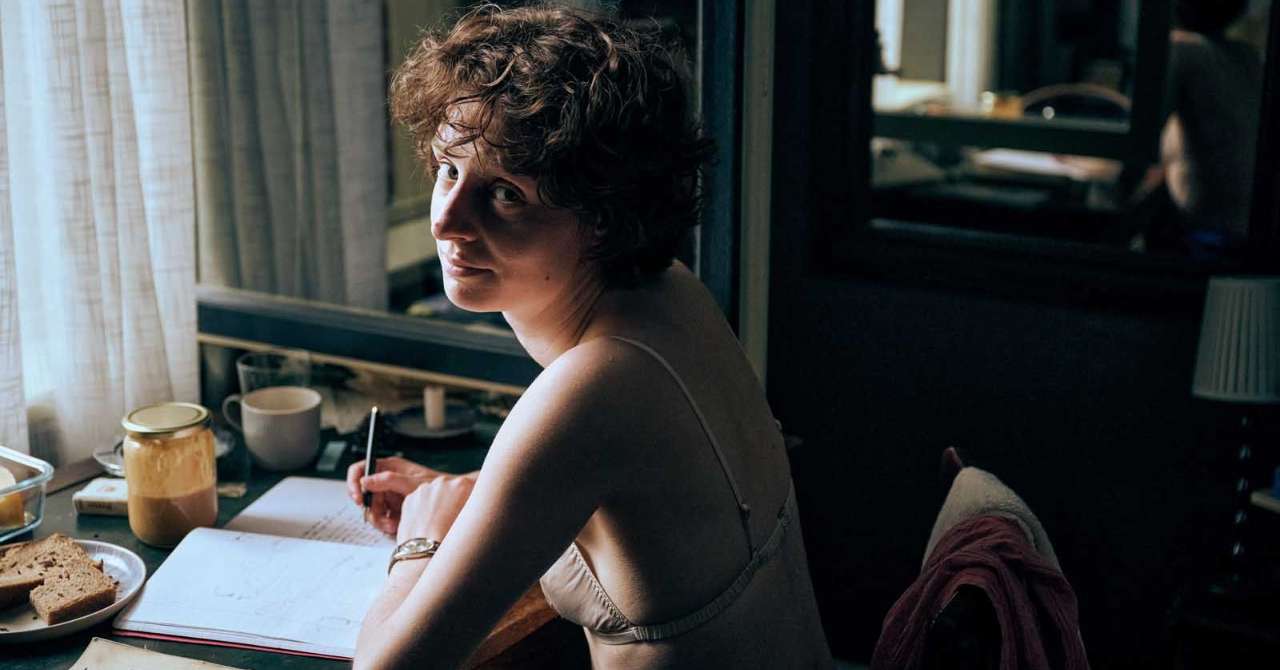
Levi therefore adapts his story with an almost dry freedom. Shot-reverse shot. No bragging. He seeks neither biographical fidelity nor illustration. He films a transformation more than a destiny, relying on a minimal, tense device, where each scene seems to be able to change. Julia Windischbauer carries the series from start to finish with astonishing intensity, always on the verge of rupture. Opposite her, Sebastian Koch (The Lives of Others) composes a troubled and magnetic Julius Spier – at the same time her mentor, her lover, and above all her revealer. It acts less as a guide than as a detonator. There is nothing spectacular in his destiny and in Etty, nothing demonstrative. Just a clear line, held to the end.
By Hagai Levi. With Julia Windischbauer, Sebastian Koch, Gijs Naber… Duration: 2h43 and 2h43. Released May 6, 2026