Maxence Voiseux: “The documentary is a molecule that accelerates life”
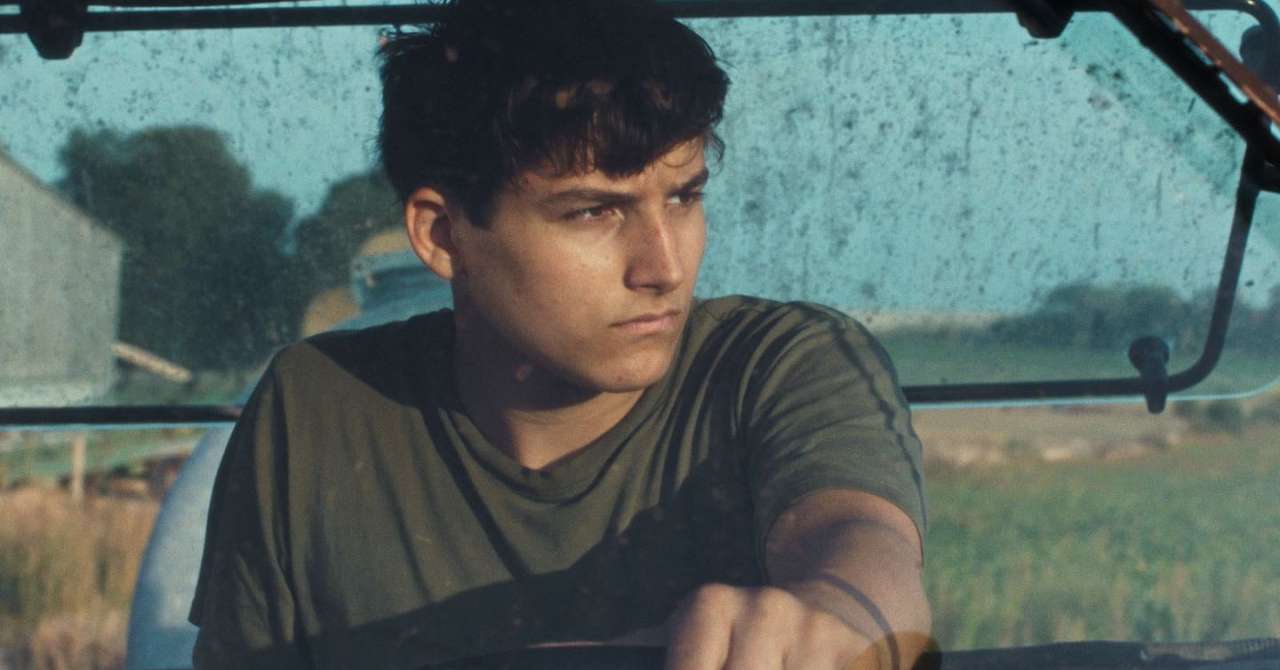
Presented in Cannes, Gabin by Maxence Voiseux follows the emancipation of a country boy over ten years. Here he talks about the making of this atypical doc and its references.
You film Gabin Jourdel over ten years from the age of eight. Can you tell us how this shoot took place?
My first two films (a short and a medium-length film) were already films with the Jourdels – with Gabin’s grandfather and with his father, Dominique. The Heirs was a family saga around the three brothers. Gabin appeared there and at that time he was eight years old. So I literally met him while filming him. Gabin Strictly speaking, it begins when he is ten and a half years old, and it lasts until he is eighteen. Between the eight and ten years, there was therefore an ellipse. Time to decide to start on this project. It was with this family that I learned to position myself, to film, to edit. I had a trust with them that I believe is totally unique. Sometimes I have trouble telling myself where it comes from.
This confidence is an asset but when we direct and when we tell a story it can become a difficulty, right?
It was almost too big, and paradoxically it was much harder. She was imposing something on me, she was demanding something. The more confidence I had with them, the more demanding I had to be about what I staged, about what I could deploy. The scene between Dominique and his brother, for example, I worked on almost like a fictional scene – not at the time of filming, but beforehand. I knew that Dominique needed to talk to someone, to say that he felt like an old patriarch who was a little hurt. My job was to prepare for this moment, to know where it could take place, on what day, under what conditions. I had to have a very detailed and intimate knowledge of their moments. A very strong kind of connection. If I brought them together just to hear what I wanted to hear, it would never work. But if they themselves need to talk to each other, the documentary crushes the organizational aspect of the staging.
Were there moments when you had the feeling of a conflict of law between your film and the Jourdels?
The documentary process is an intangible object between the one who films and the one who is filmed. Nobody knows what it’s going to look like, especially in a doc where you reinvent everything during editing. What was unique about the Jourdels was that we each came to leave something there. I told them that it was a film about Gabin’s emancipation, about transmission, about something like a family fresco. They knew what I was filming, and it awakened things in them – they are inhabited characters. Sometimes they used the film to affirm things to other family members – that’s what happened with the genealogy. Gabin was able to tell his father that he did not want to take over the butchery by also using what he put in the film. It was impossible to sort out what was cinema and what was life. My only compass was: am I aligned, ethical with what I am doing with them?
We imagine that the film had a very strong impact on their lives.
The film process is like an enzyme. He causes things that might otherwise have happened, but he makes them go through a bottleneck. After the film, Gabin went to Canada – I’m not responsible for Canada. But the film questioned his future, his loyalty, and it fueled this desire for something else. I should definitely not force or push. I fed the plant, that’s all. The day he told me that he was going to apply for his studies across the Atlantic, we both laughed and said that there would be something left of that in the film.
Gabin leaves, but on tiptoe.
That’s what upsets me about him. In emancipation stories, we often have people slamming doors and swearing they will never return. Gabin sorted out his affairs and left properly. Not to be smart, but because he has a loyalty, a respect for where he comes from – the culture, the language, his father, the very relationship with butchery, which he does not want but which he deeply respects. It was an exciting complexity to stage, this double dimension of the start. A frank and gentle emancipation at the same time.
We talk about the manufacturing process and your relationship with the Jourdels, but the film is also a very strong cinematic gesture. I asked myself a binary question when leaving the film: you are rather Boyhood or rather Farmer Profiles of Depardon?
Ahaha. I really like both. But… I would say neither for this film. My real reference is, paradoxically, literature: The Thibaults by Roger Martin du Gard, this fresco of two brothers who cross the 20th century, who love each other as much as they hate each other, who do not vote the same thing, who do not eat the same thing, and who remain brothers. For a long time I wanted to call the film The Jourdels. But obviously, on the cinema side, Depardon is around – for the agricultural sector and for documentaries. Linklater for his relationship with time. But Pialat should be added for the relationship with the father. And Andrei Zvyagintsev, who is competing this year. lack of love, Leviathanit is a cinema of absolute demands and harshness of staging. Everything is there, there are no frills. Like Ceylan. These are really filmmakers who nourish me a lot.
We thought of Dumont too…
Ah! Yes ! The first ones especially which are masterpieces. Humanity, The Life of Jesus…It was very important for me
There are a lot of fictions after all.
Yes, and that’s probably why the pace of the film is what it is. I wanted to shoot in 4/3, on a stand, with two fixed focal lengths. That there is a patina, something that tells the story of the territory. The editing was disproportionately long because for a long time the film was very wise: we told everything. And then we understood that removing things only added power to the story, creating mystery about the characters. It’s a gigantic lesson on the relationship with time, and therefore on cinema.
Do you have an example?
The transition to agricultural high school. I had filmed everything: the last summer on the farm, a superb sequence with Lilou, the move to boarding school with her mother, the start of the school year, the meeting with friends, the photos. Delicacies of reality, sequences that I adored. We cut everything. He visits the high school with his mother, and then he’s in high school. Point. There’s a monumental off-camera look at what happened between the two: who he’s with, how long he has left, what his parents think. Everyone puts in what they want, and I get told lots of things about them from this void.
But it’s riskier than in fiction I imagine.
Much more. In fiction, we can catch up, do a post-sync with an explanatory dialogue, add a scene. In documentary, when you remove it, you also lose intelligibility. It’s a requirement: to create something off-camera, something ellipse, without explaining everything and without losing the viewer. It’s a work of goldsmith.