Summer 36: what is the new historical saga of TF1 worth? (critical)
Nolwenn Leroy leads this retro fresco which takes us to the Côte d’Azur in 1936, in the excitement of the first paid holidays and the clash of social classes. Nicely frustrating.
Social diversity on the Promenade des Anglais!
With Summer 36, TF1 is attempting a new major historical and popular saga in the wake of the Bazar de la Charité and the Combattantes. Direction Nice, in August 1936. Near the luxurious Riviera hotel, bankers and members of the upper bourgeoisie see those arriving who, for the first time, can enjoy a vacation thanks to the paid leave recently introduced by the Popular Front. The Côte d’Azur is no longer reserved for an elite: the working classes now also migrate south when the sun is shining.
Carried by four heroines whose trajectories end up colliding, the series relies on a flashy casting. Nolwenn Leroy, who is trying the TV adventure again after the Brocéliande hit, even finds her former friend from the Star Academy, Sofia Essaïdi. Alongside them, Julie de Bona and Constance Gay complete this female quartet thought to be the emotional heart of the story. And to surround them, the production has thought big: Miou-Miou, François-Xavier Demaison, Pascal Elbé, Sam Karmann and even Simon Ehrlacher come to densify the gallery.
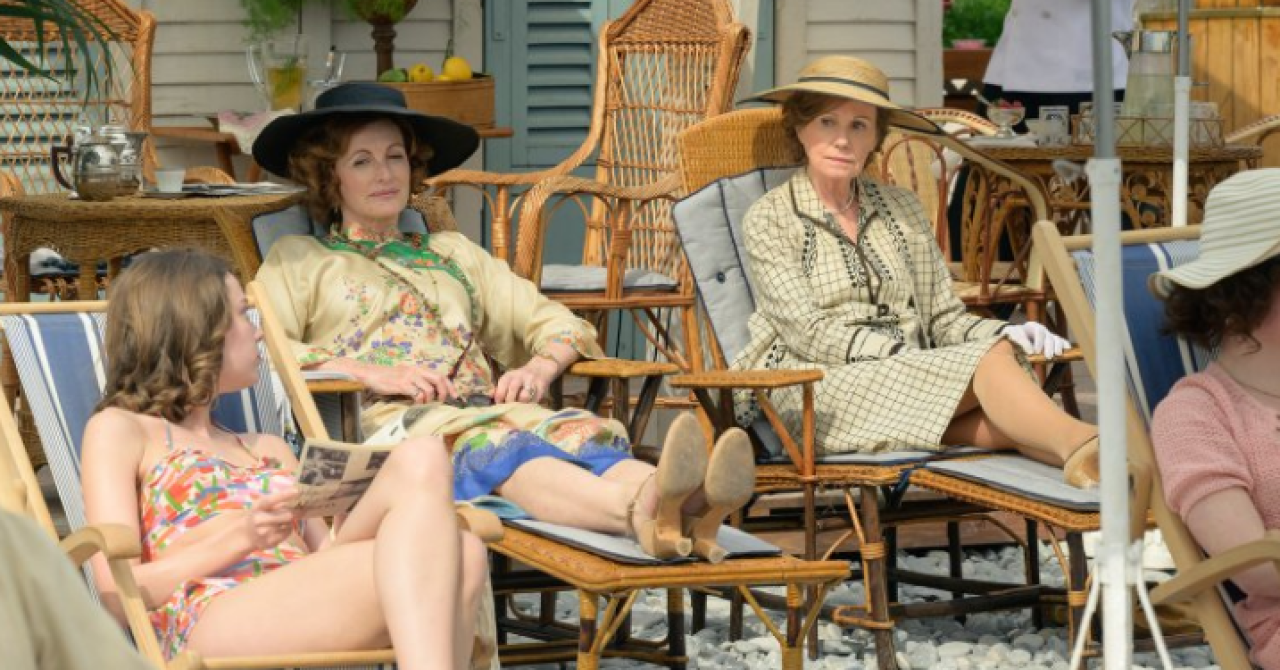
The care taken in the production is the number 1 asset of Summer 36. The fiction aligns the postcard settings with crazy generosity. But rather than a naturalistic reconstruction, the series prefers an assumed fantasy vision of the era: the one that the collective imagination created a century later. The colors burst, the dresses twirl, the Mediterranean sparkles like in a cinema dream. With its 1,700 extras and 250 costumes, the production creates a living picture that sometimes evokes a painting by Raoul Dufy: it is luminous, beguiling, almost unreal. The problem is that this beautiful paint quickly ends up cracking.
Because instead of truly weaving the portrait of a society in full upheaval, the scenario is often content to crudely juxtapose the hues of the bourgeoisie and those of the working world. This fascinating social collision, where the working class in turn discovers pleasures hitherto reserved for the rich, could have given rise to a fascinating fresco on the concrete consequences of the class struggle. But the series quickly prefers to branch off towards the marked thriller. A mysterious murder in the hotel turns Summer 36 into a vintage big-hoofed whodunit. The characters become more and more theatrical, the dialogues sound very artificial, and the whole thing ends up losing the social finesse once envisaged. Where the series seemed to want to observe a changing France, it finally takes refuge in the very classic mechanics of giant Cluedo under the Nice sun.
Too bad, because behind this luxurious facade and this gleaming artistic direction hid the possibility of a truly great popular story about the summer when France changed its face. Instead, Summer 36 mostly feels like a good old summer saga that arrived a little too early in the calendar…
Summer 36, in 6 episodes, to watch on TF1 from May 18, 2026