Medea Session, movement of women filmmakers for independent documentaries
On June 11 at La Fémis, Medea Session will launch its first edition under the sponsorship of Rosalie Varda. This professional screening will highlight five self-produced documentary short films directed by women. Première is a partner in the project.
Medea Session is not a festival, but a meeting space designed for documentary filmmakers working outside traditional production circuits. Today, part of contemporary documentary cinema is produced independently: women write, shoot and edit their films with few resources, but a truly unique perspective.
Because a film can be born far from established networks, Medea Session defends the idea that a cinematic gaze must be able to find relays, whatever the background or means of those who carry it.
These films already exist. What their directors often lack are spaces where they can show their work and circulate their films.
Medea Session wants to create this link between a new independent documentary scene and cinema professionals, around a selection of self-produced short films supported by strong and contemporary writing.
Alongside First are also held The French Film And La Fémispartners of this first edition which will be held on June 11. Producers, broadcasters, programmers, or even journalists wishing to attend the screening can reserve their place now via (email protected).
We remember the documentaries of Agnès Varda, the poetic The Gleaners and the Gleaner to the innovative The Beaches of Agnès. With these films made freely, often outside traditional frameworks, one of the great figures of French cinema has imposed his signature. Her daughter, Rosalie Varda, then acts as a symbolic and obvious godmother for this first edition.
A “natural ally” as described by Hannah Rosselin, who grew up near “of a free cinema, born outside the circuits, driven by the urgency to create.”
With its mythological name, Medea Session defends a new independent and international documentary scene. The project supports female directors from different countries and seeks to offer them what is still too often lacking in self-produced films: a professional network, distribution opportunities and support for the rest of their journey.
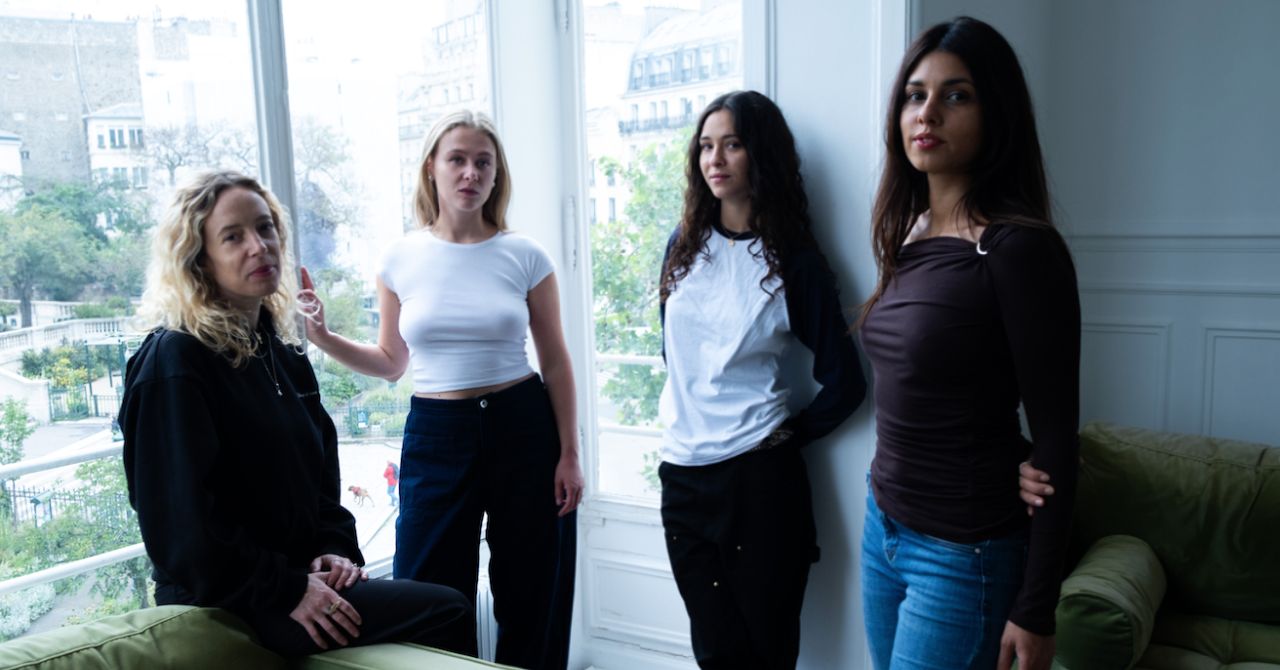
The figure of Medea, a free woman for some, a rejected figure for others, resonates with this movement led by women from different backgrounds: Jessica Melcher and Iola Degasne in production, Ahnly Roblique in communication and digital strategy, and Camille Spiller in artistic direction. The project brings together different trades around the same ambition: to put still invisible works back into circulation.
It is the filmmaker Hannah Rosselin, with her experience in self-production, who is at the origin of Medea Session. She writes, directs, shoots and produces her own films before joining the La Fémis screenplay workshop three years ago. We owe him in particular Scarsawarded at the Marseille Music and Cinema Festival. She is currently developing her first feature film, set on Reunion Island.
“I never waited to be allowed to make films. And with MEDEA, I understood that there were many of us in this situation. Making a film alone, managing to bring teams on board without money, seeing a project through to the end despite the lack of structure, that’s not amateurish: that’s already proof of cinema. It requires immense conviction, because you can’t go through all that without feeling like you have something necessary to say. Today, many female directors remain invisible simply because they do not have the right contacts. If we do not support this autonomy, we are missing out on essential filmmakers.”
Nearly 100 films from all over the world were received. 18 were preselected and 5 will be screened during this first edition.
Each director will be supported for six months by a mentor in order to support the development of her future projects, expand her professional network and promote the circulation of her films. Among them: casting director Julie Allione, director Sarah Marx, producer Claire Leproust, film critic Nozhat Badi and Nigerian filmmaker and journalist Rahmatou Keïta.
A new documentary scene born in Paris, which puts freely produced films back into circulation and defends another way of making cinema exist. A first edition conceived as the starting point of a movement destined to grow.


