
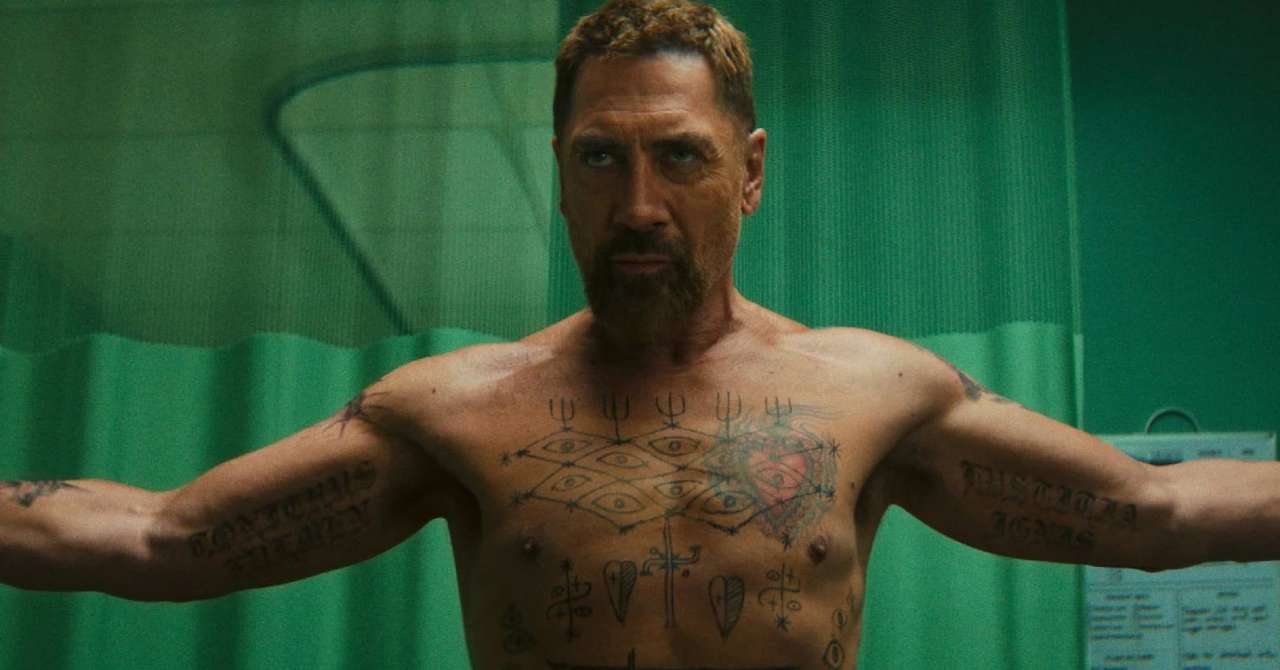
Cape Fear: “I never imagined anyone other than Javier Bardem to play Max Cady”
Creator of the Apple series, Nick Antosca tells us how he reinvented Les Nerfs à vive, to modernize the story and its famous sociopath…
There have already been two cult films. The first in 1962, putting Robert Mitchum in the footsteps of Gregory Peck. Thirty years later, it was Robert De Niro who was tracking Nick Nolte. And three decades later, it’s Javier Bardem’s turn to destroy Amy Adams. A modern rereading of Cape Fear, which is currently a hit on Apple TV (and also via MyCanal in France), and which its creator and screenwriter, Nick Antosca, deciphers for us. Interview.
FIRST: You say that you saw Les Nerfs à vive when you were little. Is this really reasonable?
NICK ANTOSCA: Yes, I saw both films when I was very young. Besides, it’s a little confusing in my head: it’s possible that I saw the famous parody episode of The Simpsons with Tahiti Bob before! But I distinctly remember walking into my parents’ bedroom as they watched the first version from 1962, in black and white, with an ominous guy chasing a kid. They had to explain the concept of harassment to me right away… Then I discovered Martin Scorsese’s version. Then again, I was probably a little too young. But these films really sparked something in me. A form of fascination. I think it’s because they tell a timeless nightmare. This idea of being relentlessly hunted. A normal, ordinary family, which should be safe from danger, suddenly finds itself threatened by a monster. Cape Fear is almost a mythological fable that spans the ages.
What did you try to bring to your version, which is still an adaptation of The Executioners (the novel published in 1957)?
I wanted to explore this story through the prism of our modern world. Because today there are new ways to terrorize someone: via social networks, with drones, thanks to technology in general. All this allows us to go even further. But the main thing was to preserve this nightmarish aspect. Preserve this deeply destabilizing feeling while injecting elements specific to our time and our culture.
The most noticeable difference is your Max Cady. We have the impression that he becomes a more ambiguous figure, less 100% evil…
Max Cady is the very essence of Cape Fear. We cannot tell this story again without offering a new, striking Max Cady. What Robert Mitchum and Robert De Niro accomplished before us has marked the history of cinema. They delivered two totally different, but equally unforgettable interpretations. Creating a new Max Cady therefore meant honoring this heritage. And Javier Bardem was the perfect actor to take on this challenge. He follows in the footsteps of Mitchum and De Niro without ever trying to imitate them. Javier captures what was best about both incarnations.
That’s to say ?
He created a more mysterious Max Cady. The more time we spend with him, the more we wonder if his anger is legitimate. Can we feel empathy for him? Do you have the right to be angry after being wronged, or does this anger inevitably turn you into a monster? Is his grievance legitimate? That’s the whole question behind this version of Cape Fear. We talked about it a lot with Javier. Our approach is more contemporary in the sense that we question what a person has the right to do when they have truly been wronged. At what point does the quest for repair become an obsession? Does demanding justice make you a bad guy? And does that mean you’ve become a monster?
Why was Javier Bardem the right choice to play Max Cady?
I never imagined anyone other than Javier Bardem in the role. When I presented the series to the channels, then to Apple, I systematically said: “Imagine Javier Bardem in the role. » So we felt like we had won the lottery when he accepted. Javier put a lot of effort into building this new incarnation of the character. He collaborated with us every step of the way to give it its own identity.
In your version, it is no longer a question of a rapist, of a sexual predator, but of a murderer. For what ?
Because the crime he was accused of had to be more literally sensational. Let him make the headlines. We took inspiration from the culture of true crime and the podcasts dedicated to these cases that captivate the attention of the entire country. We needed our Max Cady to be associated with a crime atrocious enough to have become a true media phenomenon.
The staging of the series retains very Hitchcockian echoes. Was it important for you to preserve this feeling?
Yes, because you have to remember that Alfred Hitchcock initially considered directing the 1962 film! Its influence is therefore already deeply rooted in the history of Cape Fear. Martin Scorsese paid homage to this aesthetic in his own version, and we too wanted the series to be inspired by this cinematic language. It was a way of saluting the films that came before us.
You also decided to keep the iconic musical themes of the original Cape Fear…
The Cape Fear soundtrack is totally part of its DNA. It was essential to preserve the music of Bernard Herrmann. Everything was then a question of dosage. When should you resonate those iconic notes that everyone immediately associates with the world of Cape Fear? Our composer, Jeff Russo, did a magnificent job: he re-recorded, reinterpreted and re-orchestrated everything. He preserved the power of the original score while composing new musical lines which fit naturally with those of Bernard Herrmann. When we hear these notes, we immediately see Max Cady. This music is the soundtrack of the terror named Max Cady.
Do you think that Max Cady is a character that we will see again in 30 years, through a new adaptation or another reinvention?
It’s entirely possible. Cape Fear is a bit like A Star Is Born! It’s the kind of story that can be reinvented regularly and tells something different to each generation. Basically, it’s a timeless nightmare.
Cape Fear, currently broadcast on Apple TV and also in France on MyCanal.


