Reims Polar: neon fight, Africa under tension and infinite rave
Third day in Reims Polar: an overexcited Kazakh, a poisonous Nicloux and a frustrating Claire Denis. Three visions of the thriller, between dazzlingness, unease and missed appointments.
Third day in Reims, and already this feeling of having watched films like jeroboam: it starts slowly, the fine bubbles are deceptive. But in the end it hits hard and it even burns a little. In less than 24 hours, we were treated to three radically different proposals: a Kazakh thriller on steroids, the new Guillaume Nicloux and a half-hearted Claire Denis. With one observation: this festival definitely likes taking risks.
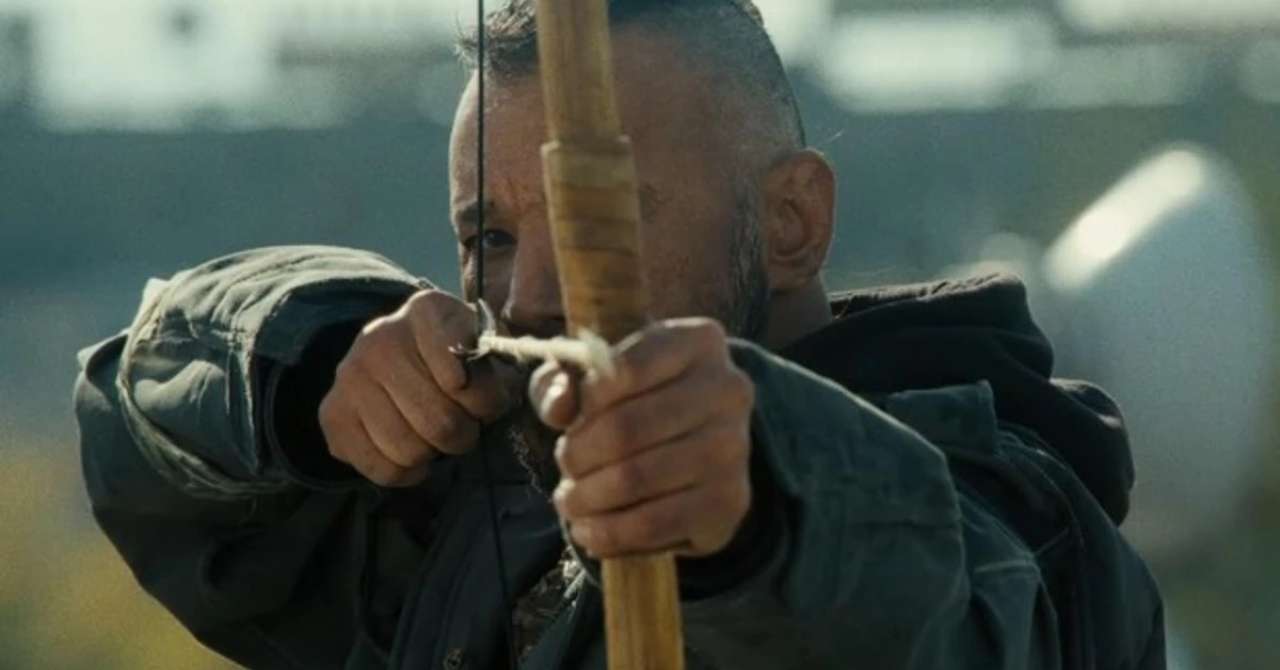
Adilkhan Yerzhanov continues his personal marathon (three films in one year, quietly) and arrives in Reims with The Moor of Karatasits frontal turn towards the pure genre film. For those who don’t know him, Yerzhanov is a gifted image artist capable of both the less good and the brilliant. Usually, he films the snowy steppes and Kazakh idiots who are drunk or a little weird. But here, no more remote villages or absurd satire, in favor of the big city, XXL corruption and a traumatized former soldier. The kind who doesn’t talk… but bangs.
The pitch is in one line: a deserter returns to the country, searches for his missing brother, and decides to protect his sister-in-law from a mafioso in a snake jacket. Result : Leon encounter Rambo in a crappy neon decor. Visually, it’s a slap in the face made with three pieces of string and a lot of ideas. Yerzhanov shoots his film like a crazy music video, with a raw energy that more than makes up for the budget limitations. It beats, it shines, it sweats. The trouble is that it doesn’t look like much. Or if: to du Besson who would have abused Koumis a little (wikipedia enlightens you: it is the national drink of Kazakhstan prepared from fermented mare’s or camel’s milk).
Moreover, this joker Yerzhanov even takes the liberty of quoting Jean Reno in a dialogue… Berik Aitzhanov, faithful to the filmmaker, takes on a jaw-dropping challenge: playing a mute hero haunted by his past crimes. He achieves this through micro-gestures, blank stares and ghostly presence. He is also literally haunted, since a specter follows him everywhere, like a cheap but effective materialization of his guilt. In short, it’s either make or break. But if we are allowed to think what we want, the fact remains that his uninhibited cinephilia never prevents him from asserting his singularity. Result: a B series film (like Besson or bizarre), almost experimental.
Presented out of competition, The Cry of the Guardsthe new Claire Denis adapting Koltès (Negro and dog fight) had everything to be one of the great moments of the festival. On paper. Return to Africa, burning text on relations of domination, Isaach de Bankolé as the central figure: the ingredients are there. And at times, it takes. Bankolé imposes a magnetic, almost silent presence, which captures all the tension of the film. But very quickly, something gets stuck.
Where the original piece was stifled in words, Denis opens the space… at the risk of diluting the tension. The closed session paradoxically becomes too broad, too explanatory. The flashbacks accumulate, as if the film feared not being understood, and break the essential ambiguity of the story. And then there is Matt Dillon, as a brutal boss, whose overly strong acting turns certain scenes into a slightly embarrassing histrionics. Where everything should have been murky, sticky, elusive – everything suddenly becomes too readable. Yet we feel the film that it could have been: drier, more radical, more faithful to the dull violence of Koltès. But Claire Denis seems to stay halfway, as if held back.
And then Nicloux came to close the day with Mi Love.
It all starts like a postcard: two Parisians on vacation, a DJ and her friend who is trying to forget a toxic ex. The program is simple: cocktails, swimming pool and night outings. And then the party goes off the rails. While the DJ is mixing, the friend disappears and everything changes. What seemed like a parenthesis becomes a spiral. Nicloux does exactly what he does best: dig beneath the surface.
Revealing its pulp plot (with Nazis, a cult and a strange mafia) behind the dreamscapes. The territory is troubled, and populated by misfits, shady types and ghostly figures. From refuge, the island becomes a labyrinth. The film progresses like a bad trip, between thriller and sensory drift. Nicloux favors sensations over logic, atmosphere over realism. He films the handsome-bizarre silhouette of Pom Klementieff, groping his way through a world that escapes him.
Facing her, Benoît Magimel, club owner who looks like an interloper guide, brings perfect ambiguity. But the real heroine of the film is the omnipresent electro music, which acts like a constant pulsation, transforming each scene into a hypnotic experience. At one point we even end up wondering if Nicloux didn’t film his DJ’s wandering just to illustrate her sounds. Very nice effect!