Simon Helberg’s secrets or how he became Howard in Big Bang Theory
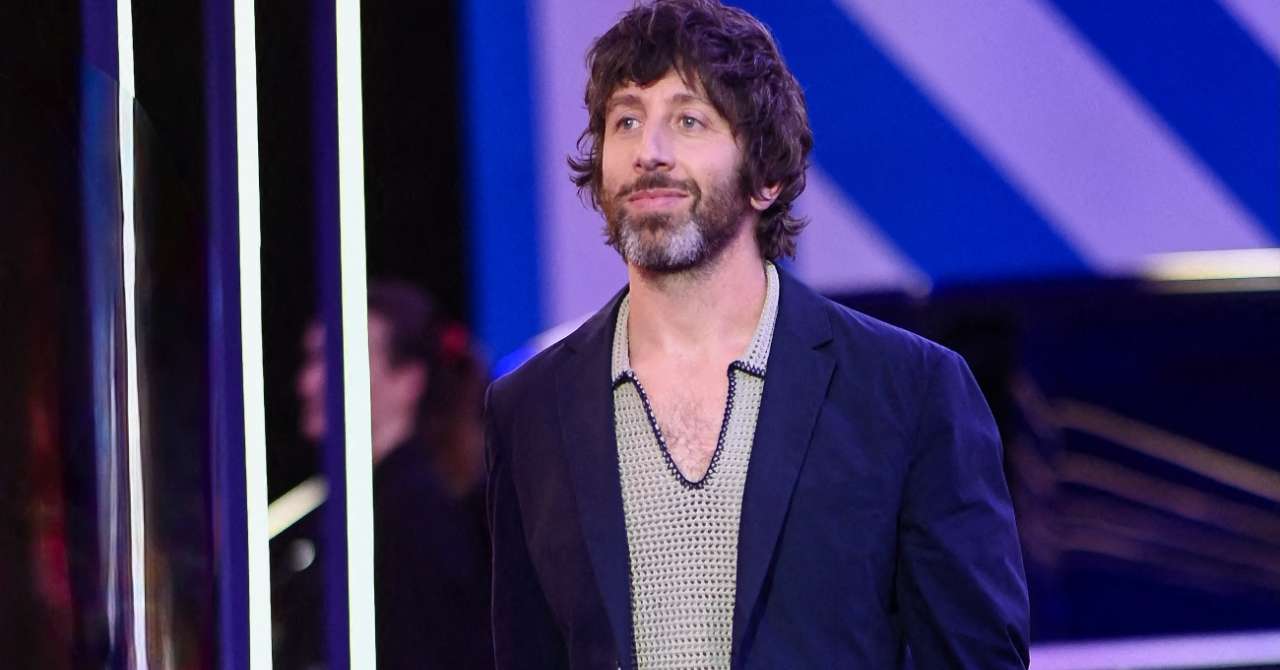
The 45-year-old actor is at Séries Mania this weekend. To the delight of the Lille public, he recounted his career and behind the scenes of the flagship series which made him a worldwide celebrity.
He’s the star guest of the Séries Mania Festival this year: American star Simon Hellberg is in Lille this weekend to present his new series The Audacity, in official competition. And yesterday, in front of a packed room, the unforgettable Howard Wolowitz of Big Bang Theory retraced his career and his life as an artist during a masterclass full of revelations. Selected pieces.
His beginnings as a musician:
“I learned music first. The piano. And growing up in Los Angeles, I was walking the Sunset Strip. Around 14 or 15, I was playing in little clubs, jazz stuff. It wasn’t really cool for a little guy like me, with my braces… I wasn’t very comfortable. I also played in hotel lobbies, not to brag (laughs). I made music for a long time, but I always felt that I wanted to act. I was already the funny guy in my jazz group. I liked to make others laugh. Afterwards, it took courage for me to go on stage in high school, I did a little theater, then I went to learn comedy at NYU (New York University).
His troubles to begin with:
“I was working in a restaurant to pay for college between my second and third year. And I was doing a small play on the side. An agent in Los Angeles saw this play and gave me auditions. So I dropped out of college to try my luck. I thought it was good… but actually it was only ‘almost’ good. I ‘almost’ got lots of roles. But in reality, I struggled a lot. I went back to live with my parents for at least a year year. I continued to audition, sometimes two or three times a day I changed in my car between two meetings and then I ended up landing a few commercials, some pilots.
Her audition for The Big Bang Theory:
“I didn’t want to go. Because at the time, I had just been recruited to play a small role in Studio 60 on the Sunset Strip, created by Aaron Sorkin, and for me that was the priority. In fact, the year before, Warner Bros. had filmed a first version of the pilot of Big Bang Theory and I was supposed to audition for the character of Sheldon. But I didn’t even go. I don’t really remember why… The character of Howard didn’t exist yet in that time. And the following year, when they decided to do another pilot – which never happens – they asked me to come back and audition for Howard. But frankly, I didn’t want to do it at all. I didn’t go in with my hands in my pocket. But I didn’t really want to play the service geek again. went without pressure…
How he finally agreed to play Howard:
“The audition went really well. I knew it. I felt it right away. They wanted me to come back for tests but I said no. Chuck Lorre didn’t understand why I refused to let go of Studio 60. Bradley Whitford (who was in Studio 60) told me that I still had to go and do these tests. So I ended up asking Aaron Sorkin for permission… I remember his response perfectly. He wrote to me: ‘You dirty little ungrateful… No, I’m kidding! Go finish the tests and if it doesn’t happen you’ll come back…’ So I went there. Johnny (Galecki) and Jim (Parsons) were already there, they were from the first version of the pilot. She was signed the same evening I think. I was really their first choice. I was later told that they would have also liked Kevin Sussman (who would eventually play Stuart) to play Howard. But hey, I got the part in the end.
The incredible first day of filming on Big Bang Theory:
“It was James Burrows, a big name in sitcoms who directed Friends and Cheers among others, who directed this first episode. It was already very impressive. The audience was dying of laughter from the start. I remember very well: I was in my dressing room while the first scene at the sperm bank was being filmed. Leonard and Sheldon had not yet said a word and everyone was laughing out loud. So much so that James was obliged to go to the spectators and ask them to calm down, so that we could shoot the sequence and then I do my first scene and then the whole audience starts applauding frantically, it was very strange, because I was nobody… Just this guy who had once played in Sabrina the Teenage Witch… I don’t really know. what exactly, but it resonated things within them.”
How he brought Howard Wolowitz to life without inventing anything:
“First of all, everything was on paper. In the scripts. It’s very Big Bang Theory written. People never believe me when I say that – even in Hollywood – but absolutely nothing was improvised on the set. Afterwards, I quickly found myself in Howard because he’s a guy who needed to be the center of attention and I think I was a bit like that at the time too. Without the swag. And without the clothes of course (laughs). I admit that I never wear a turtleneck anymore today! But in any case, all the words that Howard said in the series were in the pages of the scripts. I never really pitched an idea, a line or anything to the authors. I may have tried a little at the beginning, but it wasn’t really possible, because the machine had to roll, and if everyone wanted to put their own spin on it, it would have stopped the machine. not too cynical. It was quite precise choreography.”
The very intense production pace of the American sitcom:
“We shot one episode a week basically. But it was a bit like a school year. We filmed from August to May. It was the best schedule in the world. We started each episode with a day of reading the scripts with the whole team (table read). worked for four days and we had three days of weekend. It was a very well-oiled machine and since we were shooting quite a bit in public, a bit like a play, Chuck Lorre used it as a panel and so if it didn’t work with these 300 spectators live, he decided to rewrite the scene entirely, in half an hour, we had to take a few minutes to digest it, to understand the jokes. and almost in real time, we went back there and you have to realize that the episode in question was broadcast, sometimes, the following week on television! It’s crazy when you think about it!
Howard’s evolution over 12 seasons:
“It’s really a character who has changed over time. There was no plan from the start. For him or for any other character for that matter. We didn’t know if the series was going to last. And at the time, we asked fewer questions… Today, you have to be able to pitch a whole story to the broadcasters, an arc as a whole. But there, Howard’s evolution was mainly circumstantial. He was this shady, libidinous guy, written by authors who managed to write great jokes about it. And then at one point, others came along and decided to make it a little more intelligent, a little finer. That’s the pleasure of spreading a character over 300 episodes.
Why the end of Big Bang Theory wasn’t so harsh:
“Saying goodbye to this job was a bit like finishing high school basically. I loved my high school and when it ended, I was sad. But at the same time, I wasn’t going to stay after 12th grade, it was time to leave, to close this chapter to move on to the next stage. It was a bit of the same melancholic feeling with the end of Big Bang Theory. We had said everything. There were no more really interesting things to do with this series. And as an actor, I wanted to do other roles I was only seen playing Howard and so I was ready to move on.”
How Simon Hellberg became French for Leos Carax:
“I had lied a bit, already, about my abilities to play classical to be cast in the role of the pianist in Florence Foster Jenkins opposite Meryl Streep. And so to play in Annette by Leos Carax, I also lied by saying that I was in the process of becoming a French citizen. Because my wife (Jocelyn Towne) has French nationality. I went to the consulate to obtain a French passport. I had learned by heart a monologue about my life, my family… to be able to speak French well enough in front of my interlocutor. It was a bit like a role and then at the last interview, I was told about a little man with a black hat… I thought it was Charlie Chaplin when in reality they were talking to me about Napoleon (laughs)! And I ended up getting my passport and I was able to play for Leos Carax. I had the feeling that I was filming an artistic project more than a film, almost an essay for film school. It was daring, risky, out of the ordinary. He had staged impossible things and he said to me: ‘You don’t want to disappoint your director?’ And in the end, we always managed to do what he had in mind. Leos is such an ambitious visionary and we ended up doing something unique…”