Yeon Sang-ho director of The Ugly: “I would like us to look at the new Korean generation”
With The Ugly, he leaves big budgets for independent cinema and swaps zombies for textile factory workers. What if we were too interested in the generation of star directors and not in the one that is coming up? Interview with a committed filmmaker.
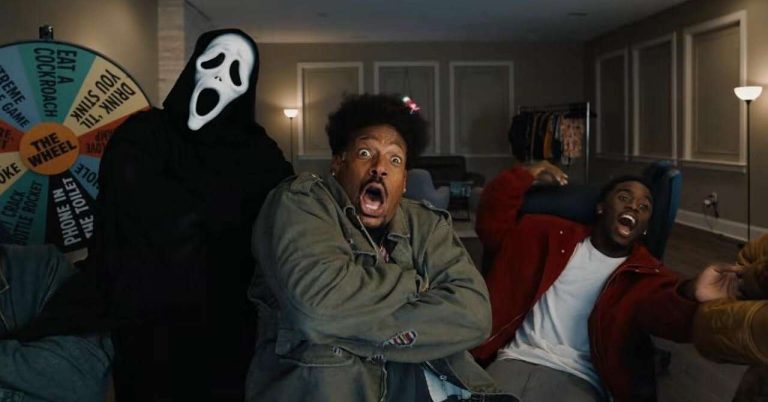
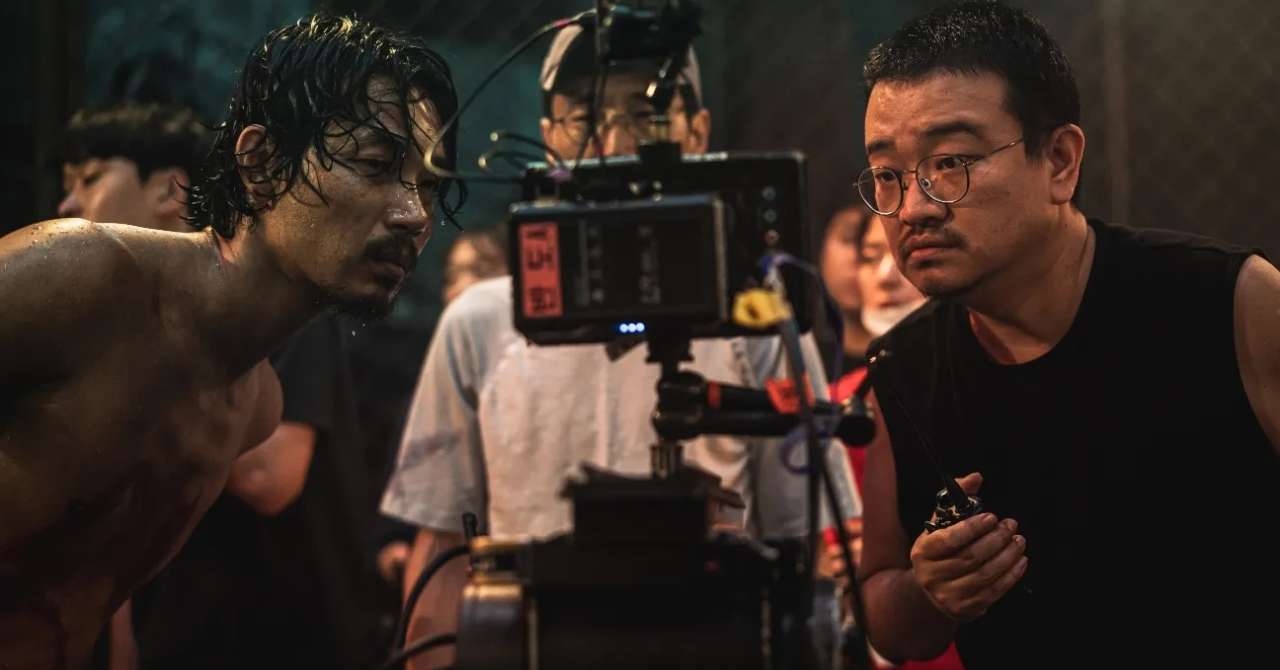
Colony was in midnight screening at the last Cannes Film Festival, as a symbol of the overwhelming presence of Korean horror blockbusters. But six months earlier Yeon Sang-ho was filming The Uglywith a very small team, outside the system, based on a graphic novel that no one wanted to finance as a feature film a few years earlier. The director of Last train to Busan in fact now leads two careers in parallel and refuses to choose. It was worth asking him a few questions about the other side of the Korean economic miracle, the generation that the Cannes Film Festival is not yet looking at or about this famous face that he refuses to show in his latest film…
You were in a midnight session with Colonysix months after filming The Ugly with a small crew and a much more indie spirit than your typical zombie film. Do you recognize yourself in both films?
I started in independent animation. Then I made my first live action film, Last train to Busana commercial film of a certain magnitude on a Korean scale. The difference between these two ways of working was considerable. And after BusanI went through a lot of changes: there was, on my personal scale, the question of success, then the pandemic and the emergence of platforms, which began to occupy a lot of space. So I had to adopt very different methods. At the time of The UglyI wanted to move away from all these external factors (the commercial cinema system, the place of streaming) and to make a film more independently. Like at the very beginning, when I started.
Exactly : The Ugly was to be your first feature film, at the end of the 2010s. Nobody wanted to finance it, and you made it into a graphic novel. What made you come back to it?
When I wrote the first script, the general opinion among investors and distributors was that the subject would have difficulty finding popular success. I figured if it was a story that couldn’t reach the public, I might as well do it later. That’s how it became a graphic novel. And then this idea suddenly came back to me: there was something like a spirit of the times, something that the public felt, and I had the feeling that the subject would find an echo. But it was a vague intuition. I didn’t have enough confidence to convince investors with that. So I said to myself: I’m doing this one personally.
And it exceeded one million spectators in Korea.
That surprised me a lot. Somehow, this zeitgeist I thought I sensed turned out to be right.
The film imposes two strong constraints: a single actor for two generations, and a face that we cannot see. Where do they come from?
For the double role, it comes from the casting. I first offered Park Jung-min the role of the son. He was the one who asked me if the father’s youth was the subject of a separate casting, and I said to myself that it would be good for him to play both. It’s a film about contemporary Korean history, and in a way a film about generations. That only one actor embodies them seemed cinematically right to me. Not showing Jung Young-hee’s face until the very end, on the other hand, was already the key idea of the graphic novel.
Why shouldn’t this face look like anyone?
What I wanted, going into the film, was that the face revealed at the end was neither that of the actor nor that of a specific real person. I wanted a character who could be the face of anyone while not being the face of anyone. There is the framework of what we call a fiction film, a film in which actors we know appear, and at the end this face which emerges. I thought it would make the end of the film open up, produce an extension of meaning towards what really happened in society. That’s why I adopted this structure.
Jung Young-hee’s character is a textile worker from the 1970s who experiences violence from men. Is it a political choice?
Korea experienced extremely brutal modernization. Among all the industries that carried this growth, that of textiles was considerable, and the exploitation of labor there was massive and violent. The symbolic figure of the Korean labor movement, Jeon Tae-il, was himself a textile worker. Most of the people who worked in these factories were very young women, between fifteen and twenty-five years old. That Korean modernization was achieved in part through their sacrifice is something recognized in Korea. The intention of The Uglywas to look back at the other side of this dazzling economic success.
You frequently say that you want to work outside the system. Is it an artistic decision, or an observation on the state of the Korean industry?
There is necessarily a market question. Korean cinema is very famous in the world today, but we must always make films with the domestic market as our horizon. And, the bigger the budgets, the more we have to conform to the taste of the greatest number. This is why I would like to see films appear that target narrower audiences. There is also one thing that was very clear at the time when I was thinking about The Ugly : the masterpieces of Japanese and Asian cinema, the films of Edward Yang and Kiyoshi Kurosawa, were in reality produced completely independently. I was very impressed by this cinema. And it was seeing them that made me want to work outside the Korean system.
You cite Fox Searchlight and Toho. Is this tool missing in Korea?
In Hollywood, Fox actually had a structure like Searchlight, a distributor that targets a narrower audience. This is the studio that produced some Malick or Little Miss Sunshine! In Japan, a company like Toho has distribution labels with a clearly identified audience. In contrast, in Korea, there is no such specialized label. And yet, it would make Korean cinema much richer. And this diversity would end up enriching commercial cinema itself.
But we have the impression that, in Korea, the border between arthouse film and commercial film is not as clear as in the West?
You are right! It’s difficult to say whether a film is commercial cinema or independent cinema. But since The Ugly obtained good results, I believe that a desire was born among Korean producers: the idea that another mode of production is possible. I hope that in a few years, it will give rise to something else. If that happens, I’ll move more in that direction. I will continue to make commercial films like Colonybut I have already shot a film using the same method as The Uglyand its release is imminent.
We’re talking about Korean cinema, so we have to talk about the generation of big names! Bong Joon-ho, Park Chan-wook, Lee Chang-dong: where do you stand compared to them?
Don’t forget Na Hong-jin! I would say that I am really the youngest. The very youngest. And I’ve done a lot of genre films so far. Today I’m looking to work very differently compared to what I’ve done over the last ten years: I want to explore more varied scales, more varied forms, more varied platforms. It can be The Uglyit can be Colonyand there’s this Netflix series coming out soon, my first collaboration with Japanese director Shinzo Katayama. A series in Japanese.
And the generation after you?
I think a new wave of filmmakers is rising, completely different from the one that preceded it. Take Yoon Ga-eun: last year in Korea, her film The World of Love was voted best Korean film of the year, ahead of No Other Choice by Park Chan-wook. This shows the extent to which it opens an entirely new period. Personally, I would like the Cannes Film Festival (like the rest of the world) to pay more attention to this new Korean generation, of which she is a part. It is really her that we must distinguish.