
Cannes 2026 – day 11: a failure in competition, Milo Machado-Graner is great, the Masson of the heart
Every day, the hot spot live from the 79th Cannes Film Festival.
Film of the day: Night stories by Léa Mysius (in competition)
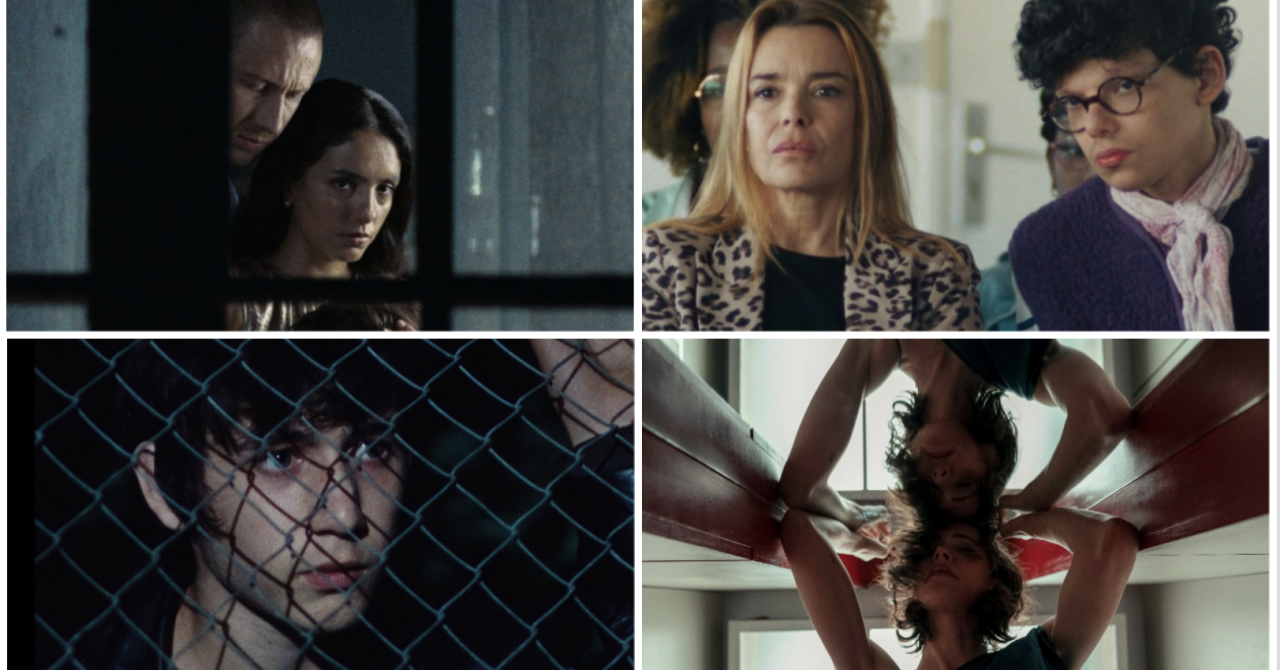
Announced as a History of Violence in the French style, the new film by Léa Mysius closes the competition with an almost perfect flop. Or Nora (Hafsia Herzi), Thomas (Bastien Bouillon) and their daughter, holed up on a farm in Limousin. Nora’s surprise birthday party turns into a home invasion when three ghosts from the past arrive, led by a violent, grotesque Magimel. Adapted from a large and diffracted novel by Mauvignier, the film program is contained on a post-it from which it will never move away.
Mysius therefore ticks the boxes of the genre without even trying to inhabit them: sharp-cut character-functions, tension that is vague rather than constructed, issues that deflate as the “buried secrets” come to light. Bouillon clenches his jaw, Herzi composes a pseudo-mysterious woman and Bellucci becomes a decorative Italian painter (we still wonder what she is doing there); everyone tries to save what can be saved from a script that abandons them. Good news: it’s really time to return to Paris.
Music of the day: “What is Love” In The dreamed adventuree of Valeska Grisebach (competition)
“What is love…Baby don’t hurt me…No more…“, spit out the speakers. In the villa of the mafia boss of Svilengrad, a small Bulgarian town on the border with Turkey, the party is in full swing. On the dance floor, the predominantly male population ogles simple young girls objects of desire. We are in the last part of thist Dream adventure (a slightly weird title) by the German Valeska Grisebach, penultimate piece (and what a piece!) of the Cannes building. This impressive 2h45 thriller invests in a neglected territory in which the heroine, Veska, an archaeologist returning home, seeks to save what can be saved.
The almost invisible staging crisscrosses a space with incredible clarity. “What is love…Baby don’t hurt me…No more…“In this evening, Veska, after telling the boss her four truths, will find a young teenager on the dance floor to protect her from the claws of the predators gathered around her. Veska sees in her the wounded girl she once was. “No more…“Haddaway’s 90’s dance hit sets the pace for a sequence full of decibels.”.. Baby don’t hurt me…”A great scene for one of the great films of this competition!
The emotion of the day: Ulysses by Laetitia Masson (Un Certain Regard)
Presented on Friday at the closing of Un Certain Regard, Ulysses tells the fight of a mother moving heaven and earth so that her son, suffering from a genetic syndrome, can have a “normal” life. With a sincerity reminiscent of his performance in PupilsElodie Bouchez touches our hearts in this role of devoted mother, facing obstacles. Here she finds Laetitia Masson, a director she knows very well and who is inspired by her own story.
The challenge of the film was to portray Ulysses at different ages. The filmmaker filmed with disabled children, with the help of a specialized coach, and chose her real son, Alphonse Roberts (on the advice of her producers), to portray him as an adolescent. Fiction then merges with reality, and emotion explodes on the screen as we see him replay the violent episodes of his own life. A real obstacle course to get a place in a school or training, with the hope of one day being a kid like the others.
Face of the day: Milo Machado-Graner in Goodbye Cruel World (Critics Week)
He was left as a clairvoyant child despite his partial blindness in Anatomy of a fall by Justine Triet (2023) We find him chased in the middle of the night in Goodbye Cruel World by Félix de Givry at the end of Critics’ Week. He was also a voice in the animated film Carmen the Mockingbird by Sébastien Laudenbach presented at the Quinzaine des filmmakers. Since the great Fall – palmed, Caesarized and Oscar-winning – Milo, 17 years old, has played small roles until Cruel world which rests largely on his frail shoulders. There is a sort of ghost, a high school student victim of harassment who botches his suicide and decides to live hidden on the edge of his own world. In his hideout, the teenager watches the others moving around and he, petrified, wonders how he could be reborn. A beautiful romantic film in which Milo bears all his lost innocence on his sweet face.
THE Black Mirror of the day: The End of It by Maria Martínez Bayona (Cannes Première)
At the end of the festival, it’s always nice to have a little sci-fi film to sink your teeth into, just to take your mind off things. This year it is The End of Itfirst film by Catalan Maria Martínez Bayona, presented in the Cannes Première section. The story takes place in a near future where aging no longer exists thanks to revolutionary technology. Death has become optional and yet Claire (Rebecca Hall), a former provocative car-row artist, is approaching 250 and is simply tired of living. Could his death be the opportunity to produce a final work?
The End of It is a little film that feels like a deluxe episode of Black Mirror and pours into philosophy for dummies (without death on the horizon, is life worth living? You have two hours), but which stands up thanks to some staging ideas and the solid interpretation of Rebecca Hall, already great in The Man I Love in competition. Rebecca, if you read us, and we have no doubt: we are always happy to see you on screen.
Today’s post-credits scene: Thanks for coming by Alain Cavalier (Fortnight of filmmakers)
At the end of Alain Cavalier’s latest film – which would also be his final according to the 94-year-old – one of his collaborators concocted a surprise mini-film shot during the festival. A sort of almost live diary which also serves as a postscript to celebrate the mischievous Cavalier, absent to present his opus at the Quinzaine des filmmakers. An absence that we hope is completely Godardian for the one who calls himself a “filmer”.
It’s been more than twenty years since the filmmaker of Therese abandoned the heaviness of classic filming to make a pocket cinema. Armed with his small camera, he fixes details, enjoys his own reflection, looks at those around him, documents his life as a free artist, comments on what he sees with the precision of a nomadic philosopher. Thanks for coming, the title is magnificent for a goodbye. This post-credits mini-film gave the sensation that even absent, Cavalier was there.
Today Cannes
All the competitions are over, most of the festival-goers have left. But Cannes 2026 is not quite finished. In a few hours the closing ceremony will take place at the Palais des Festivals (to be followed from 8:15 p.m. live on France 2), and we will discover the winners concocted by the jury chaired by Park Chan-wook. Final film in the program, the restored version of My Uncle by Jacques Tati (Special Jury Prize in 1958) will be broadcast this Saturday evening at the Cinéma de la plage.