Cannes 2026- Lukas Dhont: “With each film, I want to put young actors in the spotlight”
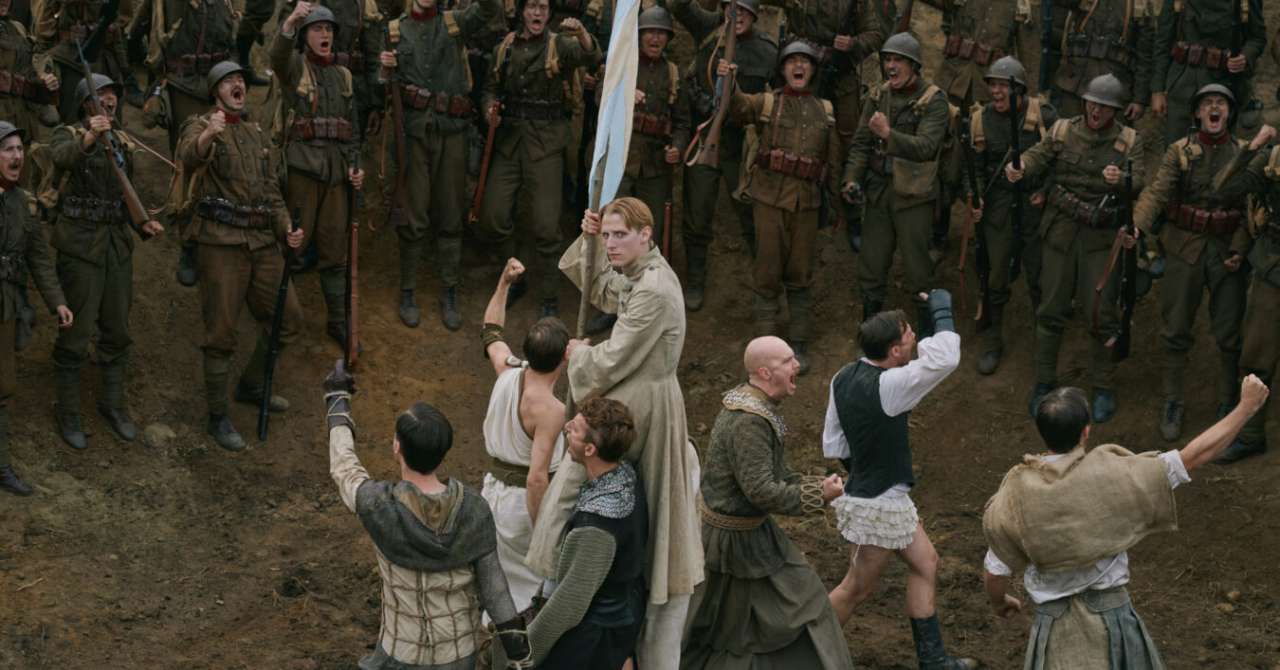
In Coward, the director of Girl stages a queer romance at the heart of the First World War and reveals two magnetic actors: Emmanuel Macchia and Valentin Campagne. Encounter
As in Girl And Closeyou reveal again in Cowardtwo young actors with almost no experience who burst onto the screen, Emmanuel Macchia and Valentin Campagne. What’s your secret?
Lukas Dhont: It all probably stems from the fact that I started cinema by doing castings for other Belgian directors. An exercise that fascinated me and taught me a lot about the way I wanted to direct, once I became a director. But above all I have a great desire to work with young people, with their energy, and to put them in the spotlight. Because – directing actors is first and foremost: putting them in the spotlight. I met Emmanuel at his agricultural high school where we were doing a wild casting call. He knew I was there for a film, and that if he wanted, he could come and talk to me. And when he did, I immediately saw in his eyes a desire to want to try. What touched me about him was his shyness, his sensitivity. He didn’t speak, he whispered. I even had to get closer to hear it. But this is exactly what I had imagined for the character of Pierre, this young boy arriving at the front where he will very quickly learn fear. So it was logical for me.
And for Valentin Campagne who we had already seen in Cannes last year in File 137 ?
Valentin has a character that is the polar opposite of Emmanuel. He is very extroverted, very into performance, into acting. We were looking for a singer and a dancer for the role of Francis… Valentin is capable of anything, but he was neither the best singer nor the best dancer of all those I have seen. However, as soon as he left the room, you instantly wanted to see him again and see what he was going to come up with. He is proof that sometimes imperfection is much more interesting than accuracy. I knew that on set, he would never do the same thing twice, over the course of takes. And this combination of two personalities based on a contrast created this magnetism which I hope and believe dominates the film.
How do you build all this with them?
The most important thing was to put them at ease. Create an intimacy in which we have the impression that we can say anything to each other and without which a distance would immediately be created. For this film, the preparation was long. Valentin had to learn all the songs over 45 days of rehearsal. Emmanuel followed horse riding training but also military training… And all this time allowed us to get to know each other. Even before filming, we already had a common language. Then, on set, I always organize myself to be able to film in 360 degrees. And that changes everything, because the actors know that if they want to move, they can move. It offers them a freedom which they have seized.
Where did the desire come from to tell this love story between two young men at the heart of the First World War where they give shows to entertain the troops between two slaughters?
It all started with black and white images of Belgian soldiers just behind the front. They had used ammo crates to create a stage and were putting on a little show for their comrades. I had never seen this type of images. So that encouraged me to dig a little, to delve into archives. And I discovered that in all centuries, in all wars, in all armies, there has been this phenomenon: men finding ways to create art with the tools at their disposal. The invisibilization of these images tells of a form of memory politics. We have always put forward images of men in combat, in violence, in destruction, while these images of collective creations exist. But they remain in the archives. They are not exposed.
Coward asks a central question: when we wage war, should we only wage war otherwise we will be labeled a coward…
And I find this question fascinating. I grew up with all these war films — including masterpieces that are very close to my heart, like The Great Illusion by Renoir or Paths of Glory by Kubrick — where the value of men is linked to their capacity to kill. To a form of physical power, almost primitive. But when I read testimonies from these soldiers talking about their fear, their desire to desert – some did so and were executed, others disappeared without ever being found, without ever being able to return to their families – I was deeply touched by what represents for me in their way acts of resistance. Because they took place at a time when everyone expected them to go to war without discussion. This is why I wanted to highlight a character who expresses this refusal more and more consciously. At first, I was a little afraid that people would think I made it all up. But actually, it totally makes sense. Even in the darkest moments, we always try to stay alive through art, music, singing, dancing. And even outside of war, in our personal lives, when we go through difficult periods, this reflex exists.
This idea of Show Must Go On…
…The very definition of film! This would make a great subtitle!
By Lukas Dhont. With Emmanuel Macchia, Valentin Campagne, Jonas Wertz… Duration: 2 hours