Ghostbusters: Night Shift: “There are as many stories to tell as there are ghosts”
Meeting in Annecy with the team of this animated series which is in the same continuity as the Ghostbusters films.
At the Annecy International Animated Film Festival, Jason Reitman, Gil Kenan, Ben Hibon, Elliott Kalan and Amie Karp presented the new animated series Ghostbusters: Night Shift. Set in New York in the 1990s, it will follow a unique team of ghost hunters, confronted with a new wave of supernatural phenomena. Meeting well in advance of the broadcast on Netflix, scheduled for 2027.
First: The idea of the series is to fill the gap between 1989 (Ghostbusters 2) and 2001 (Ghostbusters: Legacy). Why did you want to include this story in the official continuity of the saga?
Jason Reitman: While working on the latest films, we started to wonder what happened to the barracks during the 1990s. It was precisely this gray area that opened the discussion. We wondered if it would be possible to make an animated series and explore these untold years of Ghostbusters history. It was a blank page, a good opportunity to return to animation.
It’s always the same for me: I want to pay homage to this franchise and the viewers who have loved it for decades. But how to surprise them? We have to meet their expectations while reminding them how funny, dangerous and scary Ghostbusters can be. We wanted to make a series as big as our dreams and as big as our nightmares.
That would make a good interview title.
Jason Reitman: Go ahead, it’s a gift, I’ll give it to you.
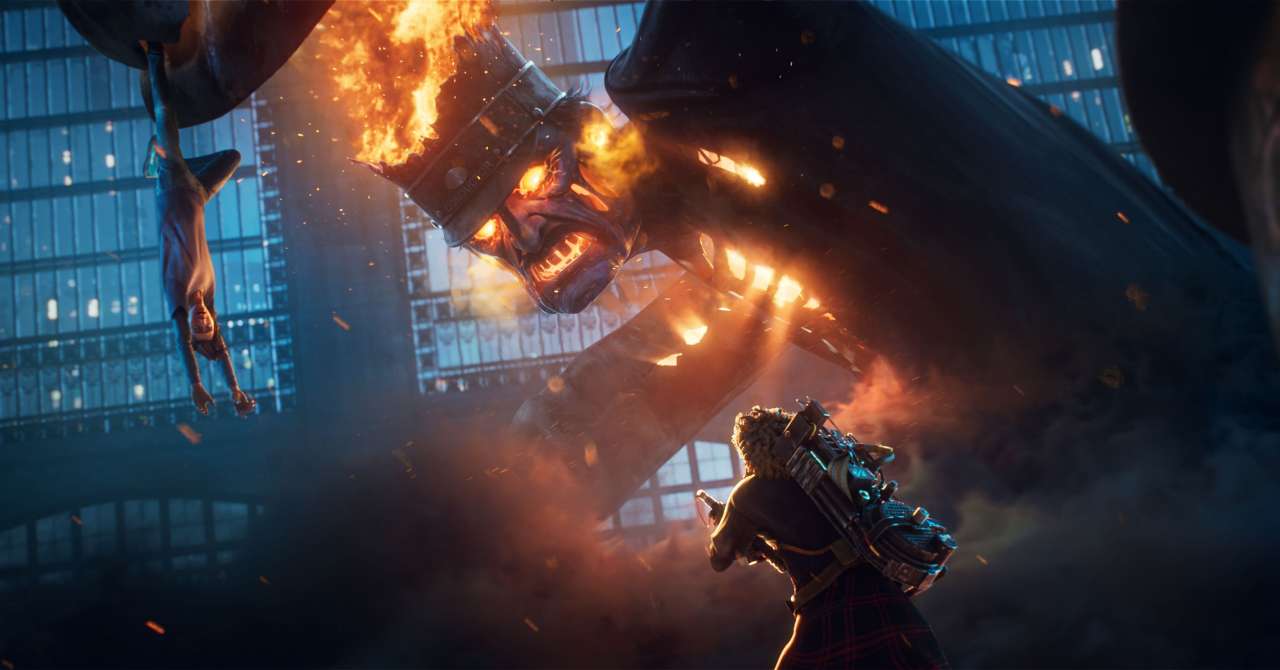
The animation style of the series is very reminiscent of Arcane. We are very far from the hand drawings of the Ghostbusters series (The Real Ghostbusters) of the 80s…
Amie Karp (producer): That’s good, we love Arcane, so the comparison is very flattering. That said, the graphic style of the project is mainly born from the story we want to tell. The series is set in 1994, but we’re making it today. We really like The Real Ghostbusters, but we weren’t looking to replicate it.
Ben Hibon (co-showrunner): As the series belongs to the same universe as the live-action films, we wanted to maintain a certain logic of camera, lighting and staging. Animation allows certain things to be exaggerated, of course, but the transition between the films and the series had to remain natural. This is why the language of virtual cameras and 3D animation seemed particularly suited to us.
Why choose an entirely new team, when the public could expect to find the original Ghostbusters?
Gil Kenan: I’m not going to reveal too much but we started with a mystery linked to the story of the Ghostbusters and this story called for new characters. For the public, following them also allows them to rediscover the rules of the Ghostbusters world in real time. They learn to survive, to understand what is happening to them and, little by little, to become ghost hunters themselves.
Elliott Kalan (co-showrunner): We wanted to imagine the young adults we might encounter in New York in 1994. They’re trying to find their place in life, and the city suddenly decides that they’re going to have to become Ghostbusters. They are outsiders, heroes in spite of themselves. The last people you would think of to solve this problem, but, once you get started, you understand why precisely this group was needed. The serial format allows you to see them evolve over time. They not only fight ghosts but also learn to become a team. With their tensions, their links and their own trajectories.
The series seems very marked by do it yourself and the misappropriation of objects, like these proton packs which work with controller buttons from the first PlayStation.
Jason Reitman: It’s the very story of Ghostbusters. It all begins with characters who are fired from Columbia and who collect equipment which they assemble as they wish. The franchise has always been about taking old things and putting them together to create something new. In cinema, we call this “kludging”: making elements work together that were not supposed to come together.
Ben Hibon: There’s a punk side to it. These machines sometimes look absurd and it’s not always clear how they could work, but that’s precisely what makes them fun. There is intelligence and inventiveness in putting strange things together to produce an unexpected result. It’s a form of magic.
Gil Kenan: When I was a kid, seeing objects on screen that I recognized made me feel like I too could build something in my kitchen and go ghost hunting.
Jason Reitman: I also like the idea that Ghostbusters says it’s a good thing to be smart. In a lot of movies, to be cool you have to appear detached or not think too much. Here, the heroes are absolutely brilliant nerds. They embrace their intelligence and use it to solve their problems.
New York is almost a character in the franchise and you say that the city here had to be “smelly”. Stinks, to put it quickly. How to transcribe this visually?
Elliott Kalan: I’m the most New Yorker on the team. It’s a city that I have long dreamed of living in and that I then had the chance to get to know. The Ghostbusters films were a big part of my perception of New York growing up. We wanted to find the city in a period when it was at the same time over-exciting, in turmoil and a little disgusting. Its glamor is linked to its filth. It may be the best city in the world, but it’s also noisy, complicated and smelly. Our characters live in crappy apartments, eat at bodegas for two dollars, and take the subway, not the taxi. They’re just trying to get by. It was important to find this feeling again.
Ben Hibon: The challenge was to create an inhabited city, in movement, with a light that could be glamorous but also almost sickly or disturbing. This creates an atmosphere where horror can really take place.
The DNA of the saga is precisely in the middle between humor and horror. A complicated dosage to find?
Elliott Kalan: This is a central question. The films are both funny and scary, but the humor doesn’t come from the ghosts being ridiculous. It relates to how characters react to truly terrifying situations. The more worrying a situation is, the funnier a surprising reaction can become. The characters have something concrete to react against. We’re constantly looking for the right balance: sometimes a scene is too scary; sometimes it is too light. So you have to go back, adjust, find the right dosage.
Ben Hibon: Horror comes through the camera, the light, the settings, the physical sensation of the world. We must create an atmosphere that gives weight to the danger. Then, the characters bring lightness through the way they react.
Elliott Kalan: The Ghostbusters movies don’t take place in a comedy world but in a horror world where funny things happen.
Gil Kenan: The series completely assumes the ambition to scare. We want to go deep into the supernatural and make a series that is really scary.
Jason, you directed Ghostbusters: The Legacy and co-wrote The Ice Menace with Gil Kenan. Since the death of your father, Ivan, do you feel like you are the guardian of the Ghostbusters universe?
Jason Reitman: Gil and I felt this weight while working on the films. The wonderful thing about this series is being able to share it. The Ghostbusters don’t fight ghosts alone, and we don’t tell these stories alone either. It’s a pleasure, and even a relief, to have partners around you who each bring their perspective. What made the first film so special was the combination of the voices of Dan Aykroyd, Harold Ramis and Bill Murray. Here I feel something similar. Elliott sends me a text, Ben sends me pictures, and suddenly the Ghostbusters universe begins to exist in a way I never imagined.
Is Dan Aykroyd involved in the series?
Jason Reitman: Yes yes, he’s in the room with us, don’t you see? (Laughs.) Dan is executive producer of the series.
I know, but let’s agree that this kind of title says everything and says nothing.
Jason Reitman: Except Dan cares deeply about all things Ghostbusters. We communicate regularly because he naturally speaks the language of this universe. If you ask him a question about any detail of the franchise, he can answer you immediately. When I met Elliott, I felt like I had discovered someone else who also spoke the language fluently.
Is Ghostbusters: Night Shift intended as a mini-series or the start of a longer adventure?
Jason Reitman: We imagine thirty-seven seasons. Nothing will make sense if we can’t tell the thirty-seven stories…
Elliott Kalan: The beginning is a little slow, but from the twentieth season onwards, it becomes really exciting.
Gil Kenan: Pffff…. Stop talking nonsense guys! The truth is that we have many stories to tell. As many as there are ghosts!
Ghostbusters: Night Shift, in 2027 on Netflix.