
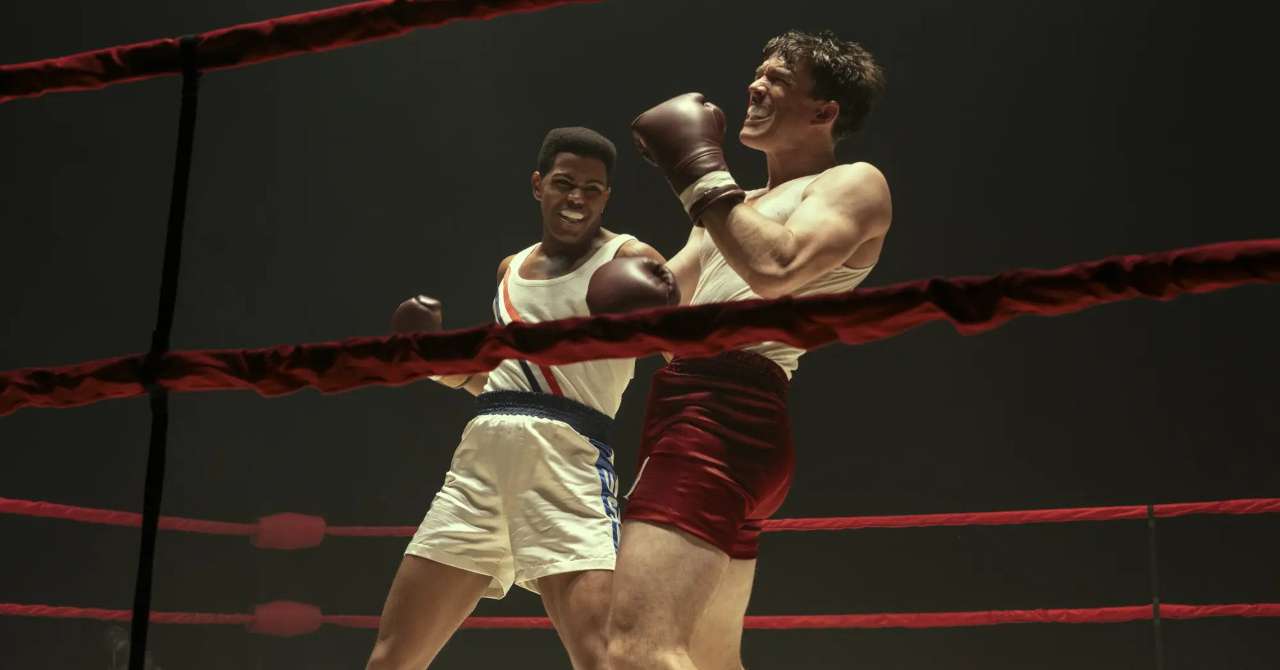
The Greatest: the series on Mohamed Ali praised by the American press
Jaalen Best’s performance, in the gloves of the legendary boxer, is particularly praised by critics. Watch now on Prime Video.
After the biopic of Michael Mann carried by Will Smith in 2001, Mohamed Ali returns to the screen in the guise of a new face: that of Jaalen Best. The actor plays the boxer in The Greatest, a series created by Ben Watkins and available today on Prime Video. Ali’s widow is among the executive producers of this fresco dedicated to the early years of his career, from his Olympic coronation to his confrontation against Sonny Liston.
And the first feedback is particularly enthusiastic.
The Los Angeles Times hails a “very successful” series, which “finely captures the transformation of Cassius Clay into Mohamed Ali”. The daily also highlights the performance of Jaalen Best, whose filmography so far consists of a few appearances in American Horror Stories or Magnum. “He has the voice and, to a large extent, the look, the ego, the impatience and the conceit of the character; but he also knows how to express his gentleness, his seriousness and his moments of doubt.”
For The Wrap, The Greatest is “an exceptional journey through the early years of the boxing legend”. The site even goes so far as to classify it among “the best new series of the year”. He describes the portrait of “a young man from Louisville with extraordinary talents, immense ambitions, and who had no way of knowing how much his world would change – or how much he himself would change the world.”
Same enthusiasm from Variety, who believes that The Greatest makes Jaalen Best a real revelation. His interpretation of Ali, “one of the most enigmatic figures in our history”, is considered “magnetic”. Beyond his physical resemblance to the boxer, the magazine notes the accuracy of his voice and his delivery, particularly when he declaims his rhymes to provoke his opponents and galvanize himself. “He does not only resemble him in his face and stature: his vocal cadence, especially when he launches his witty rhymes to taunt his adversaries and gain confidence, is perfectly accurate,” underlines the magazine. For Variety, the series also tells the story of “a young man who defined himself by his youthful arrogance and his unwavering determination, and who never stopped defending his convictions, even when it cost him everything.” By retracing the early years of Cassius Clay, it allows us to better understand “who Mohamed Ali became and why his presence continues to endure over time”.
Time Magazine, however, is a little more reserved. The review believes that the series “rarely deviates from the codes of the biopic, with its archetypal heroic journey”. An approach that suits this story of a man gradually discovering his identity and his values, but which shows its limits when the staging tries to escape from it. The criticism particularly targets boxing montages accompanied by energetic hip-hop, which “look like Gatorade commercials”. Time also points out some simplifications: “She sometimes struggles to find a fair balance between complex realities. Concerning the Nation of Islam, she makes a lucid distinction between Malcolm


