
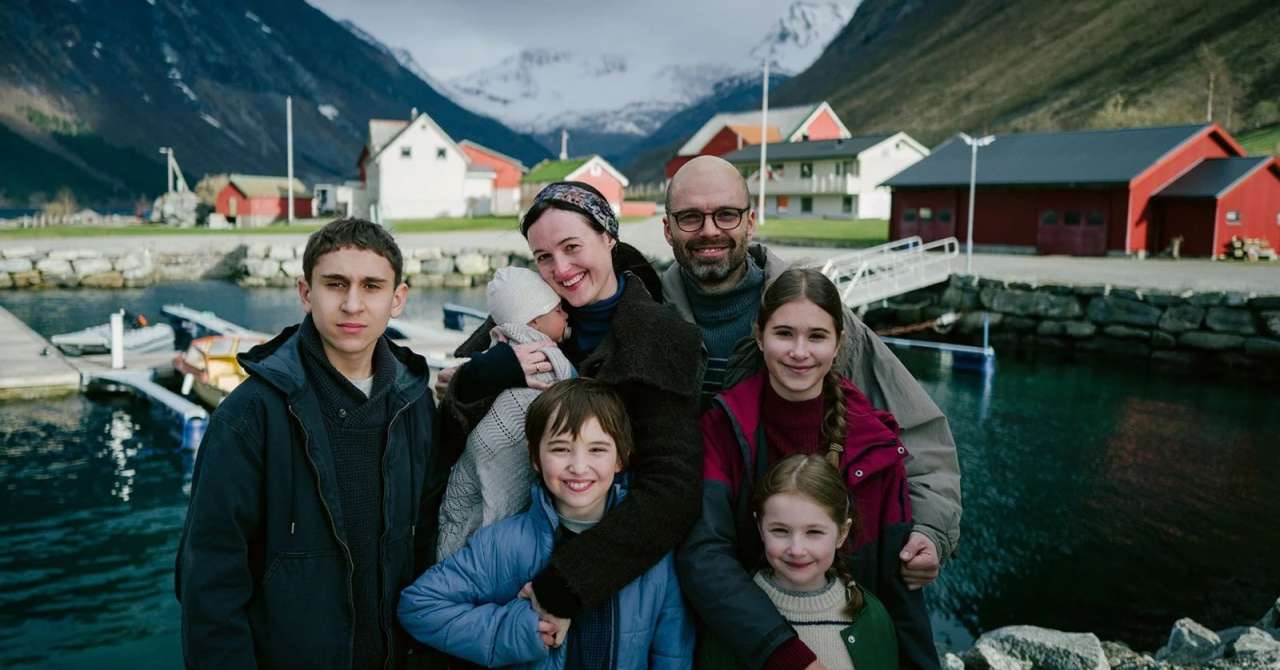
Fjord could well compete for the Oscar for Best International Film
Despite its numerous dialogues in English, Cristian Mungiu’s 2026 Palme d’Or meets the criteria of the American Academy.
Cristian Mungiu has a chance to succeed Bong Joon-ho, the last filmmaker to win the Palme d’Or and the Oscar for Best International Film with the same film (Parasitein 2020).
Her Fjordawarded the Palme d’Or at the last Cannes Film Festival, is eligible for the Oscar for Best International Film. The decision was validated by the Hollywood Academy, after several weeks of speculation.
Its American distributor, Neon, confirmed to Variety that the film indeed respects the rules of the Academy. If Fjord mixes several languages - English, Romanian, Norwegian and Swedish – more than 50% of its dialogues are well pronounced in a language other than English, as now required by regulation. At Cannes, however, several critics questioned the exact proportion of dialogue in English, leaving doubt over its eligibility.
But Fjord also benefits from a major change to the Oscars rules, which came into force this year.
From now on, foreign language films no longer need to be selected by their country to be eligible for the Oscar for Best International Film. They just need to win one of the main awards awarded by six major international festivals: the Golden Bear in Berlin, the Best Film Prize in Busan, the Palme d’Or in Cannes, the Grand Jury Prize in the World Cinema section at Sundance, the Platform Prize in Toronto or the Golden Lion in Venice.
By winning the Palme d’Or, therefore, Fjord is automatically qualified for the Oscar race, without depending on the decision of the Romanian or Norwegian national commissions. These two countries, however, retain the possibility of making him their official candidate if they wish.
This new rule also aims to protect filmmakers facing political difficulties in their country. Last year, the winner of the Palme d’Or, A simple accident by Jafar Panahi, could not be presented by Iran due to the conflicting relations between the director and the regime. It was ultimately France that submitted its candidacy for the Oscars. A year earlier, Germany had done the same to Wild fig tree seeds by Mohammad Rasoulof.


